
Support & help
Find manuals, specifications, hi-res images and answers to common questions for Carl Martin products.
If you need personal assistance, troubleshooting, or warranty support, we recommend starting with the store or dealer where you purchased your product. They know your local market and can usually help you fastest.
Products purchased directly from Carl Martin are fully supported by us. For all other purchases, your local dealer or distributor is the correct first point of contact.
Product information & downloads
Use the support list below to access user manuals, specification sheets, hi-res images and frequently asked questions for each Carl Martin product.
Most common questions can be answered immediately by checking the FAQ and documentation for your specific product.
Need personal assistance?
For technical issues, warranty questions, or service requests, please contact the dealer where you purchased the product. They can assist directly or coordinate with the regional distributor if needed.
If your dealer is no longer available, or if you purchased directly from Carl Martin, you are welcome to contact us for further support.
Product support library
Select your product below to find manuals, technical specifications, hi-res images and frequently asked questions. All files and information are publicly available.
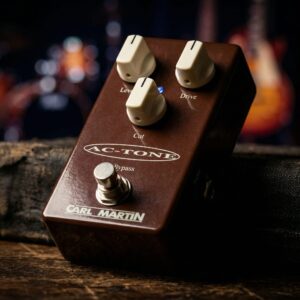
What kind of tones does the AC-Tone Single produce?
The AC-Tone Single is voiced after the classic Vox AC30 amp, delivering everything from shimmering, chiming clean tones to full-on British rock overdrive. It nails that vintage British sound – think Beatles-like cleans up to crunchy AC/DC-style rhythms – all in a compact pedal.
What does the “Cut” control do on the AC-Tone Single?
The Cut knob on the AC-Tone acts as a low-pass filter to tame high frequencies. Turning up Cut will roll off some treble, helping dial back any harsh high-end. This is useful for smoothing out the tone when the AC-Tone’s brightness is too pronounced, especially at higher gain settings.
How is the AC-Tone Single different from the original Pro Series AC-Tone?
he Single is a one-channel version of the dual-channel Pro Series AC-Tone. Carl Martin beefed up the gain for this smaller unit and added the Cut control for extra tone shaping. Unlike the old AC-powered big pedal, the AC-Tone Single runs on a standard 9V DC supply but internally converts to ±12V, so it maintains the same headroom and sound quality as the larger AC-Tone.
Is the AC-Tone Single true bypass?
The AC-Tone uses an active buffered bypass circuit rather than true bypass. This means when the pedal is off, your signal still goes through a high-quality buffer. The benefit is you won’t lose tone or volume over long cable runs – the buffer keeps your bypassed sound clear and strong. (No tone-suck issues here, as Carl Martin’s buffers are excellent.)
What are the power requirements? Can I use a battery?
The AC-Tone Single requires an external 9V DC power supply (regulated, center-negative) providing at least ~100 mA. It cannot run on a 9V battery – the pedal’s design doesn’t include a battery compartment. Power consumption is around 62 mA, so any standard pedalboard power unit will drive it easily (just be sure it’s regulated 9V DC).
What kind of amplifier setup is AC-Tone best into?
The AC-Tone Single is designed to emulate an amp, so it works great into a clean guitar amp or even straight into a power amp or recording interface. It shines into a clean channel, where it can essentially be your Vox-style amp sound. You can also run it into an effects return or amp sim setup. Many players use it as their “amp-in-a-box” for direct recording or live rigs when they want that British AC30 flavor.
Does the AC-Tone handle high gain sounds (Brian May-style lead tones)?
Yes – within the classic Vox range. The AC-Tone has plenty of gain on tap, more than the original Pro Series unit. It can absolutely get into Brian May territory (think singing, midrangy lead sustain), though its core character remains that vintage Vox-style overdrive. At max gain it produces a smooth, harmonically rich distortion, but it’s not a modern metal pedal – it’s voiced for classic rock saturation.
Where should I place the AC-Tone in my signal chain?
Treat the AC-Tone like an amp-in-a-pedal or overdrive pedal. It typically works best before time-based effects (delay, reverb) and after any fuzz or wah pedals. A common order is: Guitar → Fuzz/Wah → AC-Tone → Modulation/Delay → Amp. This way, the AC-Tone’s overdrive is adding harmonics that your delays and reverbs will then echo, preserving clarity. Since it has a buffered bypass, it can even serve as a buffer at the start of your chain to keep your tone strong.
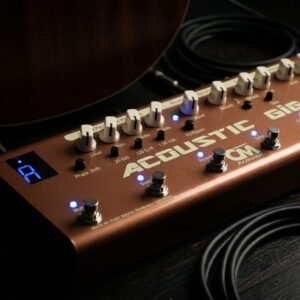
What is the Acoustic GiG pedal?
The Acoustic GiG is an all-in-one acoustic guitar preamp and effects unit designed for performing or recording with acoustic-electric guitars. It combines several essential tools for acoustic players: a high-quality preamp with 3-band semi-parametric EQ, a compressor/limiter, a footswitchable clean boost, an analog/digital hybrid reverb, a tap-tempo echo (delay) with a dotted-eighth setting, a phase inverter (to fight feedback), and even a built-in tuner with mute switch. In short, it’s like having a mini acoustic rig’s front end (preamp + DI + effects) in one floor unit – tailor-made for acoustic guitar tone shaping and problem solving on stage.
What are the main features and controls on the Acoustic GiG?
The Acoustic GiG is sectioned into modules:
Compressor/Limiter: With Compression and Level knobs, based on Carl Martin’s comp circuit, for smoothing out dynamics.
Boost: A footswitchable boost giving up to +15dB crystal clean volume lift for solos.
Echo (Delay): Vintage-style echo with Level, Tone, Repeat knobs and a tap-tempo footswitch; plus a switch for normal or dotted 8th note subdivision (handy for rhythmic delay).
Reverb: An analog/digital hybrid reverb voiced like a warm vintage spring; single Reverb Level knob (the complexity of it is under the hood – it gets more modulated/chorusy at high settings to give lush texture).
3-Band Parametric EQ: Borrowed from their Parametric Pre-Amp – likely knobs for Bass, Mid, Treble and maybe a Freq selector for the mid band (semi-parametric implies the mid frequency is sweepable).
Phase switch: A button or footswitch to invert phase 180° to help cancel feedback when needed.
Tuner/Mute: Built-in tuner display and a footswitch to mute the output for silent tuning.
On the back, connectivity includes a 1/4" input, a 1/4" output to amp, a balanced XLR DI output with ground lift for going to PA, an insert loop (placed
How do I fight feedback with the Acoustic GiG?
The Acoustic GiG provides a couple tools: primarily the Phase Invert switch. When you get low-end feedback (the infamous howling on acoustic at volume), hitting the phase button often reduces or eliminates that by 180° phase cancellation. Additionally, the semi-parametric EQ can help – you can pinpoint a problematic frequency (often around 100–200Hz for body resonance, or a honky mid frequency) and reduce it. The EQ is high quality and specific (from Carl Martin’s 3-band Parametric Pre-Amp), so you can notch out frequencies somewhat if needed. It doesn’t have an automatic notch filter, but careful EQing plus phase invert covers most feedback scenarios. Also, compressing can tame peaks that might trigger feedback. And the mute/tuner footswitch is your failsafe – if things are about to blow, hit mute to stop output instantly (and tune while muted if you like). Essentially, phase invert is step one; if feedback persists, lower the offending frequency with EQ or overall volume.
Is the Acoustic GiG’s reverb and echo specifically tuned for acoustic guitar?
Yes – the reverb is described as “shimmering yet warm,” and it’s analog/digital hybrid tailored to acoustic. That means it gives air and space without harsh digital artifacts. At higher settings, it adds a slight modulation to reverb, which can enhance the richness around the natural acoustic tone without sounding fake. The echo is described as vintage-style and musically voiced – likely analog-voiced repeats, which don’t clutter an acoustic’s clarity. Plus the Dotted 8th switch is something many acoustic players use for rhythmic delay patterns (common in modern worship music and such). They specifically mention it's the “most beautiful musical echo” with that dotted 8th option, indicating it’s not just a generic digital delay – it’s tuned in repeats and tone to complement acoustic strumming or picking (clear enough to add rhythm, but warm enough to blend). Everything suggests the FX were chosen/tweaked with acoustic’s frequency response in mind.
How is the sound quality? Would it replace my standalone DI?
The Acoustic GiG is made to be a professional quality preamp/DI. Its balanced XLR out is “high quality” and includes ground lift, meaning it’s ready to plug into a PA or interface noiselessly. The analog preamp uses high headroom components (they mention it raises the bar with “best combination preamp/parametric EQ available in an acoustic floor pedal”). So yes, it’s meant to be the box between your guitar and the sound system. If you currently use, say, a Fishman Aura or Baggs Para DI, the Carl Martin can likely take that role while adding all the extra features. Users and reviews emphasize the robust construction and “beyond reproach” sound quality. The preamp doesn’t impart noise or bad coloration; it provides transparent yet flexible tone shaping and very low noise floor (the compressor is balanced-sounding and quiet, the EQ is effective yet musical, etc. – in reviews Gitarre & Bass said the reverb sounds great, comp is unobtrusive, overall unit is highest audio quality). If anything, it might improve your tone if you were just running from your guitar’s pickup to the board, because it addresses quackiness (with EQ), dynamic spikes (with comp), etc. plus a little enhancemen
Can I run other pedals through it (like if I have a specific chorus or looper)?
Yes, the Acoustic GiG has an insert loop after the Boost and before the EQ section. That’s a perfect spot to patch in another effect or pedal. For example, if you love a certain chorus or you use a looper or an octave pedal, etc., you can plug the Send from Acoustic GiG to the input of that effect, then from effect out to Return on Acoustic GiG. This way, that effect’s signal goes through the EQ and DI as well. Also, the acoustic gig provides a 9-12V DC output to power an extra pedal off its supply, meaning you might not need a separate power adapter for that pedal. They definitely anticipated someone might add one or two personal touches (like maybe a specific modeler or extra notch filter, etc.). It’s all about giving flexibility while covering 95% of needs in one unit. It’s housed likely in a metal chassis that’s robust enough for stomping multiple footswitches, and they mention it raises the bar – indeed it aims to be the central hub of your acoustic rig.
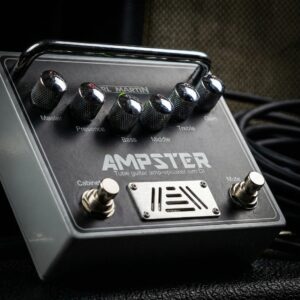
What is the Ampster?
The Ampster is a compact analog preamp pedal designed to deliver authentic amp-style overdrive and tone shaping without needing a full amplifier. It functions as an “amp-in-a-box,” giving you dynamic, touch-sensitive drive that reacts like a real tube amp when pushed.
Is the Ampster digital or analog?
Fully analog. There’s no digital modeling involved. The overdrive and tone shaping are achieved through discrete analog circuitry designed to behave like an amplifier’s preamp section.
How would I typically use the Ampster?
It can be used in several ways:
As your main overdrive pedal into a clean amp
As a preamp into a power amp or effects return
As a core tone shaper before modulation and delay
It responds well to guitar volume changes and picking dynamics, making it suitable for expressive playing.
Is it suitable for recording?
Yes. When paired with a speaker simulator, IR loader, or recording interface with cab simulation, the Ampster works very well as a direct recording preamp. Its analog nature gives it a natural feel that many players prefer over digital amp sims.
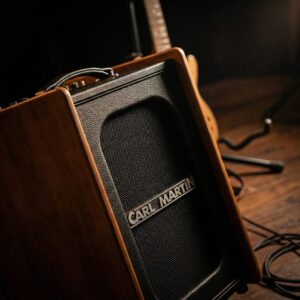
What kind of amplifier is CM Acoustic?
CM Acoustic is a 300-watt full-range acoustic amplifier built around two custom SU65147CM 6.5” full-range drivers developed and assembled in Denmark. It is designed to reproduce the natural character of acoustic instruments without imposing coloration. Rather than enhancing lows or hyping high frequencies, it focuses on transient integrity, harmonic separation, and dynamic responsiveness.
Is CM Acoustic voiced like a traditional acoustic combo?
Not in the conventional sense. Many acoustic amps intentionally shape the sound with boosted highs or softened mids. CM Acoustic is engineered to behave closer to a compact full-range monitoring system — but with the immediacy and feel of a dedicated instrument amplifier. The goal is controlled projection and transparency, not coloration.
How does the amplifier handle dynamics?
Responsiveness is central to the design. When played softly, the system remains open and articulate. When pushed harder, it tracks transient attack without flattening the response or exaggerating harshness. Harmonics remain separated rather than collapsing under dynamic pressure. The internal headroom and limiter design ensure stability even at higher output levels.
What makes the SU65147CM speakers special?
The SU65147CM drivers are specified for predictable electrical load, controlled excursion, and stable sensitivity. With a natural resonance around 100 Hz, they provide a tight low end without uncontrolled bloom. The ferrite motor structure maintains cone control under load, contributing to balanced projection and stable low-frequency behavior.
What about the microphone channel?
The mic channel includes a balanced XLR input with +48V phantom power, a limiter, and overload indication. It is designed to reproduce vocals transparently and without tonal interaction with the instrument channel.
Can both channels be used simultaneously?
Yes. The channels are fully independent and designed to behave consistently whether used alone or together. Level balancing remains predictable without unintended tonal interaction.
How does CM Acoustic handle feedback control?
It includes a phase switch to help reduce low-frequency feedback. The sweepable midrange EQ allows precise control over problematic frequencies. The limiter also helps manage transient spikes that may trigger feedback.
Does the DI output reflect the full signal path?
Yes. The balanced XLR DI mirrors the amplifier’s signal path, ensuring what you hear on stage translates consistently to front-of-house or recording systems.
Is it suitable for home use as well as live performance?
Yes. While engineered for stage reliability, the cabinet design and controlled projection make it equally suitable for home environments without sounding oversized or overly aggressive.
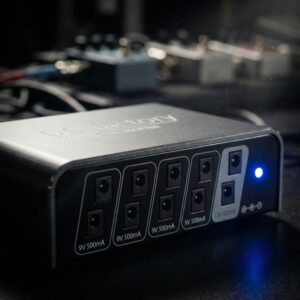
What is the DC Factory?
The DC Factory is a high-quality isolated power supply designed to deliver clean, stable power to pedalboards of all sizes. It’s built to eliminate noise, hum, and ground loop issues commonly caused by daisy-chained or poorly regulated supplies.
Why is isolated power important?
Isolation prevents pedals from sharing ground paths, which is one of the main causes of noise. Especially when mixing digital and analog pedals, isolated outputs ensure each pedal receives clean power without interference from others.
What types of pedals can it power?
Standard 9V pedals, including analog drives, digital delays, reverbs, and modulation pedals. Depending on configuration, some outputs may support higher current draw for modern digital pedals.
Is it suitable for professional touring boards?
Yes. It’s designed for reliability, stable voltage delivery, and low noise under demanding conditions. The build quality and regulation make it suitable for both studio and live environments.
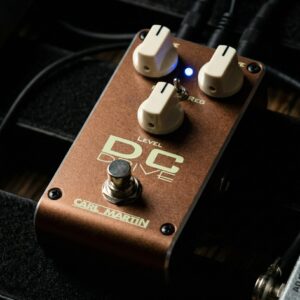
What type of overdrive is the Carl Martin DC Drive?
The DC Drive is a versatile overdrive pedal that ranges from low-gain bluesy crunch to a saturated, harmonics-rich drive. In Regular mode it delivers a crisp, classic “old-school” overdrive tone, and in Fat mode it steps into a thicker, higher-gain territory. Essentially, it covers everything from a clean boost with a bit of growl up to a juicy, singing lead drive.
What does the Regular/Fat switch do?
The Regular/Fat mini-toggle switch changes the gain character of the pedal. Regular mode gives a tighter, more transparent overdrive with slightly less distortion and more top-end – great for classic rock or blues rhythm tones. Fat mode adds gain and low-mid thickness, yielding a warmer, beefier tone with a modern feel. It’s almost like having two overdrive flavors in one pedal: Regular for crisp crunch and Fat for a thicker, more saturated drive.
Can the DC Drive function as a clean boost?
Yes. With the Drive knob turned down and Level up, the DC Drive can act as a clean (or slightly dirty) boost to push your amp. In Regular mode especially, at low gain it stays fairly transparent and just adds a bit of edge and volume. The pedal was noted to clean up well with your guitar’s volume knob too, so it’s quite dynamic. Many players use it to kick an already overdriven amp into fuller saturation.
Is the DC Drive true bypass or buffered?
The DC Drive features true bypass switching, meaning when it’s off, your guitar signal doesn’t go through any circuitry. (Carl Martin’s documentation doesn’t explicitly shout “true bypass,” but independent specs note it’s a true bypass design.) In use, players have found that engaging/disengaging the DC Drive does not alter their base tone or volume – it’s transparent when off, which is what you’d expect from true bypass.
What are the power requirements and can I use a battery?
The DC Drive runs on a 9V DC power supply (standard 2.1mm barrel, center-negative). It does not have a battery compartment – the pedal does not run on batteries. Power consumption is low (around 20 mA max), so any quality 9V adapter will work (Carl Martin recommends their regulated ProPower supply). Always use a regulated supply to avoid noise; an isolated supply is ideal if you use multiple pedals.
How does the DC Drive compare to the original (older) DC Drive pedal?
The current DC Drive (sometimes called “DC Drive 2018” as it got a facelift in 2018) is a single-footswitch compact pedal with the new Regular/Fat switch. The older DC Drive was a larger two-footswitch unit (with a separate boost footswitch). The new version retains the core tone but in a smaller package. It also added the Fat mode to emulate that old built-in boost by adding gain and heft in a toggle rather than a second footswitch. So essentially, the 2018 refresh made it more pedalboard-friendly without sacrificing the beloved DC Drive sound.
What kind of music or amps does the DC Drive suit best?
The DC Drive is very flexible – it works great for blues, classic and modern rock where you need rich overdrive that cleans up well. In Regular mode it’s superb for edge-of-breakup tones (think bluesy Strat into a Fender-style amp). Switch to Fat mode and you’ve got the girth and gain for heavier rock, leads, or to fatten up a bright amp. It was designed to be neutral enough that it doesn’t drastically color your core tone, so it pairs well with many amplifiers – whether you run it into an American-voiced clean amp or a British mid-heavy amp, it will enhance rather than completely transform the amp’s character.
Does the DC Drive produce a lot of noise or hiss at high gain?
Not in our experience – it’s actually relatively quiet. Carl Martin builds high-quality circuits, and user reviews often praise the DC Drive’s low noise floor. Of course, any overdrive will amplify noise if you’re using single-coil pickups or have noisy power, but the pedal itself is designed for low noise. Keeping the tone knob reasonable and using a good power supply will ensure it remains quiet. In Fat mode at maximum Drive, you might hear a slight increase in background hiss (normal for high gain), but it’s by no means a loud or problematic noise – certainly nothing that would overpower your playing.
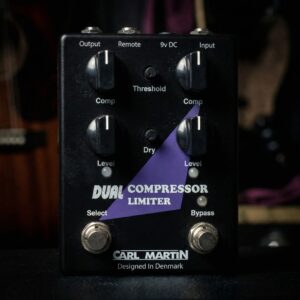
What is the Dual Compressor Limiter designed to solve?
It is designed to address uneven dynamics, disappearing sustain, and uncontrolled peaks while preserving the natural character of the instrument. The goal is control without flattening tone or sacrificing attack.
How is this different from a standard compressor pedal?
Dual Compressor Limiter provides two completely independent compression setups in one enclosure. Each side has its own COMP and LEVEL controls, while both share a global THRESHOLD control for consistent response.
What does the DRY control do?
DRY allows parallel compression. You can blend compressed signal with your untouched signal, adding density underneath your attack without making the compression obvious. This preserves feel while adding sustain.
What does internal 12V operation provide?
The pedal runs internally at 12V (generated from a 9V input), increasing headroom. This keeps the compression stable under stronger signals and prevents unwanted distortion or choking.
Is it transparent?
Yes. Even at higher compression ratios, low-end remains intact and harmonics stay defined. It is engineered to control dynamics without tonal smear.
Can it function as a limiter?
Yes. With higher compression settings (up to 30:1), it can act as a peak limiter, controlling transient spikes in a controlled and predictable way.
Is it true bypass?
Yes. It uses true bypass switching to preserve signal integrity when disengaged.
Is it suitable for studio use?
Absolutely. With 105 dB signal-to-noise ratio and low THD (0.05%), it performs cleanly in recording environments as well as live rigs.
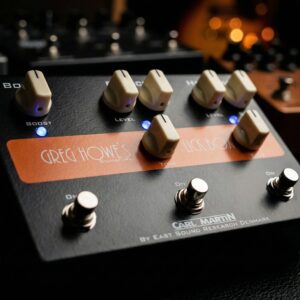
What is the Greg Howe Lick Box?
The Lick Box is a signature pedal Carl Martin designed with guitar virtuoso Greg Howe. It’s essentially three pedals in one box: a High Gain distortion channel, a Crunch (lower gain) overdrive channel, and a 12dB Clean Boost – all foot-switchable. Greg wanted a pedal that could cover his searing lead tone, a dynamic crunch rhythm, and a boost for solos, and the Lick Box delivers exactly that in a single unit.
Can the three channels be used together?
Yes – that’s a key feature. You can use the High Gain or Crunch individually or run both gain channels at the same time. Stacking the Crunch and High Gain together gives a unique mid-focused lead tone: because the Crunch channel is voiced to cut mids, when combined with the High Gain (which comes first in the chain), you get a tighter, more focused midrange that really cuts through. And on top of either (or both), you can add the clean Boost for up to +12dB volume lift. This flexibility means you can have multiple levels of drive – from light crunch, to heavy, to insane saturated sustain with both engaged and boosted.
What are the controls for each section?
The pedal has three sets of controls: High Gain channel has its own Drive, Level, and Tone knobs; Crunch channel has Drive, Level, and Tone knobs; and the Boost channel has a single Level knob (it’s a clean boost). So you can dial in the tone and volume of the High Gain and Crunch independently. For example, Greg Howe might set Crunch with lower gain for rhythm and High Gain with more drive for leads, each EQ’d separately, then kick in Boost for solos. There’s also a master on/off footswitch for each channel (and an LED for each) making it intuitive to toggle combinations on stage.
Does the Lick Box use a tube or is it all solid-state?
It’s a solid-state analog pedal (no tube inside). Carl Martin’s design still achieves very tube-like response and tone though. When Greg Howe first asked for it, he wanted it to feel like an amp – and indeed players report that it’s dynamic and responsive to pick attack (cleans up when you play lighter or roll guitar volume down, etc.). The use of an internal ±12V power conversion also gives it more headroom and “amp-like” punch, despite being a solid-state circuit.
How do I power the Greg Howe Lick Box? Can it use batteries?
The Lick Box requires a 9V DC power supply (standard center-negative jack) and draws around 100–150 mA. It cannot run on batteries – due to the power needs of the pedal (it has an internal DC-DC converter to ±12V, a real battery hog), Carl Martin designed it for power supply use only. Use a quality regulated adapter; Carl Martin recommends their Pro Power or any supply that can provide at least 150 mA at 9 volts. Running it at the proper voltage ensures you get the intended headroom and tone.
What’s the advantage of the Lick Box’s internal ±12V circuitry?
The Lick Box’s internal power converter bumps the 9V input up to dual 12V rails. In practical terms, this means higher headroom and more “amp-like” tone – the pedal can deliver strong output without clipping in unpleasant ways, and it retains punch and clarity even at high gain. It uses high-quality components that operate at ±12V, so the tone is big and dynamic like a pro-level rack unit or amplifier, rather than compressed or starved like some 9V pedals can be. This is part of why the Lick Box sounds so open and why the Boost stays crystal clean up to 12dB – the pedal isn’t running out of voltage internally.
The Boost is 12dB – is it before or after the drive channels, and can I use it alone?
The 12dB Boost in the Lick Box is a clean boost placed after the two drive channels in the signal chain. That means if you engage Boost along with either drive, it will increase volume (and a bit of saturation) without altering the tone you set on the drives. Yes, you can also use the Boost by itself – kick on the Boost footswitch while leaving Crunch and High Gain off, and you’ve got a clean volume lift for hitting the front of your amp harder or for solo passages on a clean tone. Many users love that the Boost can act independently as a solo boost whether you’re using the pedal’s drives or not.
Greg Howe uses this pedal for high-gain shred – is it noisy with all that gain and stacking?
The Lick Box is impressively quiet for a high-gain device. It’s designed with quality components and a low-noise circuit. Of course, any time you stack two drives and add boost, some noise will be present (that’s just cumulative gain), but Carl Martin built in as much noise reduction as possible. Users often comment that even with both Crunch + High Gain engaged, the pedal remains relatively quiet – certainly gig-friendly. As always, using proper power and keeping cables short will help. But rest assured, Greg Howe wouldn’t tolerate a pedal that hisses like a snake – and he’s using the Lick Box live with great results.
Can the Lick Box be used for styles other than shred/fusion?
Absolutely. While it was designed around Greg Howe’s needs, it’s essentially a versatile dual overdrive/distortion + boost, which can fit many genres. The Crunch channel on its own is dynamic and works for blues or classic rock (it’s voiced with less compression). The High Gain channel can do hard rock or metal leads. Stacking them yields a smooth, mid-rich lead tone great for fusion or sustaining rock solos. And the clean Boost is universally useful. So whether you play rock, prog, metal, or even need a fat blues lead tone, the Lick Box can cover a lot of ground. It’s like having a mini pedalboard of carefully tuned drives in one unit.
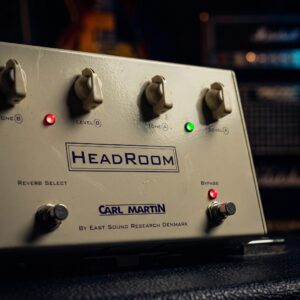
What is the Carl Martin HeadRoom?
The HeadRoom is a real analog spring reverb pedal – effectively a genuine spring reverb tank in a stompbox format. It contains actual springs to create reverb, just like the reverb in a classic Fender amp. Uniquely, it has two switchable reverb channels, so you can set two different reverb levels (small room vs large hall sound, for example) and toggle between them, much like having two presets of reverb on stage.
How do the two reverb channels work?
The HeadRoom has two identical reverb channels, labeled A and B, each with its own Tone and Level knobs. Level sets the mix/depth of the reverb (from very subtle to very wet), and Tone adjusts the brightness/darkness of the reverb tail. There are two footswitches: one is Bypass (on/off for the effect), and the other is Channel Select (toggles between A and B). This means you can dial, say, Channel A as a short, subtle reverb (Level low, Tone perhaps brighter for a “small room” vibe) and Channel B as a big, deep surf reverb (Level high, Tone maybe lower for a dark, large hall). Then with the footswitch you can jump from A to B mid-song. It’s like having two reverb presets – very handy for players who want, for instance, a light reverb on rhythm and a heavier reverb on ballad solos or ambient sections.
Is it really a spring reverb? Can it “crash” if bumped like an amp reverb?
Yes, it’s a true spring reverb unit. Inside are small spring tanks. If you physically kick or shake the pedal, you will hear that classic spring “crash” noise (though they mounted the springs with a double suspension to reduce microphonics and stage rumble feedback). So in normal use on the floor, it’s stable; but intentionally whacking it or dropping it will cause a thunderous spring crash – which some players actually find fun to use as an effect! It’s genuinely the same technology as an outboard reverb tank or amp reverb, not a digital emulation. That’s why the HeadRoom’s sound is very authentic – it’s as if your signal is being sent to a little amp’s reverb section and back.
How does the HeadRoom compare to digital reverb pedals?
The HeadRoom’s advantage is its authenticity. Being analog springs, it nails that vintage reverb character (a slightly metallic, organic ambience) that digital algorithms often attempt to emulate. The tone is described as very musical and natural – “like an organic part of the guitar sound rather than an effect tacked on”. It’s particularly excellent for surf, rockabilly, classic rock, blues – any style where a Fender-style spring reverb is desired. However, it’s not as versatile as digital multi-reverbs: you won’t get plate, hall, shimmer, etc. It basically does “small spring” and “big spring” sounds. Also, it has a limited decay length (short pan springs, so it won’t do super long cavernous trails like a digital pedal can). But within its realm, it sounds arguably better than digital – as one review put it, “sound-wise it’s the real deal”. So if you primarily want spring reverb, the HeadRoom is top-tier for sound quality. It’s a more specialized tool, whereas digital pedals are broader but can be less convincing for true spring tone.
Can I run the HeadRoom in stereo or in an amp’s effects loop?
The HeadRoom is a mono pedal (one input, one output, plus it has remote footswitch jacks for channel and bypass if you want to rack-mount it). It’s designed to go in front of an amp or in an amp’s loop – either works. If your amp has an effects loop, putting the HeadRoom there will make it behave exactly like built-in amp reverb (after the preamp distortion, which is ideal). If you run it in front of a clean amp, that’s fine too (most vintage amps didn’t have loops and did reverb before power amp). If you run it in front of a distortion pedal or dirty amp, note that reverb before heavy distortion can sound washy (that’s just physics), so usually it’s best after dirt. But yes, it can handle instrument or line level; its headroom is quite high since it runs internally around ±12V (it actually can be powered by 9V DC or a 9V battery or 12V AC adapter – it has internal power options). As for stereo – it’s not stereo out of the box. It’s a pure analog spring circuit (mono). For stereo, you’d need two units or accept mono reverb to both channels.
Does the HeadRoom require any special power?
The pedal can be powered by a standard 9V DC (center negative) supply at ~200 mA, and interestingly it can also run on a 9V battery or a 12V AC adapter, depending on version. It has an internal power transformer (older versions actually had an AC mains plug; newer are DC). The Guitarist UK review mentions it can run off a 9V battery (though likely with short life given it’s driving a spring driver amplifier). Carl Martin themselves recommend using a regulated power supply for best performance (the springs can pick up hum, so a clean supply is good). If running on a pedalboard, give it isolated 9V. If using battery, ensure it’s fresh; the pedal will warn by dimming LEDs if battery is low. So, nothing too exotic – just note it’s a bit higher draw if using battery. And if yours came with an AC plug, obviously use that or a proper cable as instructed. Check your manual for the specific power method of your unit (there have been a couple of revisions).
Any tips for using the HeadRoom live?
Because it’s real springs, avoid placing it directly on a loud vibrating speaker cab – that could induce some feedback or rumble. They did double-mount the springs to minimize that, but extreme stage vibration can still cause low-frequency howl. A bit of foam or isolation underneath can help if needed. Also, the Tone knobs are very useful: higher Tone = brighter, more splashy reverb; lower Tone = darker, more subtle reverb. In a boomy room, you might dial back Tone to avoid muddy reverb. In a dead room, add some brightness. Use the two channels creatively: maybe Channel A as always on ambient reverb (just a hint of space) and Channel B as a featured effect (big surfy reverb for certain songs). And don’t forget those remote jacks: you can connect external footswitches to control bypass and channel, which means you could mount the HeadRoom off-board (even on top of your amp or on a rack) and still switch it – nice for studios or tidy stage setups. Finally, have fun – kicking the pedal (not too hard) for a spring crash at the end of a song can be a cool showy move (just as one might kick an amp reverb).
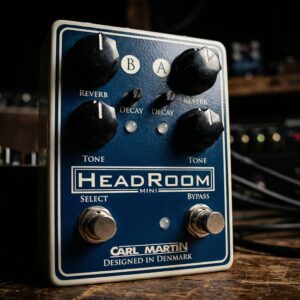
What’s the difference between the HeadRoom Mini and the original HeadRoom?
The HeadRoom Mini is a digital emulation of the HeadRoom’s spring reverb, packed into a much smaller and more modern pedal. It still offers two independent reverb channels A and B with separate Level and Tone controls, but instead of real springs, it uses a high-quality digital algorithm to simulate those spring reverb sounds. Because it’s digital, the Mini also adds features like stereo inputs/outputs and a switchable buffered bypass with spillover. Essentially, the Mini gives you the beloved warm, natural tone of the big HeadRoom’s spring, but in a compact, lightweight unit better suited for modern pedalboards – and with stereo capability and no maintenance (no springs to potentially clunk).
Does the HeadRoom Mini still have two switchable reverb settings?
Yes! Just like the big HeadRoom, the Mini has two channels (A and B) that you can toggle between with a footswitch. Each channel on the Mini has its own Tone and Level knobs (labeled A and B) to customize the depth and brightness of the reverb. So you might set A to a light “room” reverb and B to a deep “cathedral” reverb, for instance. One stomp on the left footswitch switches between A and B in real time, and the right footswitch is Effect On/Bypass. This is a direct carryover of the dual preset idea, which users loved in the original – now in smaller form. The Mini’s digital implementation even allows stereo reverb if you’re running two amps or a stereo rig, which the original couldn’t do.
Is the HeadRoom Mini true bypass or buffered?
The HeadRoom Mini uses a buffered bypass with spillover trails. That means when you bypass the pedal, it’s not cutting the reverb tails off abruptly – any lingering reverb will decay naturally (no “hard cut”). This is a great feature of many digital reverbs. Also, the buffered bypass ensures your signal stays strong through the pedal even when off (important since it’s stereo and digital). There is also a switch on the Mini to select mono or stereo operation; in stereo mode, it sums or splits appropriately. So short answer: not true bypass – it’s an always-buffered digital circuit, but for good reason (to keep your reverb tails sounding smooth).
How does the Mini’s sound compare to the original HeadRoom’s analog spring?
Impressively close. Carl Martin modeled the digital algorithm to mimic the warm, musical character of their analog spring unit. Reviews highlight that it retains the “same warm and rich tone as the original, in a more practical format”. You still get that drip and spaciousness reminiscent of a real spring. The advantage of digital is you can dial the reverb from small room to “grand cathedral” lengths – the Mini’s range actually exceeds the original’s short springs (the copy even says from “small room… to very large cathedrals!”). So the Mini can do bigger and longer reverbs too, making it more versatile. Most importantly, it responds dynamically and has zero latency issues – players note you might forget it’s not a real spring while playing because it reacts naturally. In summary, sound-wise Carl Martin nailed the spring emulation, plus you can get extremes (if you want a massive ambient wash, the digital can oblige where the analog was limited by physical spring length).
What does the “Voicing” or “Presence” switch do on the Mini (if any)?
The original analog HeadRoom didn’t have a voicing switch, but the Mini introduced a few new features. On the back panel, the Mini has a Stereo In/Out jacks and a Remote jack for channel switching via external controller. It doesn’t have a separate voicing toggle per se, but it does have the buffered bypass (with presumably an internal option to sum or something, but that’s fixed). It also draws more power (since it’s digital). Essentially, any “voicing” differences would be handled by the Tone knobs for each channel. The presence of a remote jack is great – you can integrate it with loop switchers or MIDI controllers (with a relay) to toggle A/B remotely. So if anything, the “Voicing” aspect might refer to the slight low-end cap voicing switch which the original HeadRoom didn’t have, but actually in this context of the Ampster mention, “Voicing switch” was on the Ampster, not the HeadRoom Mini. So in the Mini’s case, just know: A/B channel tone shaping is via Tone knobs, and the pedal is tuned from small room to huge hall via those controls, no extra voicing toggles needed because the algorithm covers that range.
Does the HeadRoom Mini have trails when bypassed?
Yes, because it’s buffered bypass, the reverb decays naturally when you hit bypass – the echoes don’t cut off abruptly. This means if you play a chord with big reverb then bypass the pedal, you’ll still hear the reverb tail fading out, which is usually desirable. If you prefer “hard bypass” (no trails), that’s not the default mode – the Mini prioritizes smooth operation. Most players appreciate this, as it sounds more professional between song changes, etc. If you really needed to kill the reverb instantly, you could always use the mute on your amp or a volume pedal; but generally, trails are considered a positive feature here.
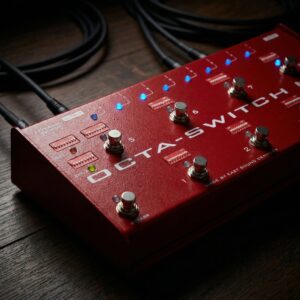
What is the Octa-Switch MK3?
The Octa-Switch MK3 is a programmable true-bypass loop switcher designed to manage complex pedalboards with maximum simplicity and signal integrity. It allows you to connect up to eight pedals in individual loops and recall preset combinations instantly with a single footswitch press. Instead of tap-dancing on multiple pedals, you step on one switch and activate an entire signal chain. It’s built for players who want consistent sounds, clean routing, and fast changes live—without digital modeling or tone coloration.
How does the Octa-Switch MK3 work in practice?
Each of the eight footswitches represents a preset. For every preset, you choose which of the eight loops are active and in what order they run. Once programmed, pressing a preset footswitch instantly engages the selected loops via relay-based true bypass switching. The signal stays fully analog and untouched except for the pedals you choose to include. This makes it ideal for players who rely on multiple gain stages, modulation, or time-based effects and want total control over combinations.
Is the signal path fully analog and true bypass?
Yes. The Octa-Switch MK3 is fully analog and uses high-quality gold relay switching. When a loop is bypassed, it is completely removed from the signal path—no buffers, no tone suck. This preserves your guitar’s natural tone even on large boards. The only thing shaping your sound is the pedals you intentionally activate.
Can I change pedal order between presets?
No—the physical order of the loops is fixed (Loop 1 → Loop 8). However, you can choose which loops are active in each preset. If you need changing pedal order per preset, that requires a matrix-based router. The Octa-Switch MK3 instead focuses on reliability, sound purity, and ease of use, which is why many players prefer it over more complex digital routers.
Is it suitable for live use?
Absolutely. It’s built like a tank, with heavy-duty footswitches, metal chassis, and silent relay switching. Once programmed, it’s incredibly stable—no menus, no screens, no boot time. Many touring players use it because it removes human error on stage: one press, correct sound every time.
Who is the Octa-Switch MK3 best suited for?
Guitarists with medium-to-large pedalboards who want fast preset recall without compromising tone. It’s especially popular among players using multiple overdrives, boost stages, and time-based effects where consistent combinations are critical. If you value analog tone but want digital-style convenience, this is the sweet spot.
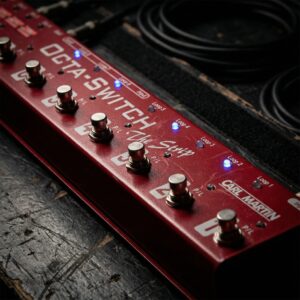
What is the Octa-Switch The Strip?
The Octa-Switch The Strip is a programmable, stage-friendly loop switcher built to simplify complex pedalboards without compromising tone. You get 8 true-bypass loops and 8 preset switches (“banks”) so you can recall complete pedal combinations with a single press—no tap dancing. It’s designed to be fast, intuitive, and rugged, with a “what you see is what you get” approach that keeps things practical for real-world gigging.
How is The Strip different from the Octa-Switch MK3?
The Strip is commonly described as a more modern/refined take on the Octa-Switch idea, adding practical live features like MIDI functionality, external switching options, and flexible routing features that many players need today. It still stays focused on simplicity—programmable loop switching without deep menus or “computer-like” workflow.
How many loops does it have, and are they true bypass?
It has 8 loops (often listed as 7 mono + 1 stereo), and the loops are true bypass using relay switching—so when a loop is off, it’s physically removed from your signal path. That helps keep your core tone intact even with lots of pedals connected.
Does The Strip have a built-in power supply?
No. The Strip does not have a built-in pedal power supply. It runs on an external 9V DC (regulated), center-negative adapter, and the adapter is not included. Plan for a supply that can deliver sufficient current (often stated around 600 mA recommended).
What does “Instant Access mode” mean?
Instant Access mode lets you temporarily add/remove loops inside a bank without overwriting the stored preset. In practice, that means you can start from a preset “base sound” and then kick an extra loop on/off for a section—without needing a dedicated new preset for that small change. It’s a very gig-friendly feature for improvising during a set.
Does The Strip support MIDI? What can I actually do with it?
Yes—The Strip supports MIDI (commonly listed as MIDI out sending program changes), which allows it to control or sync with MIDI-capable devices (for example, a delay/reverb unit, switchable amp, or rack effect) by recalling matching programs when you change banks. It’s aimed at practical “preset recall” integration rather than deep MIDI editing.
What are the “external relay switches” for?
The Strip is designed to control more than pedals in loops. It includes external switching outputs (often referenced as multiple external switches) that can be assigned to things like amp channel switching, amp reverb, boost, or other gear that accepts simple contact-closure switching. This is one of the biggest reasons players choose The Strip over bare-bones loopers: it can become the “central foot controller” for your rig.
Can I run two amps or a stereo setup?
Yes. The Strip is commonly listed with assignable outputs suitable for stereo or dual-amp rigs. That lets you route your board to two amps (or two channels) in a controlled way—useful for wet/dry setups or stereo time-based effects.
Will it “tone suck,” or do I need a buffer?
The core design is built around preserving tone (true-bypass loop switching). Some sources also mention the ability to choose true bypass or buffered bypass at the main input, which is useful if you’re on a big stage or running long cable lengths. In practice: use true bypass if your cable runs are short and your pedals behave well; use buffered input if you need extra signal stability across long runs.
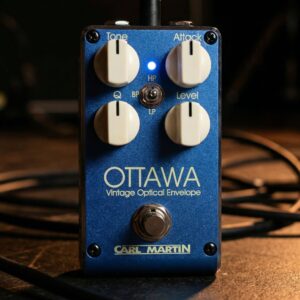
What type of effect is the Carl Martin Ottawa?
The Ottawa is an auto-wah / envelope filter pedal – essentially it gives you that funky wah-wah sound that follows your playing dynamics, without you rocking a pedal. It’s an optical envelope filter, meaning it uses an optical circuit to sweep a wah-like filter based on your pick attack. The name “Ottawa” is a cheeky pun (“auto-wah” sounding like Ottawa). So if you want those classic 70’s funk “waka-waka” tones or Jerry Garcia-style auto-wah or even synth-like filter sweeps on bass or guitar, the Ottawa does the job.
What are the controls on the Ottawa and how do I use them?
The Ottawa has five main controls: Attack (sensitivity), Tone (overall tone brightness of the effect), Level (output volume), Q (filter bandwidth), and a 3-way Range (Select) switch for High-pass, Band-pass, Low-pass filter modes.
Attack: This adjusts how sensitive the filter is to your playing dynamics. If Attack is set high, even softer playing will trigger the wah sweep (good for low-output pickups or if you want it always quacking). If Attack is lower, you need to hit strings harder to engage the wah effect (good for controlling it with picking intensity). Essentially, Attack tunes it to your guitar and style – set it so that normal playing opens the wah as desired.
Q (Bandwidth): This sets how sharp or broad the wah filter is. A high Q (knob clockwise) makes a narrow, sharp, very pronounced wah (ear-piercing if extreme – “quacky” and focused). A low Q (counter-clockwise) yields a wider, rounder sweep that’s more subtle and warm. Interactive with Attack & Tone, you’ll tweak Q to get either a soft vowel-like wah or a ripping funky quack.
Tone: It’s essentially a high-cut on the output. Full up = full frequency passes (bright), roll it back to cut highs (darker outpu
Is the Ottawa suited for bass guitar too?
Yes! The Ottawa was designed to be usable with both guitar and bass. The inclusion of the Low-Pass (LP) filter mode specifically allows it to function great as a bass envelope filter (LP mode retains the low frequencies, giving that deep Bootsy Collins style sweep). Also, the Attack (sensitivity) range is wide enough to accommodate bass output levels – so you can adjust it to trigger properly from bass notes. Many envelope filters can suck low-end out of a bass signal – but Ottawa’s Low-Pass setting ensures the deep end stays intact and quacks in a bass-friendly way. Whether you slap, pop, or play fingerstyle, you can find a setting that works (Attack higher for soft playing, lower if you really dig in). So yes, bassists will find it funky and very usable.
Does the Ottawa need to go first in chain, and does it handle high-gain signals?
Envelope filters like Ottawa are generally best placed early in the signal chain, before any distortion or compression. That’s because they rely on your playing dynamics to trigger the filter. If you put it after a heavy distortion, the signal is so compressed that the envelope might not track well (everything becomes the same volume). So typically, run Guitar → Ottawa → then overdrives/distortions. That said, you can experiment: putting Ottawa after fuzz can create synth-like tones (the fuzz gives a harmonics-rich input for the filter to sweep – very cool, but the response will be less dynamic). The Ottawa does have a Level control, so you can make sure if it’s after a pedal that the level isn’t too hot. But best practice: first in chain or right after wah (if you had both – though you likely wouldn’t use wah and autowah simultaneously). As for high gain, Ottawa can sound great in front of a distortion – you get that classic “filter then fuzz” vowel synth sound. It won’t harm the pedal; just mind your Attack setting. If your distortion compresses things a lot, you may need to raise Attack so the filter still opens. The Ottawa’s internal design (optical) is pretty forgiving – it is
Is the Ottawa true bypass?
Yes, the Ottawa is true bypass when off. Carl Martin put a high-quality relay or bypass switch in it to ensure when disengaged, it doesn’t affect your base tone. The envelope circuit is only active when on. One thing to note: because it’s true bypass, you’ll want it early in chain (which we already said) with maybe a buffer later down the line for long cables, etc. But the Ottawa itself won’t buffer your signal when off. That’s fine – envelope filters usually go first anyway. And since it’s optical and analog, switching is quiet and smooth (no popping has been reported typically). Being true bypass also means the pedal’s LED or circuit draws minimal current, which is why it’s around 14 mA draw – super low. That also means battery operation is possible (though it explicitly says it does not run on battery, only external supply – indeed Carl Martin omitted battery clip likely due to space and consistency reasons). So stick to a good 9V supply.
What kind of sounds can I get with the Ottawa?
The Ottawa covers a wide range of auto-wah sounds:
In High-Pass mode with high Q, you get that thin, sharp “chirp” – great for funky rhythm chords that need to cut, or for lead lines that almost mimic a cocked wah (very trebly filter).
In Band-Pass mode (the standard) with moderate Q, it gives the classic auto-wah guitar sound heard in 70’s funk (think Shaft theme style or Stevie Wonder’s “Higher Ground” clavinet effect on guitar). It’s quacky and vocal, without being piercing.
Low-Pass mode yields a “bowww” sound – almost like a muted trumpet or a synth filter opening. On guitar, it can sound like a subtler auto-wah (less quack, more oomph). On bass, it’s the key to a usable funk sound as mentioned.
Combine that with adjusting Attack: a high Attack and you get a quick wah that opens even on soft notes – continuous quacking on everything (makes it sound almost like an automatic wah pedal moving constantly). Lower Attack and you can control it more by playing dynamics (hit harder for wah effect, play softly and it stays more closed – great for expressive playing).
With Drive pedals: before drive, it can create those Jerry Garcia Mu-Tron-esque lead tones (Garcia often
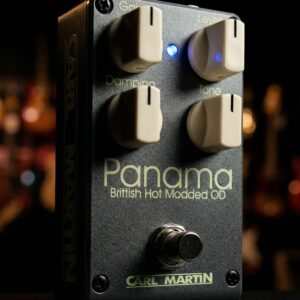
What kind of pedal is the Carl Martin Panama?
The Panama is a high-gain overdrive/distortion pedal voiced after those hot-rodded British “brown sound” amps of the 1980s. It delivers that classic roaring Marshall tone associated with 80’s hard rock and early metal (the name “Panama” itself is a nod to Van Halen’s famous tune and tone). Essentially, it gives you vintage 80’s amp drive in a pedal, from crunchy rhythm to screaming lead.
What does the Damping control do?
The Damping knob is a unique feature on the Panama – it adjusts the tightness and response of the low end. Turning up the Damping tightens the bass and makes the distortion more aggressive and cutting (great for fast palm-muted riffs – no “woofiness”). Turning down the Damping does the opposite: it loosens and deepens the low end, giving a thicker, heavier bass response for big, doom-y chords. In other words, Damping lets you fine-tune the pedal’s feel from tight and articulate to fat and woolly, so you can nail both the searing ’80s tones and more modern saturated sounds.
Is the Panama an analog pedal or digital modeling?
The Panama is all analog. Carl Martin built it using an internal charge pump that runs the pedal at ±12V, which gives it lots of headroom and an amp-like feel, but it’s not a digital modeler. No digital processing – just analog circuits creating those Marshall-style tones. That’s why it responds so organically to playing dynamics and volume knob changes. If you’re worried about latency or “processed” feel – don’t; the Panama behaves like a real amp.
What are the recommended settings for a classic ’80s rock tone on the Panama?
A great starting point is: Gain around 1–2 o’clock (for a hot-rodded amp crunch), Tone about noon, Damping at 3 o’clock (to tighten bass), and Level to taste. That tends to yield a bright, crunchy distortion that’s reminiscent of that famous “brown sound” – aggressive but clear. For Van Halen-esque tones, you might favor the higher Damping as mentioned (tight low end) and perhaps roll the Tone back slightly if your rig is very bright. And of course, experiment: if you want more low-end thump like a modern EVH rhythm, lower the Damping and increase Gain. The pedal has a wide range, but many users report the sweet spot for ’80s rock is with Damping fairly high.
Can the Panama be used into a clean amp, or is it meant for an already driven amp?
The Panama is designed to sound like a high-gain amp on its own, so it works excellently into a clean amp (or directly into an effects return/power amp). Reviews actually recommend using it into a clean channel to hear its true voice. It basically becomes your amp’s drive channel. You can also slam it into a slightly broken-up amp for even more saturation, but generally a clean platform will let the Panama shine. It also sounds great direct into recording interfaces if you use cabinet simulation, due to its amp-like output and headroom.
How does the Panama compare to the PlexiTone or other Carl Martin drives?
The Panama is tuned for later-era, higher gain rock tones compared to something like the PlexiTone (which covers more ’60s/’70s Marshall sounds). The PlexiTone and PlexiRanger do the classic Plexi/early Marshall voicing, whereas the Panama is “hot-rodded 80s Marshall” – more gain, more compression, and that Damping control to shape bass response. In practical terms, if you want EVH, Ratt, early Ozzy (Jake E. Lee, etc.) tones – the Panama excels. It has a bit more modern aggression available than the PlexiTone. Also, the Panama’s Damping control sets it apart by allowing modern metal tightness or vintage sag, which PlexiTone doesn’t have. Many users pair the Panama for their high-gain needs and use PlexiTone for lower-gain classic rock needs.
What is the power requirement and can it use a battery?
The Panama, like Carl Martin’s other newer pedals, needs a standard 9V DC regulated power supply. It draws about 65 mA. It does not accept a battery – there’s no battery clip inside. The pedal uses an internal DC-DC converter to run at ±12V for better performance, which is part of why a battery isn’t practical. Use a good quality adapter (center-negative). It’s a high-headroom pedal, so giving it a stable power source will ensure it sounds its best.
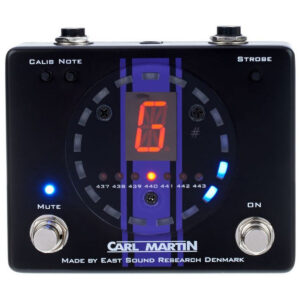
Pedal Tuner
Downloads (1)
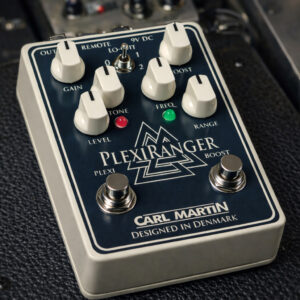
What is the PlexiRanger pedal?
The PlexiRanger is a two-in-one pedal: it combines a Marshall Plexi-style overdrive/distortion and a vintage treble booster (à la Dallas Rangemaster) in one box. Essentially, you get that classic British amp overdrive tone and a powerful boost that can focus on specific frequencies. It’s Carl Martin’s way of recreating the tones of players like Tony Iommi, Brian May, and Ritchie Blackmore – who often hit a cranked Marshall with a treble booster for sustain and cut
Can I use the drive and boost independently?
Yes – the PlexiRanger has separate footswitches for the Plexi drive channel and the Boost channel, and they can be engaged independently or together. This means you can use it as: just an overdrive pedal (Plexi side on, boost off), just a boost (boost on, Plexi off) for pushing your amp or another pedal, or both together for maximum rock fury (boost hitting the Plexi drive). The independent switching makes it very versatile; it’s like having an overdrive and a boost pedal in one housing.
What controls does the PlexiRanger have?
On the Plexi (drive) side, you have Gain, Tone, and Level knobs to dial in the distortion tone. On the Boost side, it’s a bit more involved: there’s a Boost Level knob (up to +15dB of clean boost), and a Frequency selector and Range knob which together control a frequency boost (this is the “treble booster” part). The Frequency knob chooses which frequency band to emphasize, and the Range knob sets how much boost at that frequency. Additionally, there’s a 3-position Low-Cut switch (actually a 4-way rotary with 3 active positions) that lets you apply no low-cut, a mild low-cut, or a strong low-cut to the boost side. That low-cut is basically simulating how classic treble boosters cut bass – useful to prevent flubby lows when boosting a high-gain amp or pedal.
How do the Frequency and Range knobs on the boost work?
Think of the PlexiRanger’s boost as an adjustable treble/mid boost. The Frequency knob selects the center frequency (which part of the spectrum to boost) – lower settings boost lower mids, higher settings boost upper mids/treble. The Range knob then determines how much of that selected frequency range gets boosted. At low Range, the boost is subtle and more full-range; at max Range, you get a pronounced peak at the chosen frequency (really great for, say, pushing the midrange for solos). In essence, you can tune the boost to be like a classic treble booster (set Frequency high and Range up) or a fatter full boost (Frequency lower, Range lower). This flexibility means you can tailor the boost to different guitars and amps – it’s not one fixed “treble boost” but many.
What does the Lo-Cut switch do exactly on the Boost?
The PlexiRanger’s boost has a 4-way selector for low-cut filtering, labeled 1, 2, 3 (and an off position) internally. Position 1 = slight low-cut, Position 2 = heavy low-cut, Position 3 = no low-cut (full range). This is to emulate how old school treble boosters would cut bass to prevent muddiness. If you find the boost makes your tone too bassy or flubby, use the low-cut (especially useful with neck pickups or already bass-heavy amps). If you want a fuller boost (like for fattening single-coils), you might leave it at no cut. It’s a great tweak to ensure the boost complements rather than muddies your tone.
Is the PlexiRanger true bypass?
Yes – the pedal uses gold relays for true-bypass switching on all loops of the signal. That means when both the drive and boost are off, your signal is not going through any circuitry (and even when on, those relays and buffers are high quality, impedance-friendly components). Carl Martin specifically notes the loops are “impedance free, gold relays” which is a fancy way of saying it preserves tone and is effectively true bypass when not engaged.
How does the PlexiRanger differ from the classic PlexiTone pedal?
The PlexiRanger’s Plexi side is akin to a PlexiTone (Marshall-in-a-box drive) but the PlexiRanger adds the rangemaster-style boost section. The original Carl Martin PlexiTone was just an overdrive/distortion. Here you get that plus the footswitchable boost that can hit the front end of the drive. Also, the PlexiRanger’s drive is a single channel (one flavor of gain adjustable by the Gain knob), whereas the big PlexiTone had multiple gain channels. So, PlexiRanger is perfect if you love classic Marshall tone but also want the option of a Brian May or Blackmore style treble boost to slam it. In short: PlexiRanger = PlexiTone-style drive + tunable boost in one. It’s more versatile in shaping overall tone due to the boost’s Frequency/Range controls.
Can I use the boost side in front of other pedals/amps?
Definitely. The boost output can be used independently, so you could run the boost into a different overdrive pedal or directly into your amp as a standalone boost. For example, if you have the PlexiRanger on your board, you might sometimes leave the Plexi drive off and just use the boost to push your real tube amp or another distortion pedal. It’s an excellent solo boost – and because you can tailor the frequencies, you can avoid boosting frequencies that would cause muddiness or feedback on your rig. Just remember that the boost is pre the Plexi drive when both are on (the boost will drive the Plexi harder). But if Plexi drive is off, the boost is simply a high-quality EQ/boost. Many bass players even like the boost side (in Low-Pass mode) to get a Rangemaster effect for bass – it’s that flexible.
What is the power requirement for the PlexiRanger?
The PlexiRanger runs on a standard 9V DC supply and draws about ~100 mA. It does not accept a 9V battery (most of Carl Martin’s newer pedals forego batteries due to current draw and internal dual-voltage design). Use a good isolated power source to avoid any ground loops, especially since this pedal will likely be first in chain (with the boost, you might have it early to shape your tone). But overall, it’s not a picky pedal power-wise – anything that can supply a stable 9V @ 100 mA or more will do.
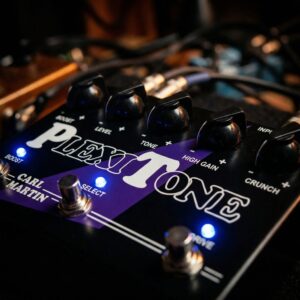
What is the Carl Martin PlexiTone pedal?
The PlexiTone is Carl Martin’s flagship distortion/overdrive designed to emulate a vintage Marshall Plexi amp tone. It’s a high-gain, three-channel overdrive: it has a Crunch channel (medium gain), a High-Gain channel (lead levels of gain), and a 20dB Clean Boost channel. Essentially, it’s like putting a classic Marshall amp’s two drive channels plus a boost into one pedal. It’s known for delivering authentic “Marshall stack” tone, from AC/DC-esque crunch to 80’s hero lead sounds.
How do the three “channels” or switches work on the big PlexiTone?
The PlexiTone (original version) has three footswitches: one engages/bypasses the pedal, one toggles between Crunch and High Gain modes, and one activates the Boost. In practice, you’d kick the rightmost footswitch to turn the pedal on (that gives you Crunch channel by default), then you can hit the middle footswitch to go into High Gain mode (only works if the pedal is on). The leftmost footswitch is the Clean Boost, which can function independently – you can use that boost whether the drive is on or off. One important detail: the High Gain switch doesn’t do anything unless the Crunch channel (pedal) is active – effectively, Crunch and High Gain share the same Tone and Level knobs, and you “step up” to High Gain by engaging that middle switch. The Boost is post-drive and can be used by itself to boost your clean tone or stacked to boost the Crunch/High channels for solos.
What tones can I get from the PlexiTone?
The PlexiTone covers a wide range of classic rock and hard rock territory. The Crunch channel goes from a light, edgy overdrive up to a raunchy hard rock rhythm crunch – very much like a cranked non-master-volume Marshall at lower gain settings. The High Gain channel adds even more saturation and low-end for singing leads and heavier riffs (think 80’s “Brown sound” levels of gain). Despite the high gain on tap, the tone remains focused and Marshall-like – it’s got that warm yet biting quality with plenty of low-end thump. Stacking the Clean Boost can push it into even more sustain or simply make your lead lines louder. Reviews (and even Greg Howe) have noted it can do everything from subtle boost to tight crunch to massive, saturated gain, all while retaining clarity. So if you’re chasing classic Plexi/JCM800 tones in a pedal, the PlexiTone delivers in spades.
Does the PlexiTone have an internal power supply? How do I power it?
The older large PlexiTone was unique – the first versions had an internal mains power transformer (you’d plug it directly into AC). However, the current PlexiTone Version 2 uses an external 9V DC supply and an internal DC-DC converter. In either case, you cannot use a battery with the PlexiTone. On the updated V2, you feed it 9V DC (regulated) at ~80 mA min, and it internally generates ±12V rails for extra headroom. Always double-check your unit: if it has an AC mains plug, use that; if it has a DC jack, use a proper 9V adapter. The manual explicitly says not to try to run it on battery and to use only DC power supply if it’s the newer version.
How loud is the Clean Boost on the PlexiTone and can I use it alone?
The Clean Boost channel on the PlexiTone offers up to +20 dB of boost. It’s fairly substantial – enough to slam the front of any tube amp into natural overdrive or to make your solos stand out in the mix. And yes, it can absolutely be used by itself. One nice thing is that the Boost switch is independent: if the pedal is bypassed but you hit the Boost footswitch, it will activate just the boost (so the pedal basically becomes a clean booster). This is great for those who want to leave the PlexiTone on their board as both their overdrive/distortion and also as an occasional boost for other uses. The boost is transparent (doesn’t add grit on its own, just volume and a bit of sparkle), and you can use it with or without the drive channels engaged.
The PlexiTone is pretty large – is there a smaller alternative?
Carl Martin recognized that the big PlexiTone is a pedalboard space hog (though a worthy one!). They released the PlexiTone Single Channel and a Lo-Gain PlexiTone, which are in smaller enclosures. The Single PlexiTone captures the High Gain channel of the big PlexiTone in a compact pedal, and the PlexiTone Lo-Gain is a version tuned for lower gain range. Neither of those have the built-in boost or dual channels – but they are great if you want that core PlexiTone sound in a smaller footprint. So if space is a concern, look at those. Otherwise, many still swear by the big PlexiTone for its all-in-one functionality and slightly different voicing due to the higher internal voltage and big circuitry.
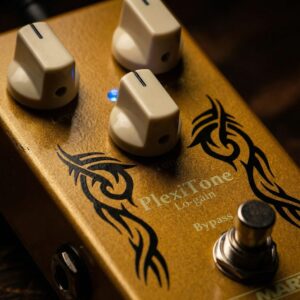
What is the PlexiTone Lo-Gain version?
The PlexiTone Lo-Gain is a single-channel overdrive pedal that’s based on the famous PlexiTone, but tuned for lower gain applications. It provides the classic British Plexi amp character, but with a reduced gain range so that you can get those edge-of-breakup and crunch tones more easily (whereas the standard PlexiTone is very high-gain). In short, the Lo-Gain PlexiTone is for those who say “less is more” – it delivers that Plexi flavor in a more restrained, vintage-voiced way.
How much gain does “Lo-Gain” mean – can it still rock?
Don’t be fooled by the name – the Lo-Gain PlexiTone can still rock, it’s just not as saturated as its high-gain siblings. It’s described as being in the “low to mid gain” overdrive realm. You can dial it down to almost clean boost with a touch of hair, or crank it for a thick classic-rock overdrive. It won’t go into modern metal distortion territory (that’s on purpose), but it covers blues, country, classic rock, and indie rock distortion levels beautifully. Think of it like this: where the regular PlexiTone picks up at AC/DC and goes to Van Halen, the Lo-Gain PlexiTone goes from Stones/Free and tops out around AC/DC. It’s very dynamic and responsive across that spectrum – rich harmonics and “plexi” grind without an overwhelming amount of compression or gain.
What are the advantages of the Lo-Gain PlexiTone versus the standard one?
The Lo-Gain model offers more control in the lower gain ranges. With the high-gain PlexiTone Single, it can be a bit touchy to dial in mild overdrive (since it wants to roar). The Lo-Gain is voiced so that its whole knob sweep is useful for subtler drive. It’s perfect if you mostly play on cleaner or crunch settings and don’t need searing lead distortion. Another advantage: it tends to preserve a bit more clarity and “open-ness” because it’s not as high gain – so chord work and complex voicings remain clear. Many players report it’s great as an always-on “amp enhancer” – you can leave it on to give your clean tone some grit and warmth, then push it for solos. In essence, it’s the PlexiTone for vintage tone fans: still definitely a Marshall vibe, but more “old-school” and touch-sensitive.
Does the Lo-Gain PlexiTone have the same internal voltage and headroom?
Yes, it also incorporates the Carl Martin DC-DC converter circuitry internally. That means you supply 9V DC, and it ramps it up inside to ±12V, giving it high headroom just like the other PlexiTone pedals. The result is a very amp-like response and no sagging on the low notes. It’s one reason the Lo-Gain can stay punchy even at subtle settings. The pedal can’t run on batteries (no 9V battery option, due to current draw and design), so you’ll use a standard 9V adapter. But thanks to the dual-voltage design, it maintains the same tone quality and feel as the Pro Series Plexi in a smaller box.
Can I use the Lo-Gain PlexiTone as a clean boost or is it always colored?
You can get very close to a clean boost with it. Set Gain fully counter-clockwise (minimal) and Level up a bit – you’ll get a mostly clean signal with just a slight “British” bite when you dig in. It’ll raise your volume and add a touch of warmth and compression, essentially like hitting your amp with a subtle plexi-flavored preamp. It does have a tone coloration (it is voiced like a Plexi amp’s preamp), so it’s not 100% transparent – but many find that coloration desirable even as a boost (it’s that elusive midrange warmth). If you truly need pure clean, a dedicated clean boost might be better. But the Lo-Gain PlexiTone can absolutely function as a low-gain boost/overdrive to “sweeten” your tone without overt distortion, then you can dial in more gain for songs that need it. It’s quite flexible in that regard.
Who would benefit most from the PlexiTone Lo-Gain?
Guitarists who primarily play with light breakup to classic rock crunch and value dynamics and clarity. If you’re in a blues, country, or classic-rock band and you live in that Hendrix/Free/ZZ Top zone of gain – this pedal was made for you. It gives you the essence of an overdriven Marshall at club-friendly gain levels and is extremely responsive to picking strength. Also, if you found the regular PlexiTone too over-the-top for your needs, the Lo-Gain will likely be “just right.” In practical terms, it’s also great for stacking – you can put a boost or another mild overdrive in front of it to get higher gain when occasionally needed, and because it’s Lo-Gain tuned, stacking won’t result in as much muddiness. It’s become a secret weapon for those who want a foundation overdrive that’s always on, providing body and grit that they can then kick up with other pedals. As one review put it, the Lo-Gain “gives your sound that Plexi character” without overwhelming it.
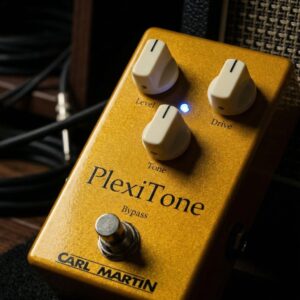
What is the PlexiTone Single?
The PlexiTone Single (sometimes dubbed the Pete Thorn edition) is a compact, single-channel overdrive/distortion pedal derived from the classic Carl Martin PlexiTone. It was designed in collaboration with guitarist Pete Thorn. Essentially, it captures the high-gain channel of the original dual-channel PlexiTone, but in a smaller pedal with just one footswitch and three knobs (Gain, Tone, Level). Pete had Carl Martin tweak it for a tighter low end and slightly smoother highs to work well with a variety of amps.
How does it sound compared to the big PlexiTone?
The Single PlexiTone has the same gain structure as the High Gain mode of the original, so it’s still that roaring British stack sound. However, Pete Thorn’s input led to a “tighter bottom-end and slightly softer high frequencies” than the original, meaning it’s a bit more refined out of the box. Users often describe it as very amp-like, with dynamic response – if you roll back your guitar volume, it cleans up nicely like a Plexi would. It’s capable of everything from mid-gain crunch to full, singing lead distortion (the Gain knob range is very wide). Overall, if you love the PlexiTone’s tone but only need that one high-gain voice, the Single delivers it with perhaps even more compatibility across different amps thanks to those subtle EQ tweaks.
Can the PlexiTone Single do lower-gain classic rock tones or is it only high-gain?
It’s surprisingly versatile. While voiced for high gain, if you keep the Gain knob down, it absolutely can do classic rock crunch. Pete Thorn himself has demonstrated getting “barely breaking up” bluesy tones with it. The pedal’s Gain goes from a light overdrive (around 9 o’clock) to a saturated distortion (past 3 o’clock). So you can cover AC/DC-ish rhythm grind at lower gain settings and then dime it for ’80s hair metal sustain. One review noted you can go from “low gain overdrive to insane Plexi on 11” – which sums it up. The Tone knob has a broad sweep, allowing you to soften the brightness for lower gain settings or let the treble through for cut at higher gain.
Is it true bypass and how do I power it?
Yes, the PlexiTone Single features true bypass switching (no tone coloration when off). It runs on a standard 9V DC power supply. Like most Carl Martin pedals with internal charge pumps, it does not take a battery. Power draw is about 60 mA. It actually has an internal DC-DC converter to run at ±12V internally (just like its big sister) for better headroom, but you only need to supply it with a normal 9V external source. Use a regulated supply – minimum 100 mA available is more than enough.
Does the PlexiTone Single stack well with other pedals?
ery well, indeed. Because it’s designed to behave like an amp channel, you can boost it or drive it further with another pedal. Hitting it with an overdrive or a clean boost in front can yield even more sustain (just like boosting a Marshall amp). Likewise, since it’s true bypass, you can place time-based pedals after it easily. Pete Thorn often demonstrates running delay and reverb after the Single PlexiTone for huge lead sounds – it takes those effects as an amp would. Just remember the pedal has a lot of output on tap; unity volume is around noon on the Level knob or below, so there’s headroom to use it as a boost itself if needed. But yes, you can absolutely stack something like a Tube Screamer into the PlexiTone Single for a mid-humped higher gain lead, or run the PlexiTone into an amp’s already gritty channel for layers of drive (just watch overall noise when stacking multiple gains).
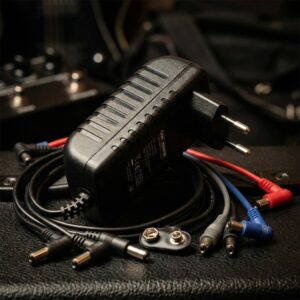
Power Jack EU
Downloads (1)
What is the Powerjack?
Powerjack is a universal 9V DC stabilized power supply using switch-mode technology. It operates from 100V–240V input, making it suitable for international use.
How much current does it provide?
It delivers 1670mA of stabilized 9V DC output, sufficient for powering multiple pedals simultaneously.
Is it isolated?
It is a high-current stabilized supply with daisy-chain capability. It does not provide individual isolated outputs like a multi-isolated power brick.
Is it safe for digital pedals?
Yes, provided total current draw does not exceed 1670mA and polarity matches the pedal’s requirements. Always verify pedal specifications before connection.
Power Jack UK
Downloads (1)
What is the Powerjack?
Powerjack is a universal 9V DC stabilized power supply using switch-mode technology. It operates from 100V–240V input, making it suitable for international use.
How much current does it provide?
It delivers 1670mA of stabilized 9V DC output, sufficient for powering multiple pedals simultaneously.
Is it isolated?
It is a high-current stabilized supply with daisy-chain capability. It does not provide individual isolated outputs like a multi-isolated power brick.
Is it safe for digital pedals?
Yes, provided total current draw does not exceed 1670mA and polarity matches the pedal’s requirements. Always verify pedal specifications before connection.
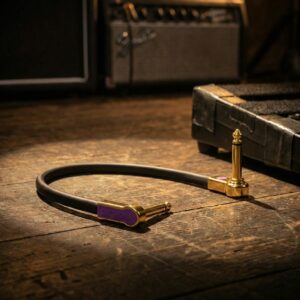
Why do patch cables matter on a pedalboard?
Patch cables influence signal clarity, noise rejection, and physical reliability. Poor cables can introduce resistance, hum, and mechanical stress on jacks.
Why use flat cables instead of round?
Flat cables reduce vertical height and allow tighter routing between pedals, making boards cleaner and reducing mechanical stress on connectors.
Are they suitable for professional touring use?
Yes. The combination of shielding density and conductor robustness makes them reliable in high-noise stage environments.
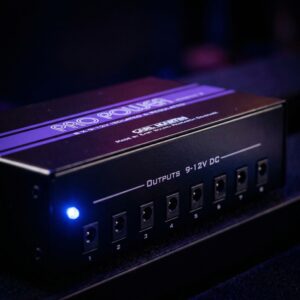
What is Pro Power V2?
Pro Power V2 is Carl Martin’s flagship pedalboard power supply, designed to handle modern, power-hungry pedal setups. It offers multiple isolated outputs with high current capacity, making it ideal for boards loaded with digital effects.
How is Pro Power V2 different from basic power supplies?
Pro Power V2 delivers significantly more current per output, which is essential for modern DSP-based pedals (delays, reverbs, multi-effects). It maintains stable voltage even under heavy load, ensuring pedals perform consistently.
Will it reduce noise on my pedalboard?
Yes. The combination of isolation, filtering, and regulated outputs dramatically reduces hum and digital noise. Many users find it solves issues that cheaper supplies cannot.
Who should choose Pro Power V2?
Players with advanced boards using multiple digital pedals, stereo rigs, or complex signal chains. If you’ve ever had a pedal misbehave due to insufficient power, Pro Power V2 is built to prevent that.
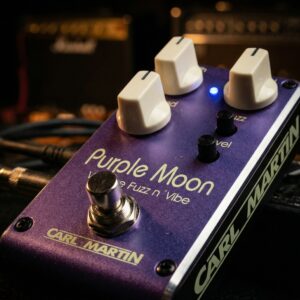
What is the Purple Moon pedal?
The Purple Moon is a vintage-style “fuzz ‘n’ vibe” pedal – it combines a chewy Uni-Vibe style analog vibrato effect with a built-in fuzz circuit. It’s Carl Martin’s take on capturing the psychedelic late-60s guitar sounds (think Jimi Hendrix “Band of Gypsys” or Robin Trower tones) in one box. Notably, it’s a dual-speed vibe (you can toggle between two preset speed settings) and the fuzz can blend with the vibe to various degrees. So, Purple Moon = analog Uni-Vibe (vibrato/chorus) + vintage silicon fuzz, all true bypass and analog.
Can I use the vibe and fuzz separately?
The Purple Moon is designed to have both effects active together – there isn’t a separate footswitch to independently turn off the fuzz or vibe. There’s one footswitch to bypass/engage the pedal (when on, vibe is active), and a small toggle to select between two vibe speeds. The fuzz is built into the circuit and controlled by the Fuzz knob. However, you can dial the Fuzz knob to zero for essentially no fuzz (just vibe effect), or crank it for thick fuzz combined with the vibe. So while not independently switchable, you can get just vibe (fuzz down) or vibe+fuzz (fuzz up). It’s really meant to emulate the combination of fuzz and vibe used simultaneously in those classic recordings, but it’s flexible in that you can minimize the fuzz if you want a cleaner warble.
Is the Purple Moon true bypass?
Yes – the Purple Moon is true bypass (which is somewhat unique given it has an analog modulation; many vibe pedals are buffered but Carl Martin managed true bypass here). So when it’s off, it’s completely out of your signal chain. No tone loss or change when bypassed. And since it’s analog, there’s no latency or conversion. One thing to note: because it’s true bypass, if you switch it off, any ongoing vibe modulation (and fuzz) cuts out immediately (there’s no effect “trail,” which is expected for modulation pedals).
Does the Purple Moon emulate a specific vintage pedal?
It’s inspired by the classic Uni-Vibe (Shin-ei Univibe) unit that Hendrix, Trower, Gilmour used, and also incorporates a Fuzz Face flavored fuzz. In a sense, it packages the combination of a Fuzz Face into a Uni-Vibe. The vibe portion gives that “liquidy” rotating speaker-esque modulation (the pedal can do both chorus and vibrato sounds – internally it’s a vibe circuit). The fuzz portion is a vintage-style silicon fuzz; it’s described as thick and saturated, very period-correct to late ’60s sound. When combined, the interaction is magical: the fuzz into the vibe creates those swirling, harmonically rich lead tones (think the Woodstock “Star-Spangled Banner” or Trower’s “Bridge of Sighs” vibe). So while not a clone of any one pedal, Purple Moon is definitely built to nail a specific era of tone by marrying two legendary effects in one.
Can I get just a straight fuzz sound out of Purple Moon (with no modulation)?
Not exactly – the vibe circuit is always on when the pedal is engaged. Even if Depth is at minimum, there may still be a slight tonal coloration from the vibe circuit (though practically at zero depth it’s very subtle). The design intention is that you’ll always use some vibe with the fuzz. If you wanted strictly fuzz, you might need a separate fuzz pedal. That said, you could set Depth to zero and Speed anywhere (the modulation becomes nearly imperceptible) and use it as a fuzz box in a pinch. But truly, Purple Moon shines when you let the two effects interact – if you want a standalone fuzz, Carl Martin has other pedals or you could simply dial your fuzz pedal into Purple Moon’s vibe input (some users run an external fuzz into Purple Moon with its fuzz turned down, for different flavors).
What is the power requirement for Purple Moon?
It uses standard 9V DC (center-negative) at about 50–60 mA. Like other Vintage Series Carl Martin pedals, it does not have a battery compartment (no battery use) – the expectation is you’ll run it off a pedalboard power supply. Being analog and having a small incandescent lamp or LED circuit for the vibe (Uni-Vibes traditionally used a light cell), keeping it at a steady 9V is recommended. If you feed it an isolated, filtered 9V, you’ll get the lowest noise performance. And do note, because it’s analog and true bypass, you won’t get any weird digital noises or anything – it’s just power it and go.
If you cannot find the information you need here, or if your issue requires hands-on service, please contact the dealer or distributor where the product was purchased.