Ottawa
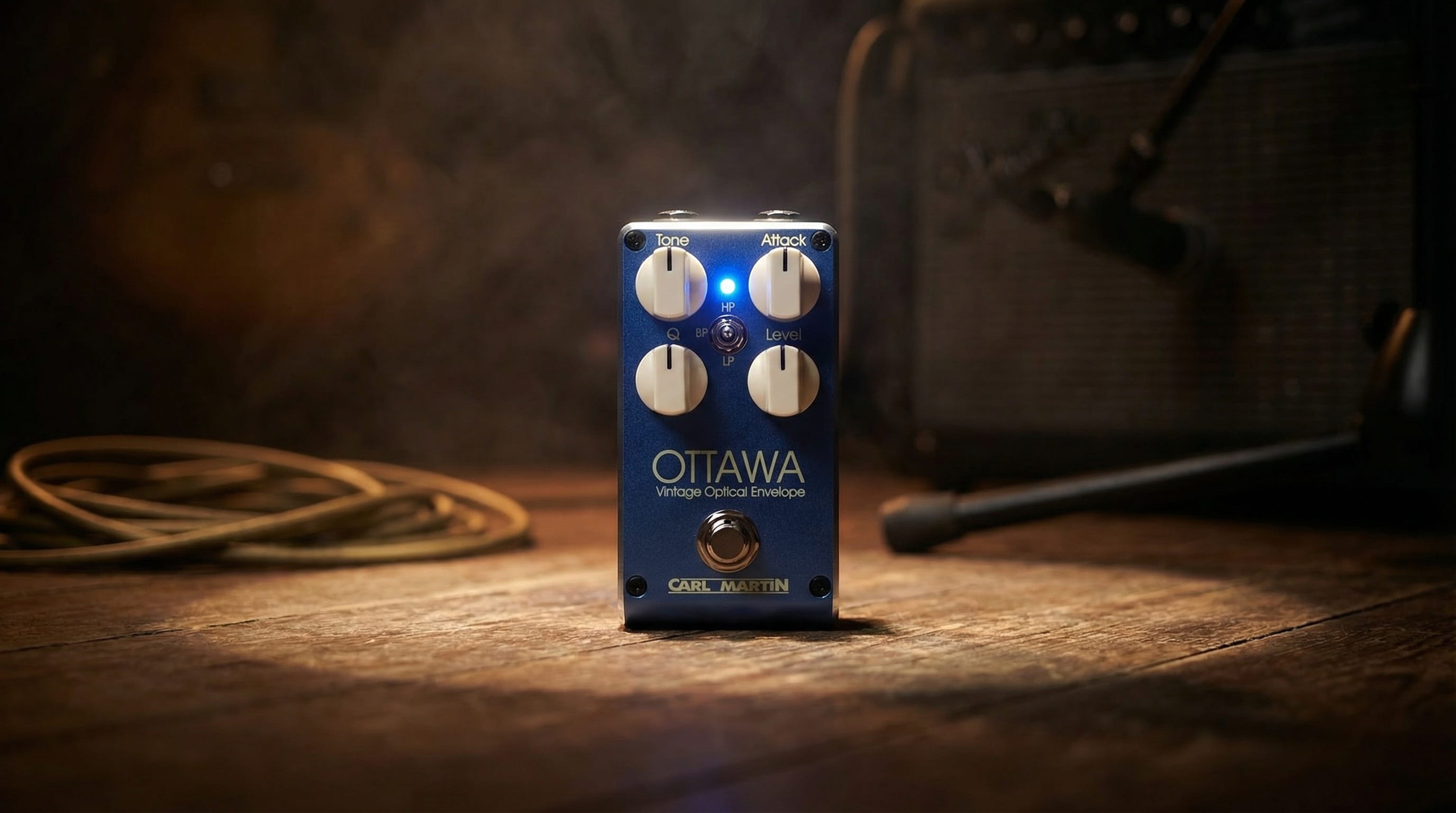
- Optical envelope filter delivers classic wah-like movement without a treadle.
- Three selectable filter modes: High Pass, Band Pass, and Low Pass for versatile tonal options.
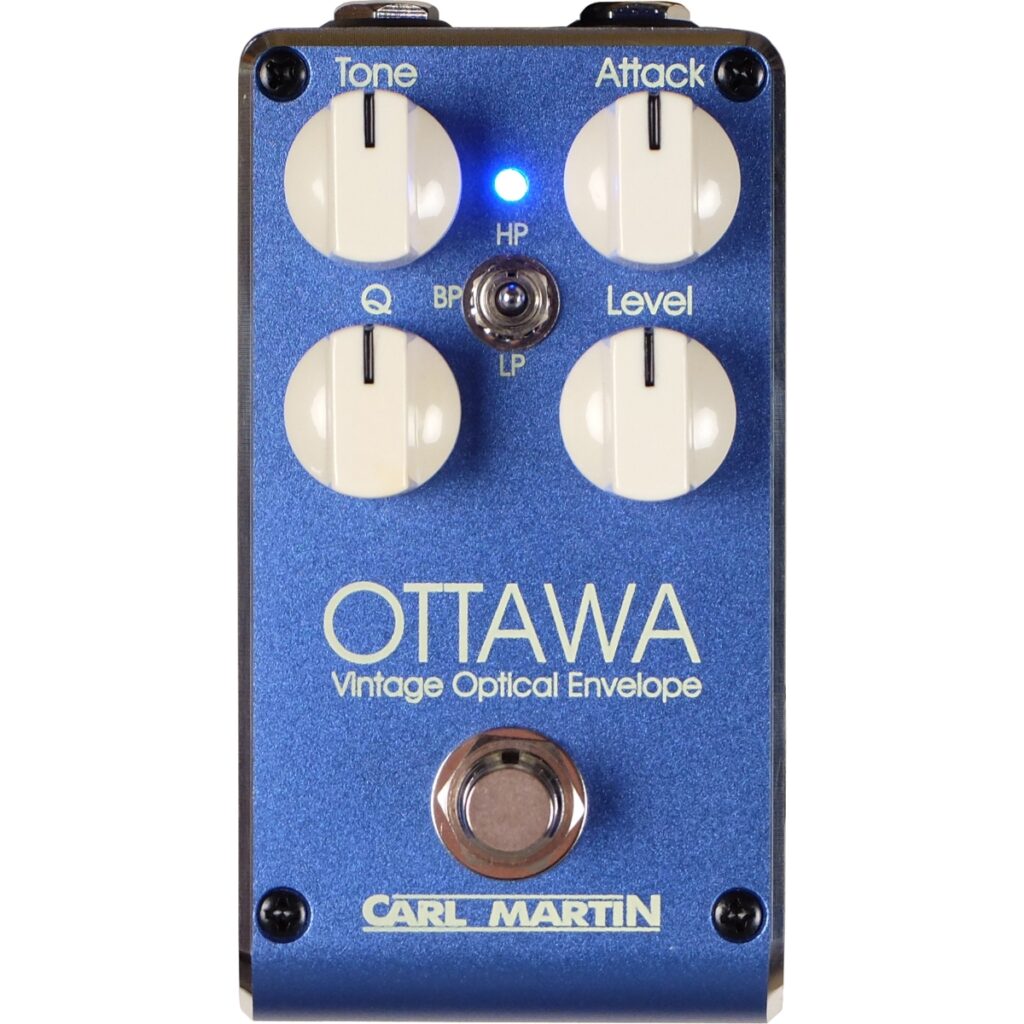
- Q control shapes the resonance and width of the filter sweep for expressive sound sculpting.
- Attack and Tone controls allow precise adjustment of filter response and high-frequency content.
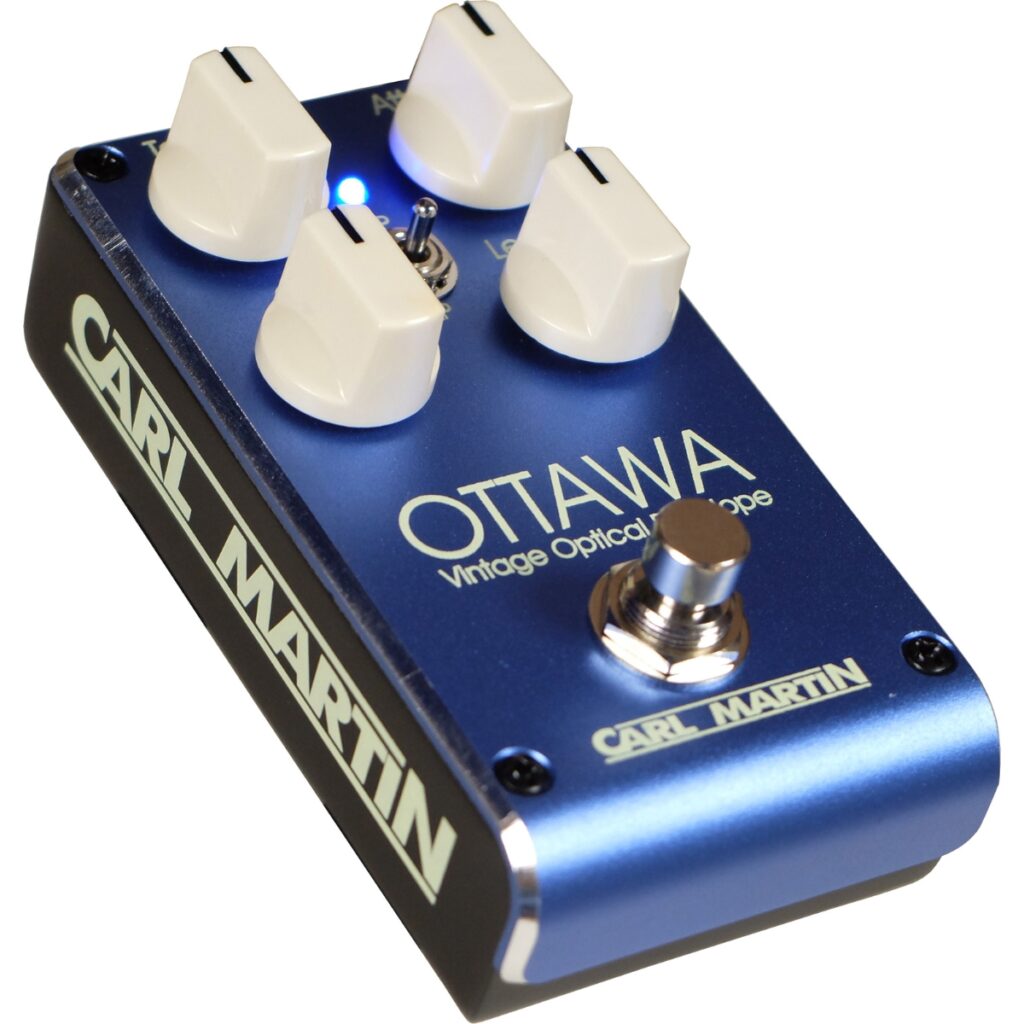
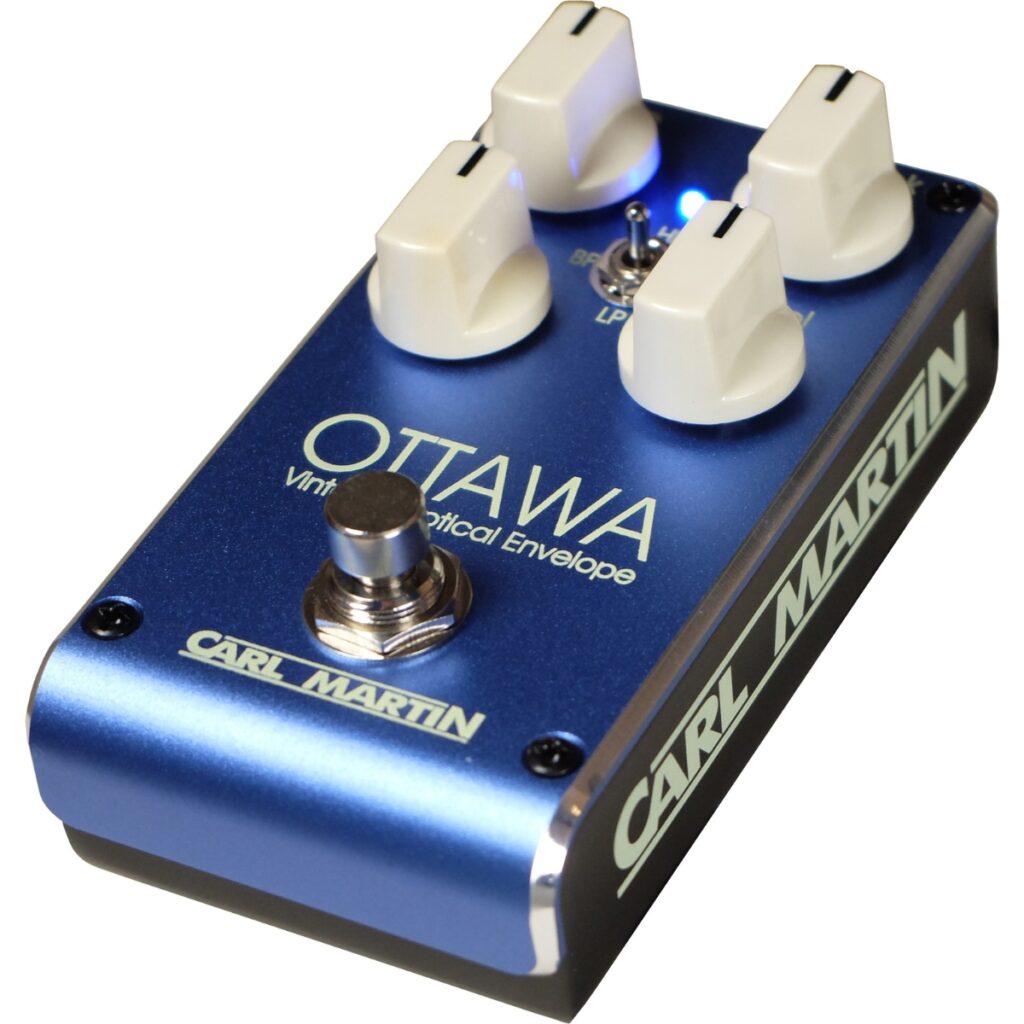
- Fully analog, compact, and rugged design that responds dynamically to your playing style.
All about Carl Martin Ottawa
When we redesigned our optical envelope filter, we wanted to keep the expressive character that makes this type of effect so musical — while making it easier to control and more consistent across different guitars and playing styles. The result is Ottawa: an envelope filter that delivers classic wah-like movement without the need for a treadle.
Ottawa reacts directly to how you play. Pick harder, and the filter opens up. Play lighter, and it stays subtle and controlled. That makes it equally effective for rhythmic parts and expressive lead lines, whether you’re after psychedelic textures, funky rhythm work, or more modern envelope-driven tones.
At the center of the circuit is an optical envelope filter with three selectable filter modes: High Pass, Band Pass, and Low Pass. Each mode changes how the filter responds and where it focuses the frequency sweep, giving us very different tonal characters from the same pedal.
The Q control adjusts the bandwidth and resonance of the filter, shaping how narrow or wide the sweep feels. Attack controls how quickly the filter responds to your picking, allowing anything from fast, percussive movement to slower, more vocal-like sweeps. A dedicated Tone control works as a high-cut filter, while Level lets us match or boost the output to suit the rest of the rig.
Ottawa is built as a fully analog design, housed in a compact and rugged enclosure. Simple to dial in, highly responsive, and designed to feel like an extension of your playing rather than a preset effect.
Hear it in action
Watch and hear this product in use. Select more videos below.
More videos
FAQ
Quick answers about this pedal — shipping, power, use-cases and more.
What type of effect is the Carl Martin Ottawa?
The Ottawa is an auto-wah / envelope filter pedal – essentially it gives you that funky wah-wah sound that follows your playing dynamics, without you rocking a pedal. It’s an optical envelope filter, meaning it uses an optical circuit to sweep a wah-like filter based on your pick attack. The name “Ottawa” is a cheeky pun (“auto-wah” sounding like Ottawa). So if you want those classic 70’s funk “waka-waka” tones or Jerry Garcia-style auto-wah or even synth-like filter sweeps on bass or guitar, the Ottawa does the job.
What are the controls on the Ottawa and how do I use them?
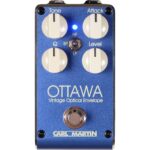
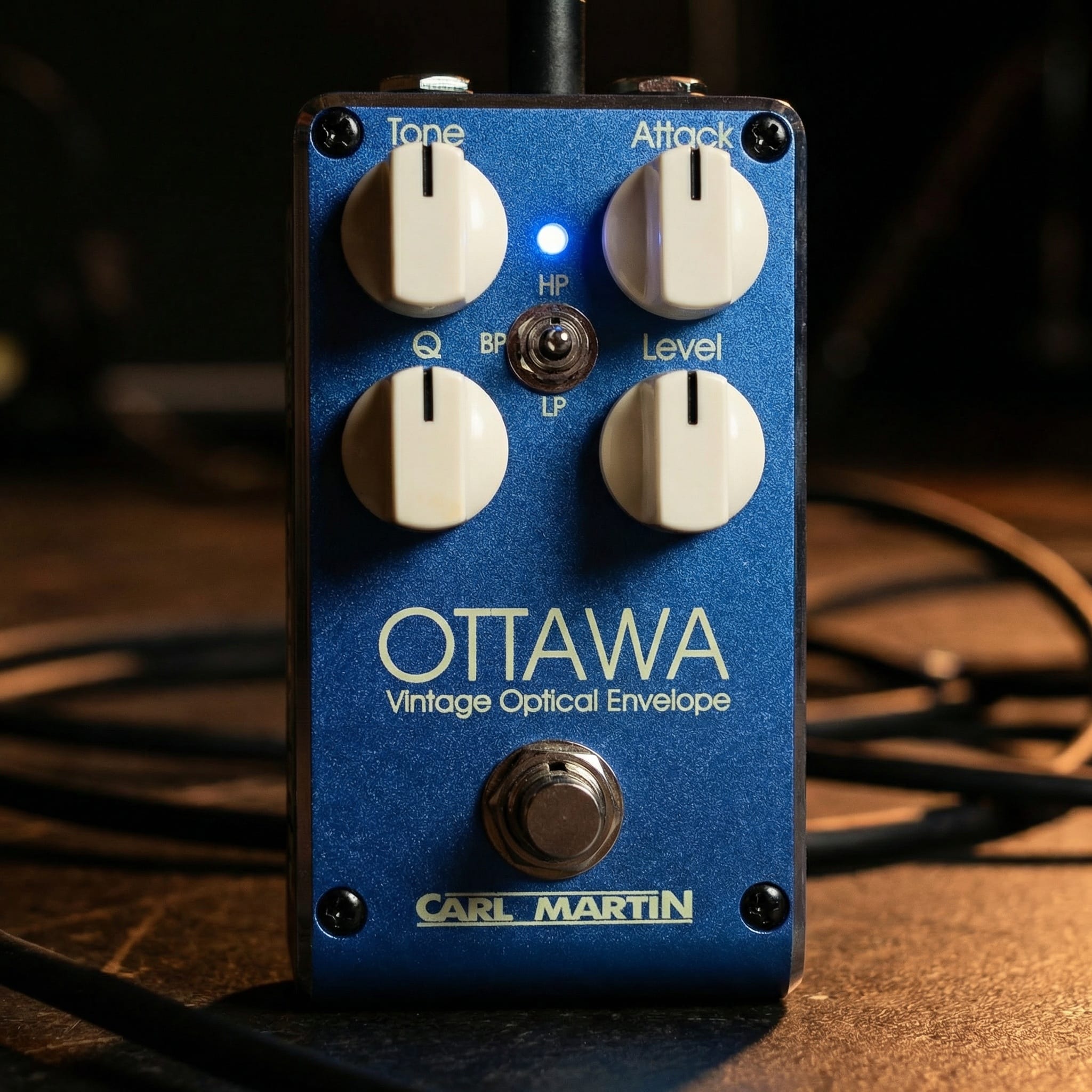
The Ottawa has five main controls: Attack (sensitivity), Tone (overall tone brightness of the effect), Level (output volume), Q (filter bandwidth), and a 3-way Range (Select) switch for High-pass, Band-pass, Low-pass filter modes.
Attack: This adjusts how sensitive the filter is to your playing dynamics. If Attack is set high, even softer playing will trigger the wah sweep (good for low-output pickups or if you want it always quacking). If Attack is lower, you need to hit strings harder to engage the wah effect (good for controlling it with picking intensity). Essentially, Attack tunes it to your guitar and style – set it so that normal playing opens the wah as desired.
Q (Bandwidth): This sets how sharp or broad the wah filter is. A high Q (knob clockwise) makes a narrow, sharp, very pronounced wah (ear-piercing if extreme – “quacky” and focused). A low Q (counter-clockwise) yields a wider, rounder sweep that’s more subtle and warm. Interactive with Attack & Tone, you’ll tweak Q to get either a soft vowel-like wah or a ripping funky quack.
Tone: It’s essentially a high-cut on the output. Full up = full frequency passes (bright), roll it back to cut highs (darker outpu
Is the Ottawa suited for bass guitar too?
Yes! The Ottawa was designed to be usable with both guitar and bass. The inclusion of the Low-Pass (LP) filter mode specifically allows it to function great as a bass envelope filter (LP mode retains the low frequencies, giving that deep Bootsy Collins style sweep). Also, the Attack (sensitivity) range is wide enough to accommodate bass output levels – so you can adjust it to trigger properly from bass notes. Many envelope filters can suck low-end out of a bass signal – but Ottawa’s Low-Pass setting ensures the deep end stays intact and quacks in a bass-friendly way. Whether you slap, pop, or play fingerstyle, you can find a setting that works (Attack higher for soft playing, lower if you really dig in). So yes, bassists will find it funky and very usable.
Does the Ottawa need to go first in chain, and does it handle high-gain signals?
Envelope filters like Ottawa are generally best placed early in the signal chain, before any distortion or compression. That’s because they rely on your playing dynamics to trigger the filter. If you put it after a heavy distortion, the signal is so compressed that the envelope might not track well (everything becomes the same volume). So typically, run Guitar → Ottawa → then overdrives/distortions. That said, you can experiment: putting Ottawa after fuzz can create synth-like tones (the fuzz gives a harmonics-rich input for the filter to sweep – very cool, but the response will be less dynamic). The Ottawa does have a Level control, so you can make sure if it’s after a pedal that the level isn’t too hot. But best practice: first in chain or right after wah (if you had both – though you likely wouldn’t use wah and autowah simultaneously). As for high gain, Ottawa can sound great in front of a distortion – you get that classic “filter then fuzz” vowel synth sound. It won’t harm the pedal; just mind your Attack setting. If your distortion compresses things a lot, you may need to raise Attack so the filter still opens. The Ottawa’s internal design (optical) is pretty forgiving – it is
Is the Ottawa true bypass?
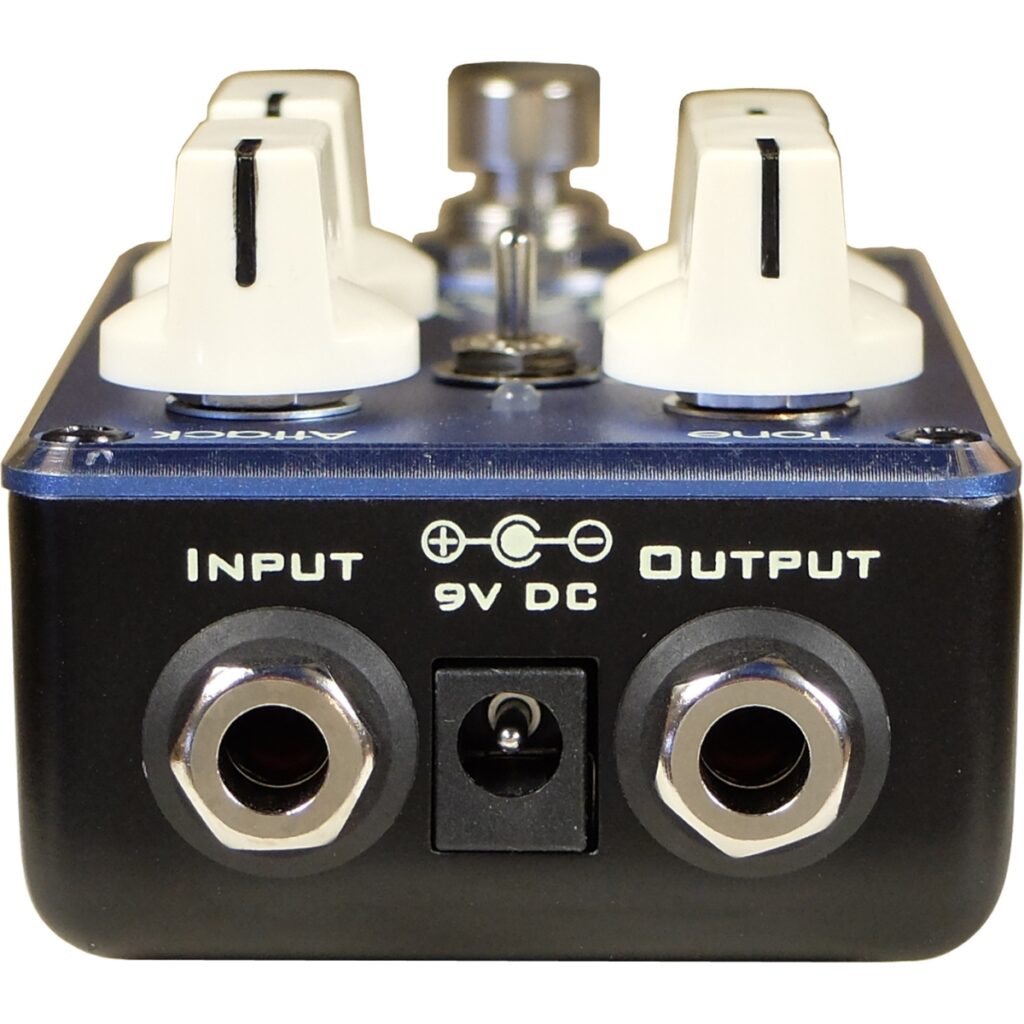
Yes, the Ottawa is true bypass when off. Carl Martin put a high-quality relay or bypass switch in it to ensure when disengaged, it doesn’t affect your base tone. The envelope circuit is only active when on. One thing to note: because it’s true bypass, you’ll want it early in chain (which we already said) with maybe a buffer later down the line for long cables, etc. But the Ottawa itself won’t buffer your signal when off. That’s fine – envelope filters usually go first anyway. And since it’s optical and analog, switching is quiet and smooth (no popping has been reported typically). Being true bypass also means the pedal’s LED or circuit draws minimal current, which is why it’s around 14 mA draw – super low. That also means battery operation is possible (though it explicitly says it does not run on battery, only external supply – indeed Carl Martin omitted battery clip likely due to space and consistency reasons). So stick to a good 9V supply.
What kind of sounds can I get with the Ottawa?
The Ottawa covers a wide range of auto-wah sounds:
In High-Pass mode with high Q, you get that thin, sharp “chirp” – great for funky rhythm chords that need to cut, or for lead lines that almost mimic a cocked wah (very trebly filter).
In Band-Pass mode (the standard) with moderate Q, it gives the classic auto-wah guitar sound heard in 70’s funk (think Shaft theme style or Stevie Wonder’s “Higher Ground” clavinet effect on guitar). It’s quacky and vocal, without being piercing.
Low-Pass mode yields a “bowww” sound – almost like a muted trumpet or a synth filter opening. On guitar, it can sound like a subtler auto-wah (less quack, more oomph). On bass, it’s the key to a usable funk sound as mentioned.
Combine that with adjusting Attack: a high Attack and you get a quick wah that opens even on soft notes – continuous quacking on everything (makes it sound almost like an automatic wah pedal moving constantly). Lower Attack and you can control it more by playing dynamics (hit harder for wah effect, play softly and it stays more closed – great for expressive playing).
With Drive pedals: before drive, it can create those Jerry Garcia Mu-Tron-esque lead tones (Garcia often