Surf Trem
- Classic tremolo sound inspired by vintage tube amps from the 50s and 60s.
- Smooth, musical modulation ranging from subtle movement to deep, pulsing tremolo.
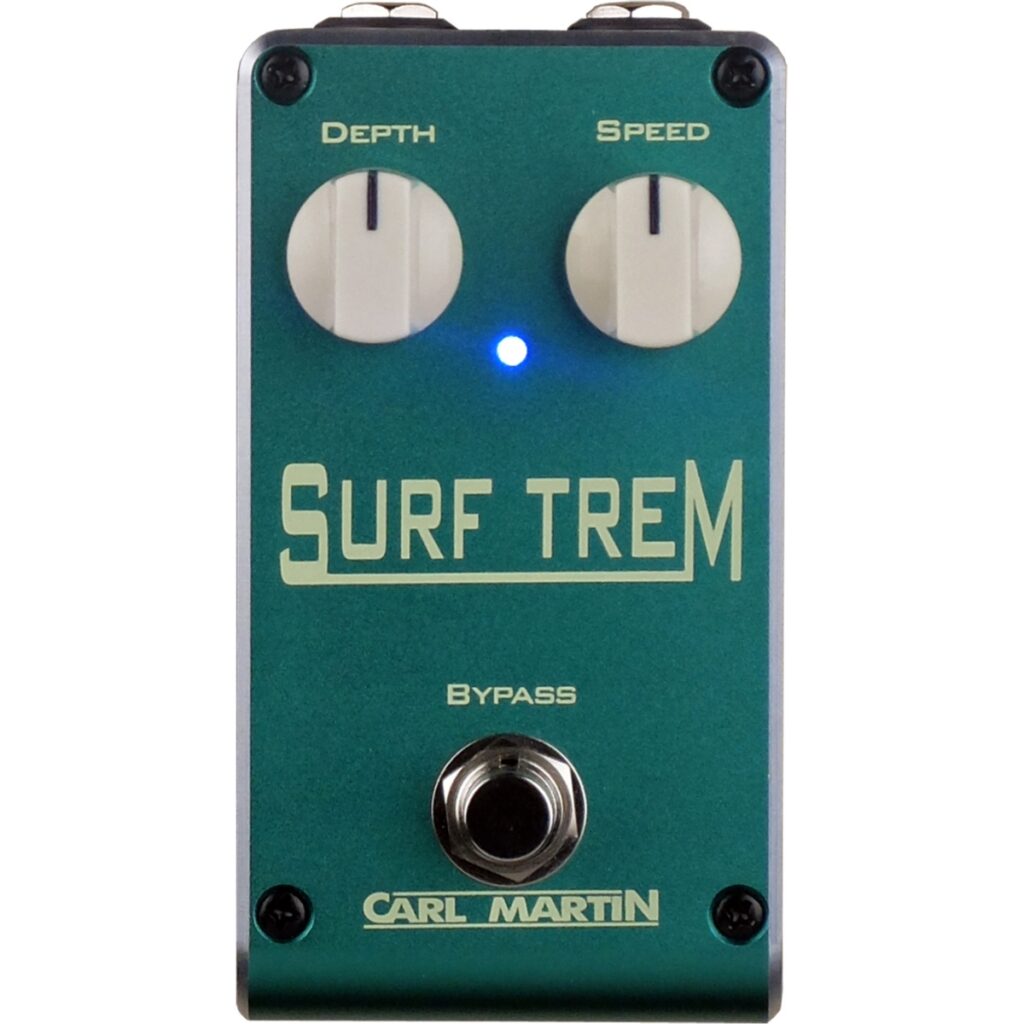
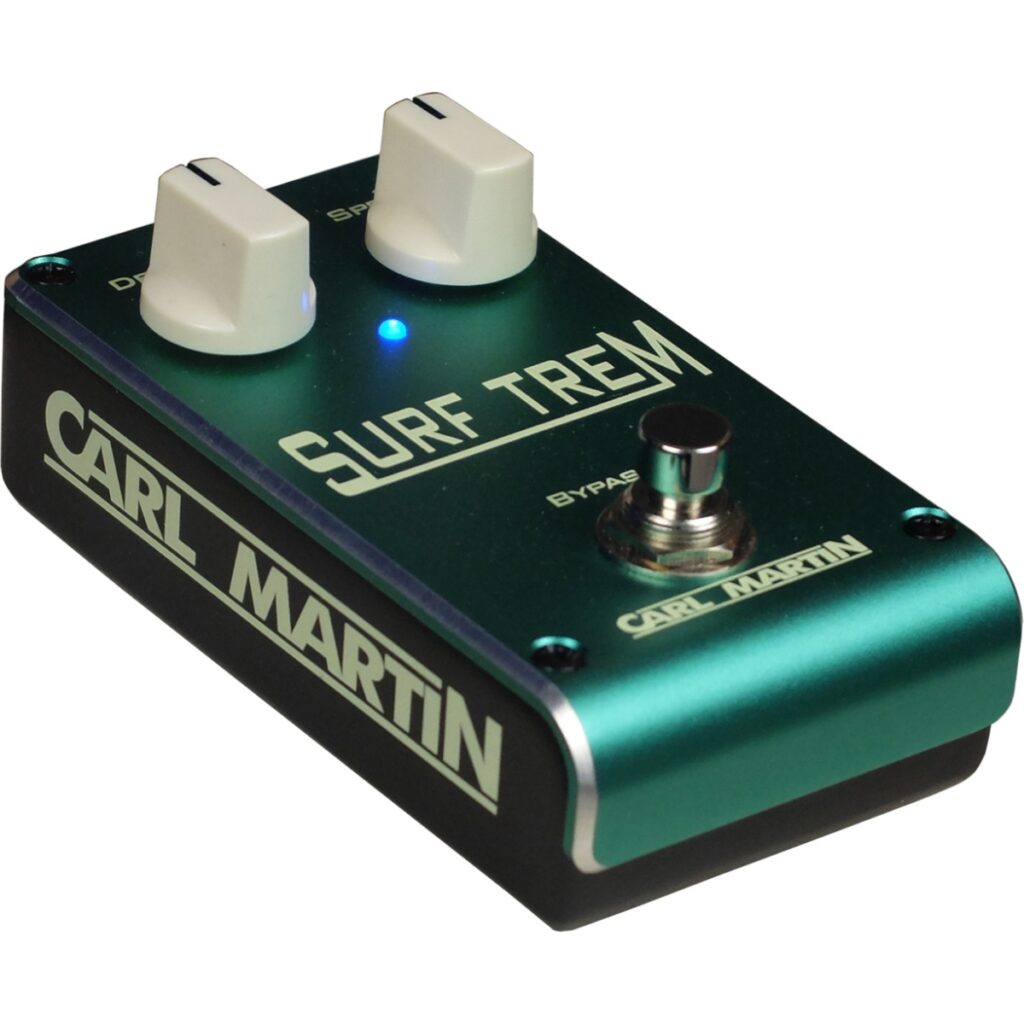
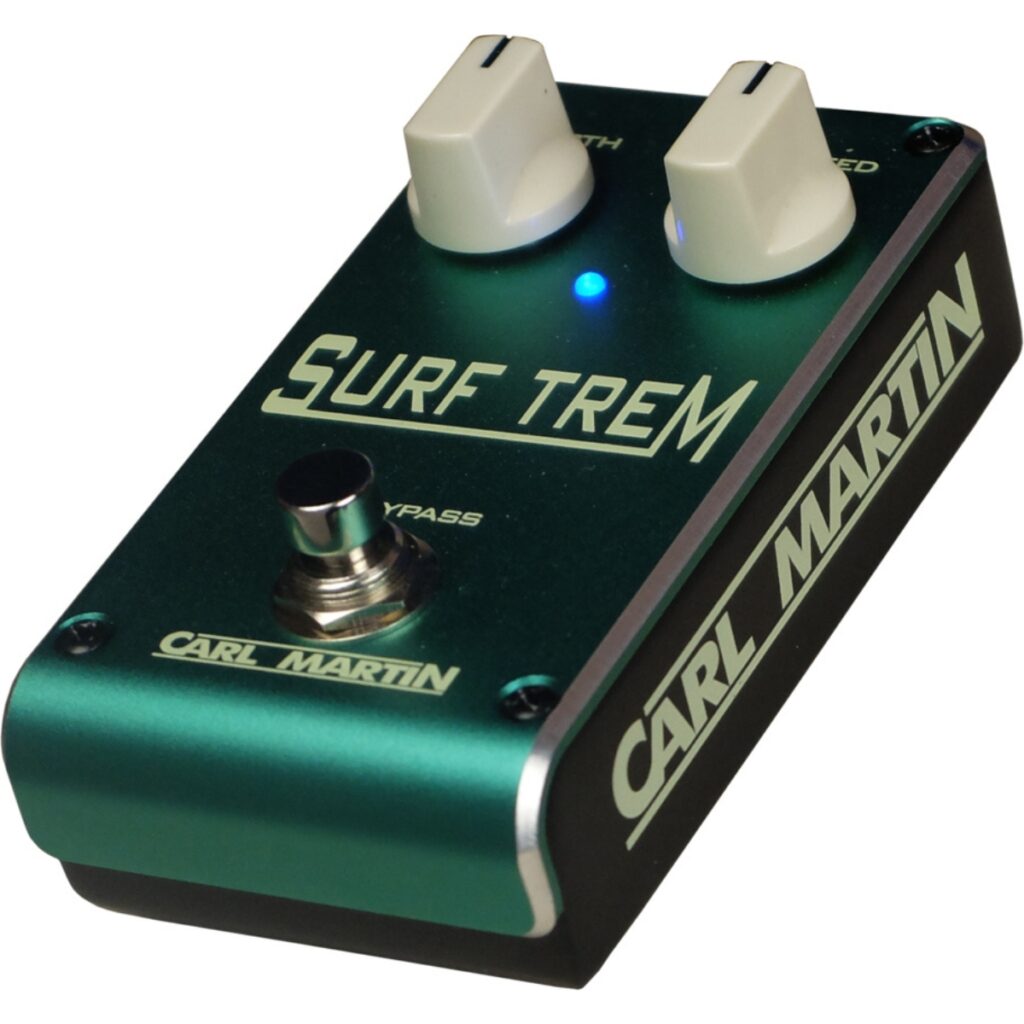
- Simple control layout: Speed for modulation rate and Depth for effect intensity.
- Stripped-down, pedalboard-friendly design with no extra modes or complexity.
- Rugged die-cast enclosure built for reliable use on stage and in the studio.
All about Carl Martin Surf Trem
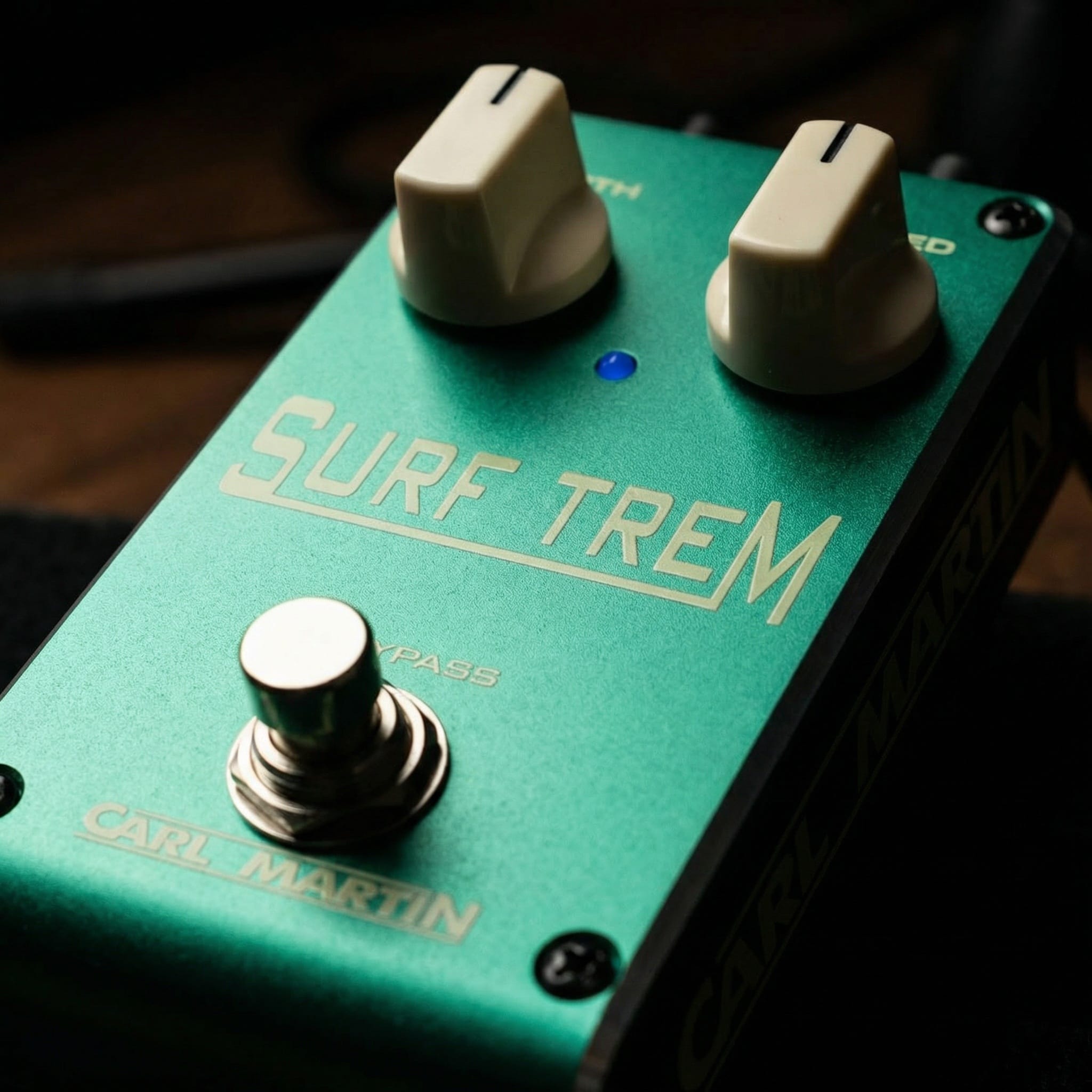
When we refreshed our Vintage Series, the goal was to make the pedals more pedalboard-friendly without changing what made them sound right in the first place. Surf Trem is our take on classic tremolo, built around the same core trem circuit we developed for the CM Tremovibe — but stripped down to the essentials.
We voiced Surf Trem to capture the unmistakable tremolo character of classic tube amps from the 50s and 60s. The modulation is smooth, musical, and immediately familiar, whether you’re after subtle movement or deep, pulsing tremolo that defines the rhythm.
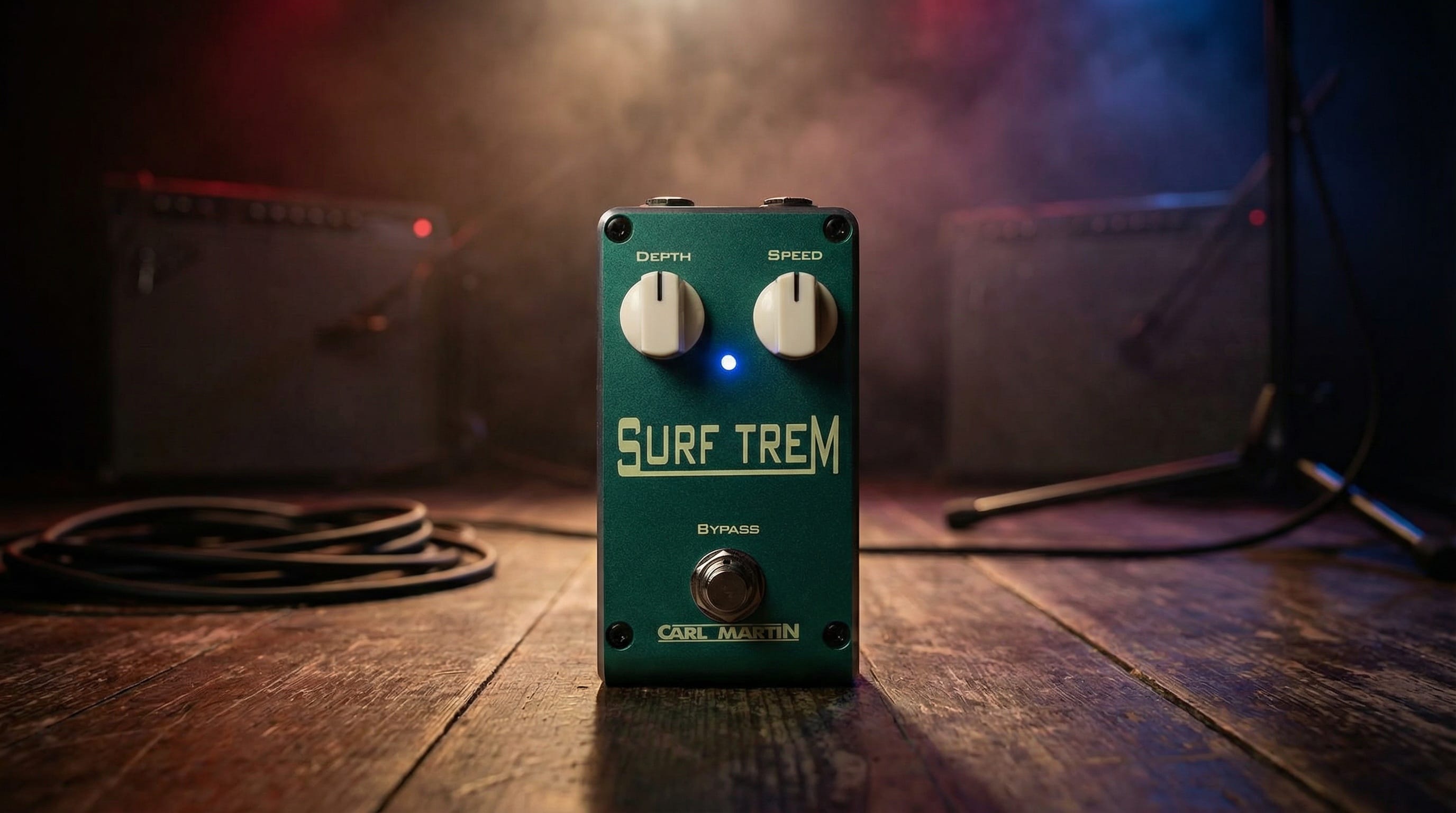
The control layout reflects that simplicity. Speed sets the rate of the modulation, while Depth controls how pronounced the effect becomes. Just like on a vintage amp, everything happens right under your fingers — no extra modes, no secondary layers.
Surf Trem is built in a rugged die-cast enclosure with a compact footprint, designed to handle real-world use on stage and in the studio. It’s a straightforward tremolo pedal that focuses on feel, timing, and musical response rather than complexity.
Hear it in action
Watch and hear this product in use. Select more videos below.
More videos
FAQ
Quick answers about this pedal — shipping, power, use-cases and more.
What is the Carl Martin Surf Trem?
The Surf Trem is a straightforward, vintage-style tremolo pedal. It’s designed to recreate the smooth, swaying tremolo sound of 1950’s and 60’s American tube amps (hence “Surf” Trem – think Fender amp tremolo tones used in surf music and early rock). It has just two knobs: Speed and Depth, exactly like old amp trems, making it super easy to dial in. If you want that classic throbbing trem (from subtle shimmer to deep “stuttery” chop), the Surf Trem delivers it in a simple format.
How do I control the tremolo on the Surf Trem?
Use the Speed knob to set how fast the volume oscillates (from slow, swampy pulses at low settings to rapid flutter at high settings). Use the Depth knob to set how intense the volume modulation is. At minimum Depth, the effect is very shallow (almost imperceptible wobble); at max Depth, it’s very deep (full on/off chop between loud and soft – but note, the Surf Trem doesn’t get too choppy; even max remains somewhat smooth, which is ideal for musicality). These two controls emulate the trem circuit of old tube amps (which often labeled them “Speed” and “Intensity”). No waveform knob – it’s a fixed waveform (a smooth sine/triangle blend) that’s voiced like vintage amp trems. So really, just set the speed you like for the song’s tempo and depth for how noticeable you want it, and you’re set.
Is the Surf Trem a true bypass pedal, and will it color my tone when off?
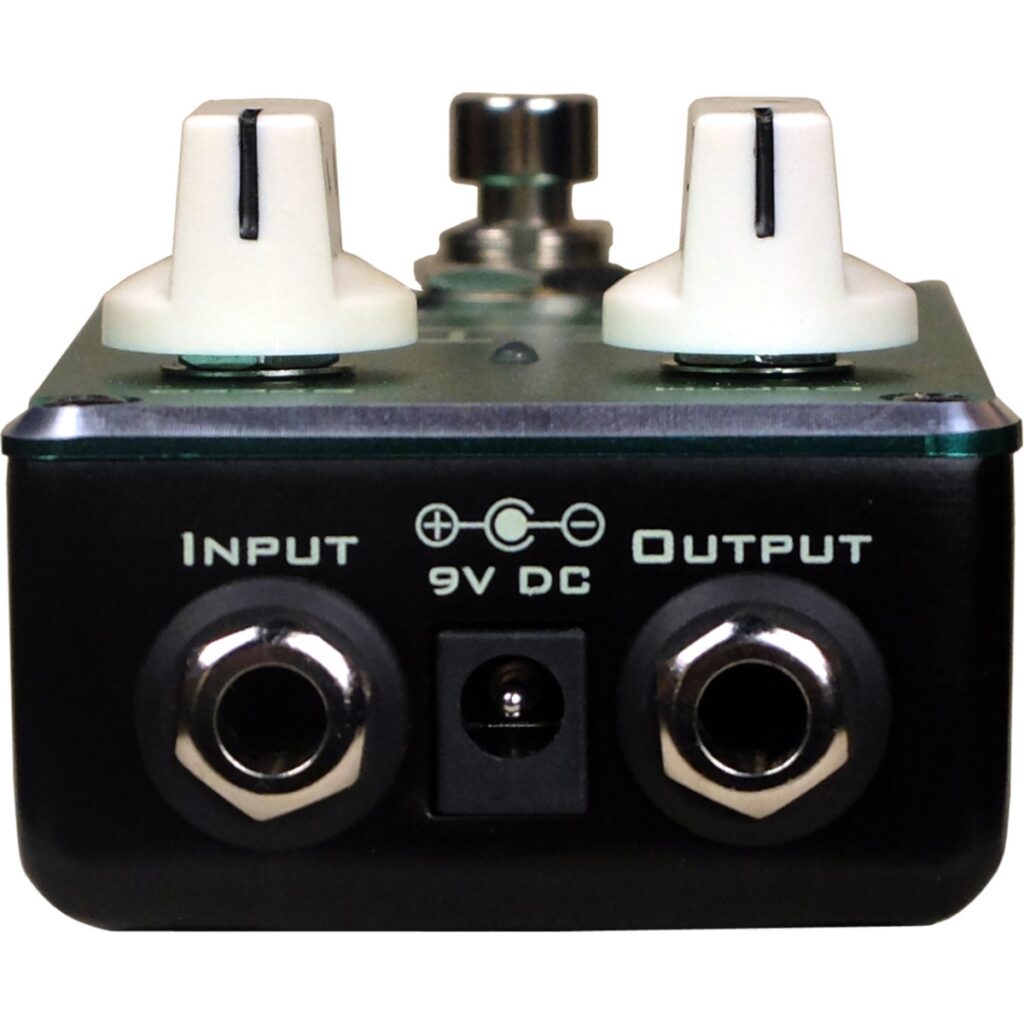
The Surf Trem (2018 edition and onward) is a true bypass pedal in a lightweight housing. Earlier big-box versions were buffered, but the latest Vintage Series (small anodized aluminum one) is indeed true bypass (and even the heavy-duty switch implies that). It also features jacks on top and a low current draw, and can run on battery or adapter. When off, it’s completely out of your signal; it will not color or affect your tone. When on, users report it’s very transparent aside from the intended volume modulation – it doesn’t boost or cut your overall tone frequencies. In the Vintage Guitar review snippet, they specifically noted switching it in/out did not color tone or add noise. So you can confidently leave it in your chain.
How does the sound of the Surf Trem compare to an amp’s built-in tremolo?
Very close – that’s exactly its design goal. It uses an opto-coupler circuit derived from the Carl Martin TremO’Vibe (which was their larger tremolo/vibe pedal), providing a lush, round waveform trem (more like a sine wave trem, not a square wave chop). At low Depth, it’s subtle and “transparent,” just like dialing down an old amp’s trem intensity for a gentle shimmer. At high Depth, it can get pretty deep – in fact deeper than some amp trems – giving a pronounced effect but still with that smooth wave (not hard on/off). The Speed range goes from really slow (several seconds per cycle) to fairly fast (almost machine-gun trem, though it won’t reach ring-mod speeds – it’s musical range). People comparing it to Fender amp trems often say it nails that character: warm, not clicky or choppy, and “didn’t add any noise”. In a blind test, you’d likely feel it as an authentic tube bias-trem or optical trem sound. So basically, it gives you amp tremolo without needing the amp’s onboard one – perfect if your amp doesn’t have trem or if you want footswitch control and two knobs up front.
Does the Surf Trem work well with other pedals (overdrive, etc.)?
Yes – tremolo is fundamentally just volume modulation, so it typically plays nicely with other effects. Common setup: you might put the Surf Trem after overdrives in your chain (this mimics how amp tremolo comes after the preamp gain in an amp). That way, your drive tone is being modulated. The Surf Trem can definitely handle being after distortion – it’s actually very cool for that raunchy chopped distortion tone used in modern rock. Conversely, some might put it before dirt for a different, more subtle feel (the distortion compresses some of the trem’s variance, making it milder). Either way, the Surf Trem’s output is low impedance (since it’s active when on, and when off true bypass but your next pedal likely has input buffering), so it won’t mess up tone. It can also go into an amp’s effect loop if desired (because it’s essentially akin to an amp trem circuit – though it’s not necessary unless you want the trem strictly post preamp distortion). It’s a quiet pedal, so it won’t introduce hum even if chain after fuzz, etc. Only thing: if using very high gain, a trem will make the noise floor audible on the “lows” (when volume goes down, you hear amp hiss swell). That’s physics – n
Does the Surf Trem have a volume drop or boost when engaged?
It is designed not to. Vintage Guitar’s review said switching it on did not change tone or add noise, implying unity volume. Most analog trems are unity at center; and because Depth doesn’t fully silence your signal except at peaks, the perceived loudness remains about the same. The Surf Trem also has an internal trim for level (older wide box version had, not sure if small one does; likely not user adjustable in new one). But user reports and design suggest it’s unity gain – so you shouldn’t hear a jump or drop when engaging the trem. If you do sense a slight drop at very high Depth, that’s common (since at deep depth, your ear might perceive average loudness a tad lower as it spends more time at low volume). But it’s minimal. In a band mix, it will cut through fine. If needed, you could always place a clean boost after it, but likely unnecessary.