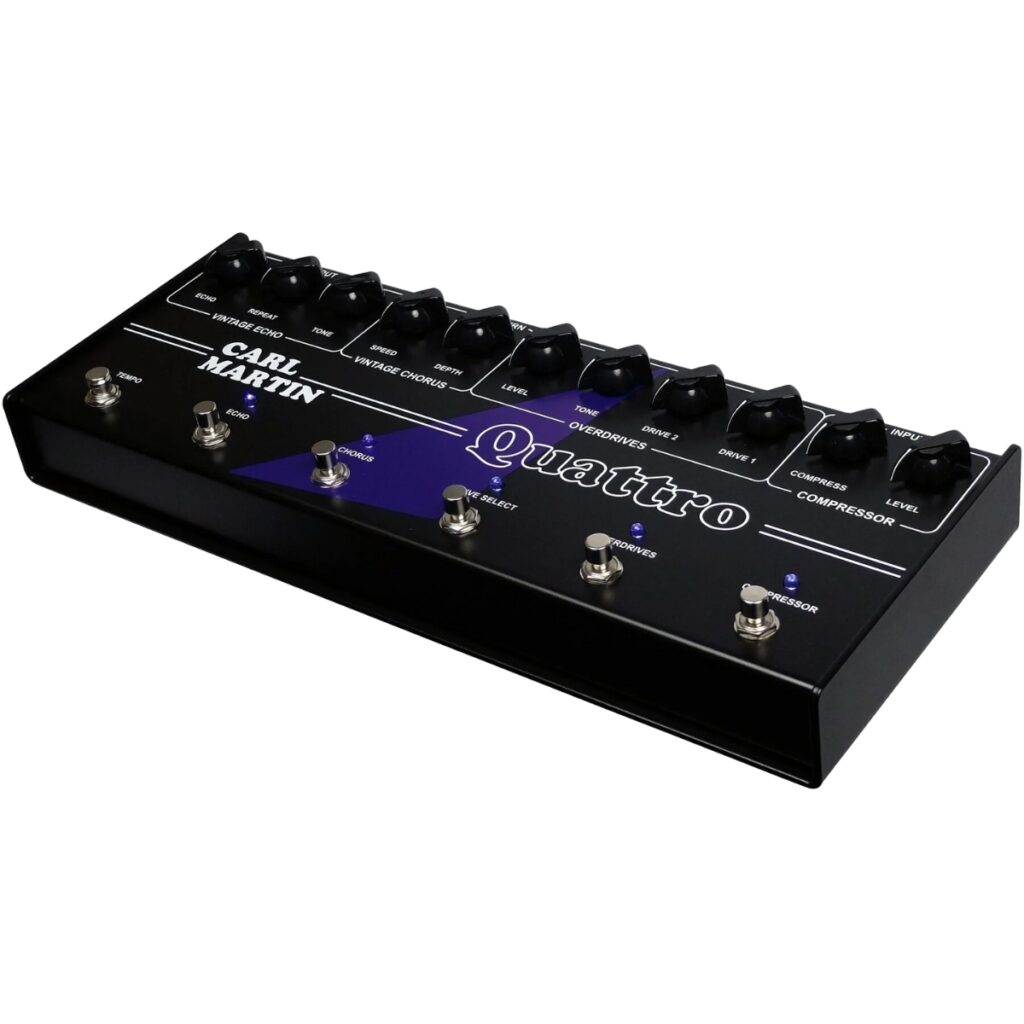
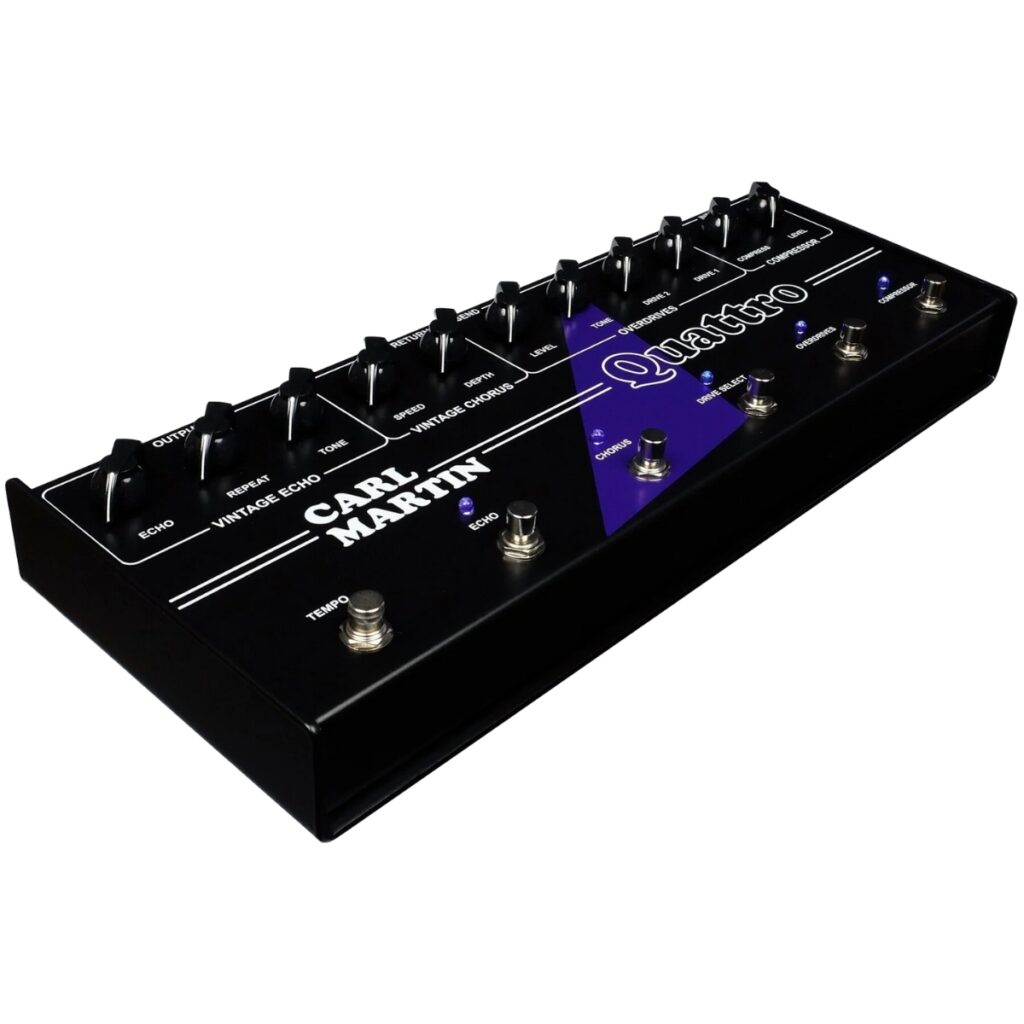
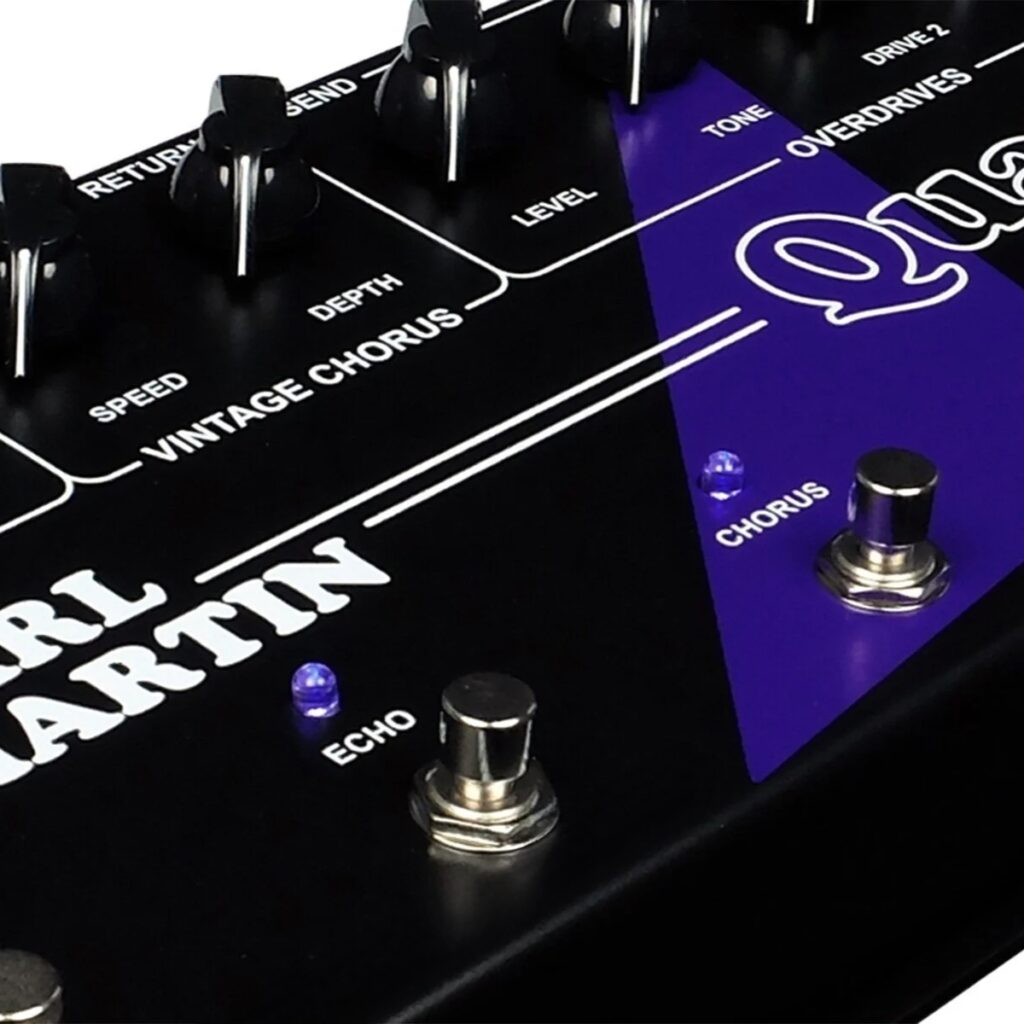
Quattro
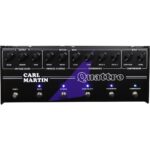
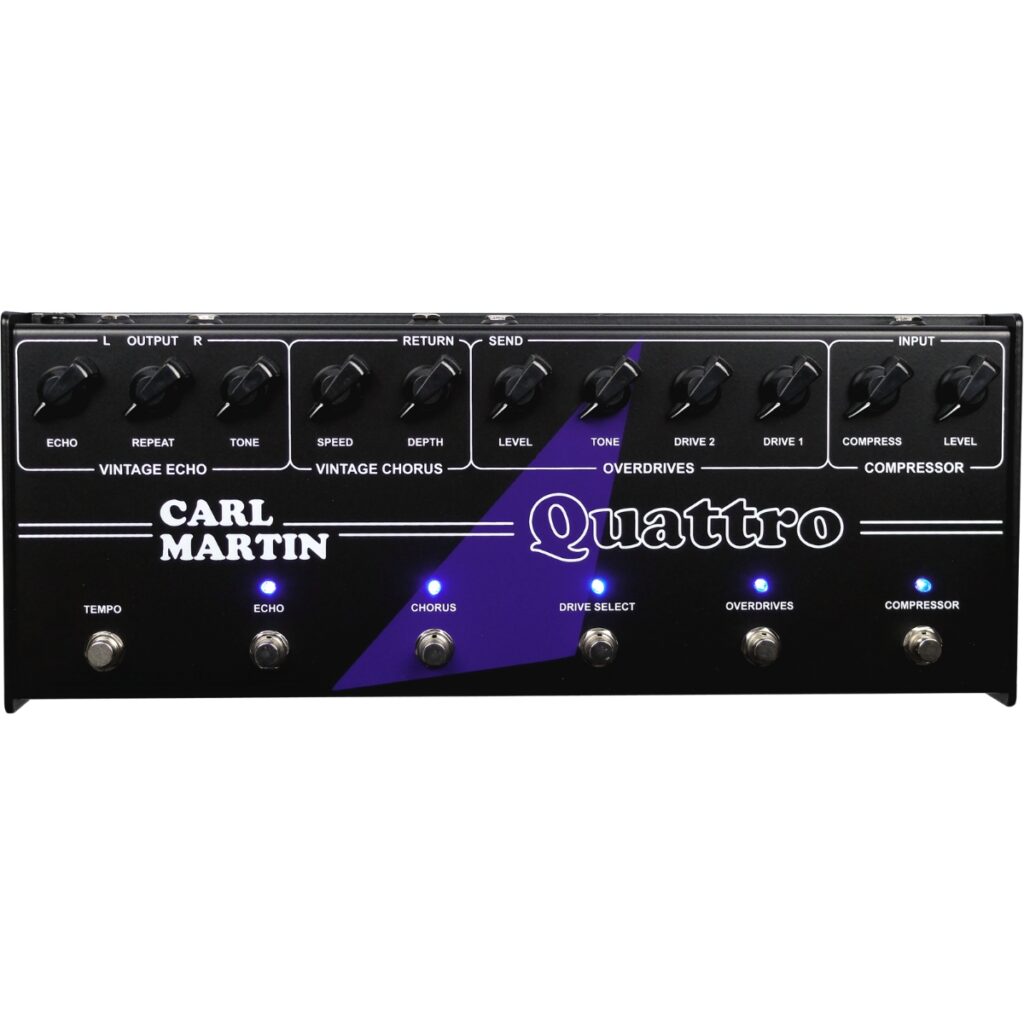
- Combines four independent analog effects: Compressor/Limiter, two-channel Overdrive, Vintage Chorus, and Echo.
- Dedicated controls and footswitches for each section allow instant, menu-free operation during performances.
- Built-in effects loop between overdrive and chorus for flexible pedal integration in the signal chain.
- Internal regulated ±12V power supply ensures high headroom, low noise, and premium component performance.
- Designed for open, dynamic, and transparent sound that preserves your amp’s character.
All about Carl Martin Quattro
When we designed Quattro, the goal was straightforward: bring four of our most used, performance-ready effects together in one unit — without losing feel, headroom, or clarity. Instead of digital modeling or layered menus, we focused on real circuits, immediate control, and a signal path that behaves like a proper pedalboard.
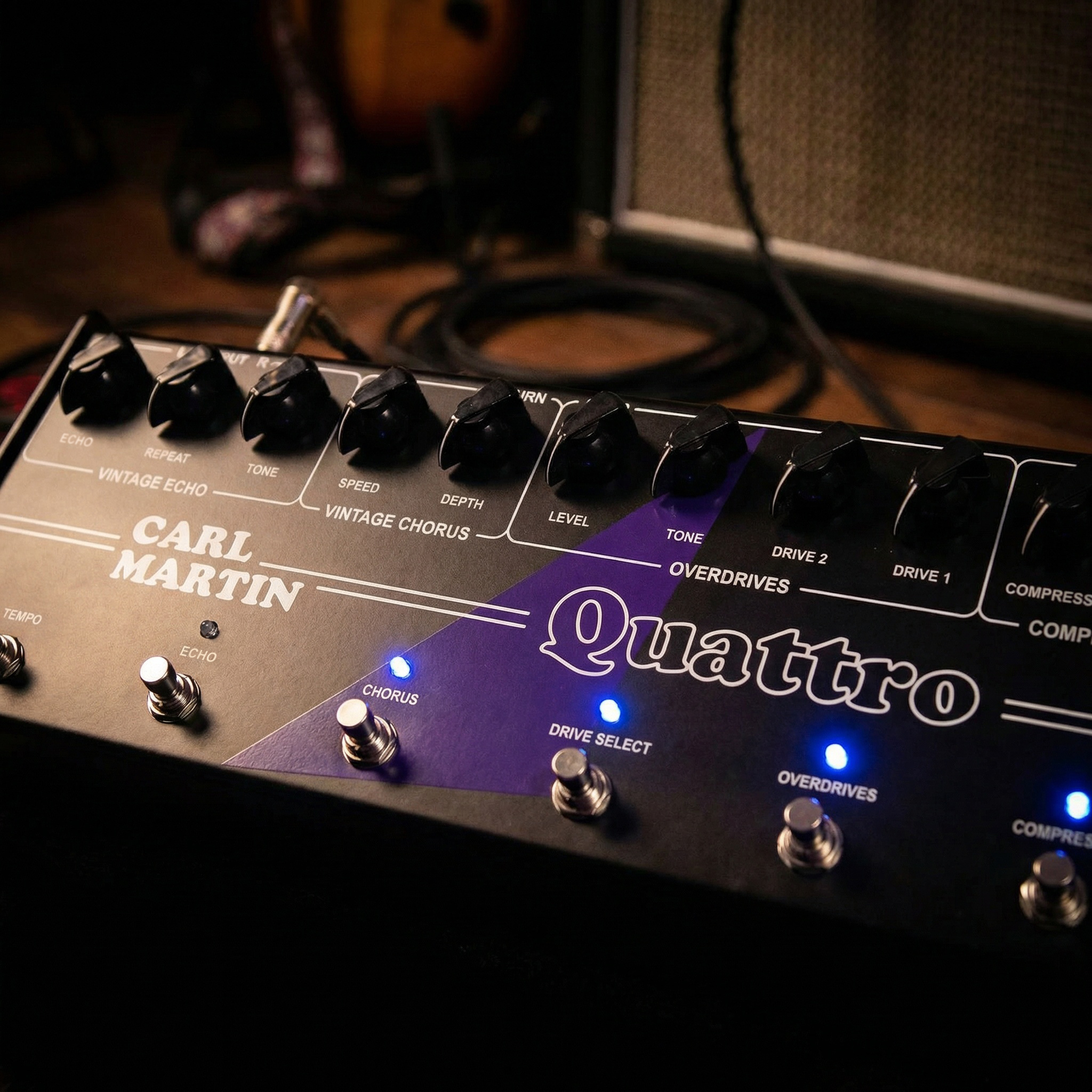
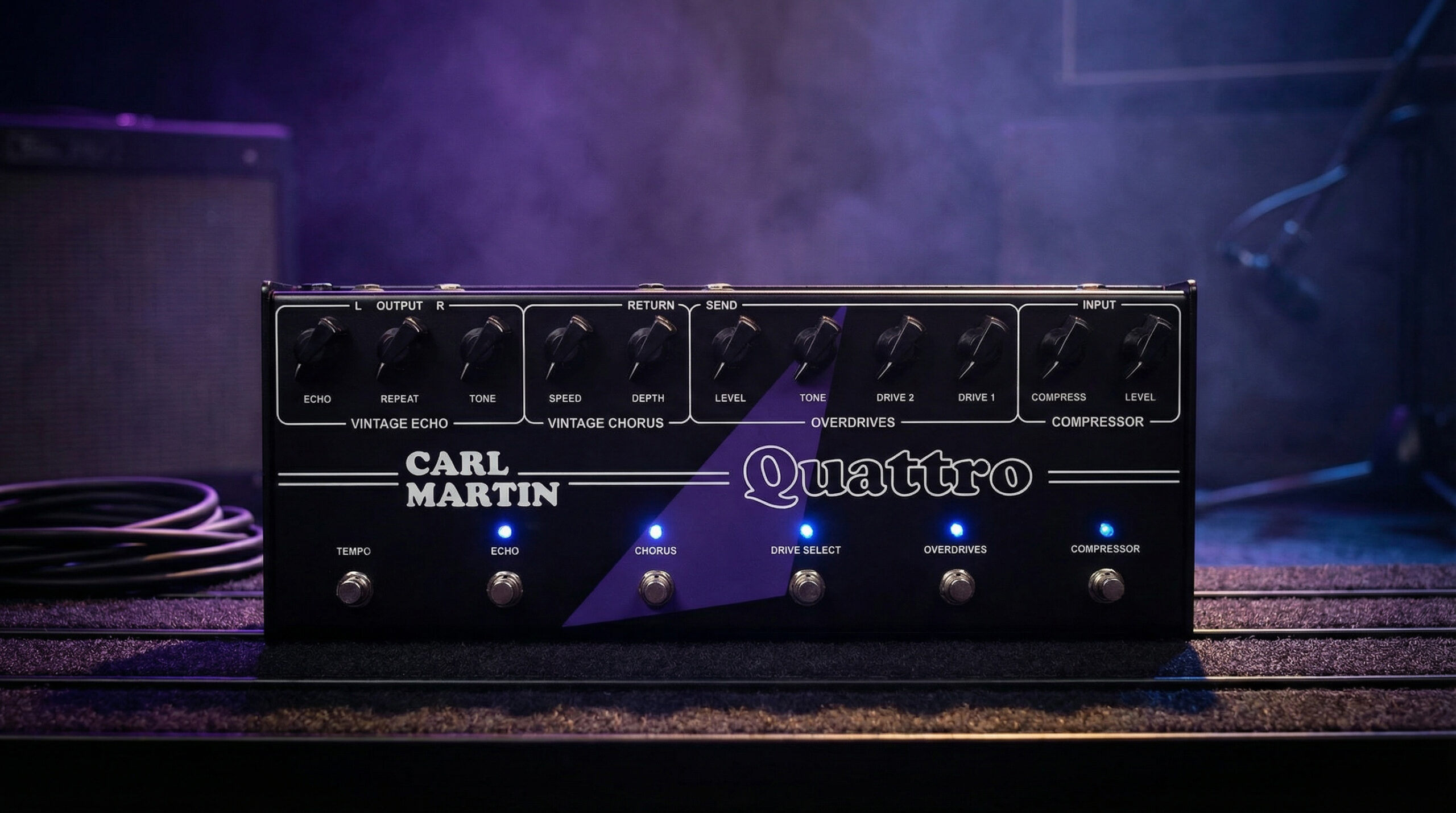
Quattro is built around four independent analog sections: Compressor, Overdrive, Chorus, and Echo. Each effect has its own dedicated controls and footswitch, allowing us to engage or bypass sections instantly during a performance — no scrolling, no presets, just play.
The signal starts with our Compressor/Limiter circuit, offering controlled dynamics and level balancing without squashing the tone. From there, the two-channel Overdrive provides both crunch and high-gain stages, selectable on the fly. The voicing stays tight and articulate, with a tone control that works as a low-pass filter to keep the drive focused.
Next in line is the Vintage Chorus, delivering classic modulation with simple Speed and Depth controls. Subtle settings add movement and width, while deeper settings bring out a more pronounced, vintage character.
The chain ends with the Echo section, voiced for warm, musical repeats. With controls for Level, Tone, Repeat, and Tap Tempo, we can move from slap-back delays to longer rhythmic echoes that stay clear and controlled.
We also built in an effects loop between the overdrive and chorus sections. This allows us to insert a favorite drive or fuzz pedal exactly where it belongs in the signal chain — without rewiring the entire rig.
Quattro runs on an internal regulated ±12V power supply, giving us the headroom needed to use high-quality components and maintain low noise throughout the system. The result is a multi-effect that feels open, dynamic, and transparent — designed to sound like your amp, not like a processor.
Hear it in action
Watch and hear this product in use. Select more videos below.
More videos
FAQ
Quick answers about this pedal — shipping, power, use-cases and more.
What is the Carl Martin Quattro?
The Quattro is an all-analog multi-effects pedal that packs four of Carl Martin’s vintage-style effects into one board. It includes: a Compressor/Limiter, a Dual Overdrive (Crunch and High-Gain), a Vintage Chorus, and an Echo (delay) with Tap Tempo. Essentially, it’s like having a small pedalboard of Carl Martin’s best analog effects in a single unit, with an effects loop in between (so you can insert an external pedal between the overdrive and chorus sections if desired). It’s designed for maximal tone quality – using high-headroom ±12V internal power – and simplicity (no menus, no digital screens; just knobs and footswitches).
Are all the Quattro’s effects analog?
Yes – that’s a big selling point. The compressor and overdrives are analog (based on Carl Martin’s acclaimed standalone units), the chorus is analog (bucket-brigade style), and the Echo is also analog-voiced and uses a bucket-brigade or analog/digital hybrid but analog signal path (Carl Martin calls it “vintage style Echo;” likely it’s using an analog BBD or at least filtering to sound analog). It has analog dry-through, and the entire unit runs internally at ±12V for high headroom. The footswitching is mechanical/electronic but no digital processing in audio. That’s why it’s praised for “studio quality” sound – it’s basically these four analog circuits put together with an internal power supply (the Quattro plugs into mains, giving ±12V internally). No digital menus or memory; what you dial is what you get. So you sacrifice presets or any digital versatility for pure analog tone. It’s aimed at players who want simplicity and quality akin to using quality single pedals or even studio rack.
Does the Quattro have an internal power supply or do I need an adapter?
The Quattro includes an internal power supply. It has a built-in regulated power section that takes AC mains (110-230V) and converts it to ±12V for the circuits. So you actually plug it directly to the wall (there’s an AC input on it or a fixed power cord, depending on version). The Pro versions used to have that. The manual snippet: “switchable (110-230 V) fused AC input” and “eight isolated outputs etc” is general, but specifically Quattro does mention “on-board regulated ±12V power supply”. So yes, no 9V adapter needed – it uses mains, which means one less thing on your board. This design allows use of high-voltage components for better tone and headroom. Just ensure you have the correct voltage selected if it’s switchable (some units have a 115/230V slider). It also means it’s one of the heavier “pedals” since it’s basically half-pedalboard half-power unit.
Can I use the effects independently, for example, can the echo be on while the drive is off, etc.?
Yes – each section has its footswitch, so you can mix and match. For instance, you can run just the echo by itself (Comp off, Drive off, Chorus maybe off or subtle, Echo on). They’re designed to be chainable in any combination. The only slight caveat: the Chorus doesn’t have a footswitch, so to “bypass” chorus you’d turn Depth to zero (effectively no modulation). If you want it out of the circuit entirely, I suspect at Depth=0 it’s basically transparent because many analog choruses at minimum depth are effectively bypassed (maybe a slight buffer only). But otherwise, yes, you could have comp and echo for a compressed ambient clean, or drive and chorus for 80’s rock tone, etc. They’re independent in control and can all be engaged together if you like (leading to something like: compressed, overdriven, chorused, echo-laden lead – which might be glorious!). The inclusion of the series effects loop also means if you don’t want to use, say, the internal compressor, you could loop out another effect after drive, etc. But general operation: it works as a normal pedalboard where you stomp each effect in/out as needed.
Is the Quattro programmable or MIDI-switchable?
No, the Quattro is fully analog and old-school – no MIDI or presets. It’s meant for those who want high-quality analog effects without multi-fx menus. So you cannot program combinations; you have to stomp multiple footswitches if you want to, say, turn off compressor and turn on drive at the same time (that’s two stomps). The footswitches are spaced for a reasonably easy multi-stomp though. Some players might use an external loop switcher to control it (the Quattro’s design doesn’t really allow separate in/out per effect, aside from the one loop insert; it’s a series chain internally, so it’s not easily externally switchable by section except using its own switches). So it’s not for those who need patch changes, but more for the “analogue purist” who doesn’t mind a bit of tap dancing. However, because it’s laid out logically, many find it intuitive and simpler than some digital multi-fx which trade that for complexity.
How does the Quattro’s sound compare to individual pedals?
xtremely favorably. In fact, inside it basically is individual Carl Martin pedals. The compressor is their well-regarded comp/limiter (same circuit as their single pedal, just fewer knobs because threshold/response fixed). The overdrives are based on their PlexiTone style circuits (two channels of drive with shared tone – sounds very amp-like and warm). The chorus is described as “Vintage Chorus” – likely an analog BBD chorus akin to an old CE-1 style (rich and not sterile). The echo is particularly praised: it’s analog-voiced, around 600ms, with tap tempo – essentially similar to their Red Repeat or DeLayla circuits, giving lush repeats that can get a bit dark for ambience. They run internally at ±12V, so the headroom and clarity might even exceed some 9V pedals. Many users and reviews note the sound quality is top notch, with no noticeable tone suck when all sections are off (because the unit likely has a high-quality buffer in/out). Also, noise levels are low – e.g., the comp is quiet, the drives are quiet relative to gain, etc. You’re essentially paying for 4 high-end pedals in one, and that’s exactly the sound you get. So yes, it stands up to individual boutique pedals well; p