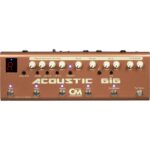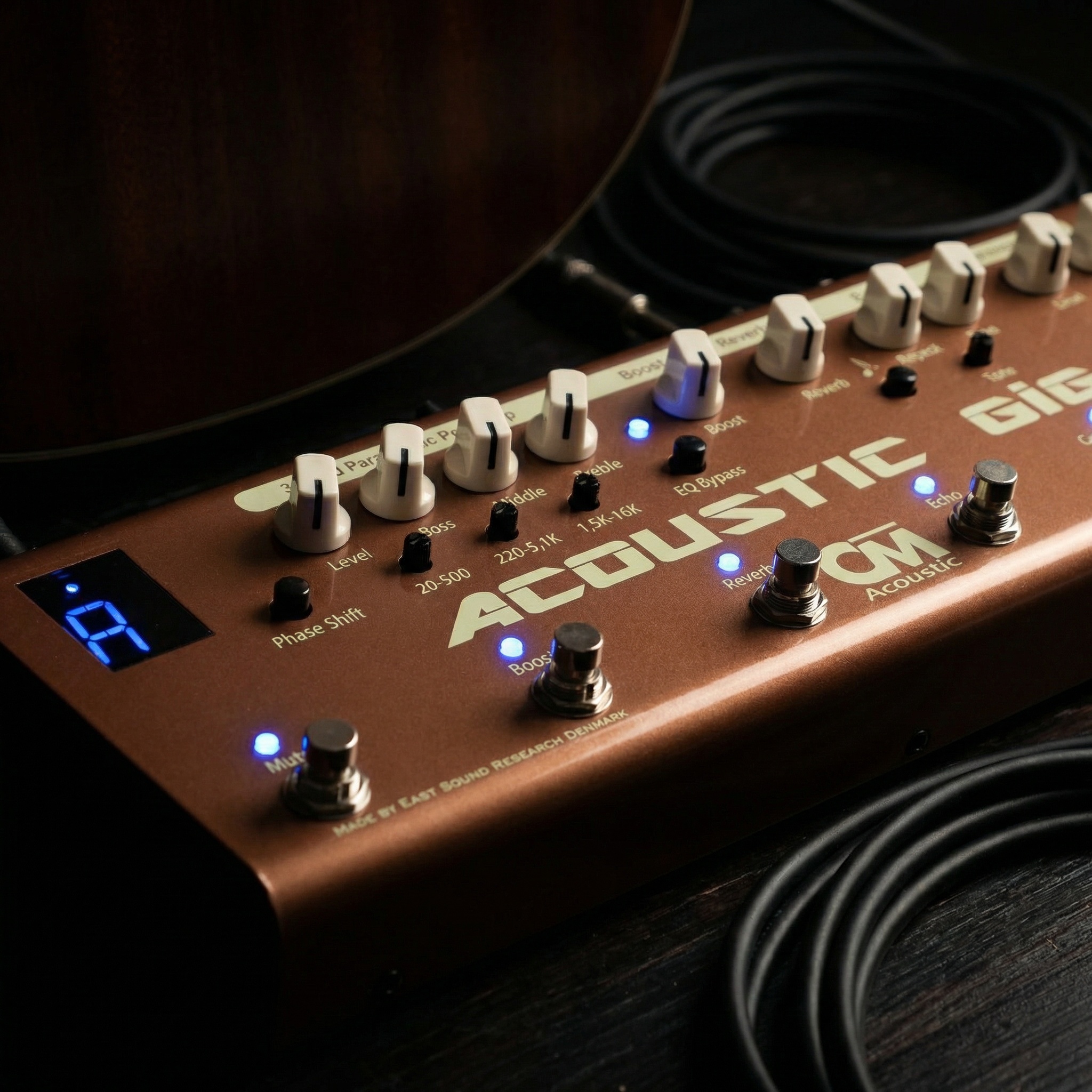
Acoustic Gig
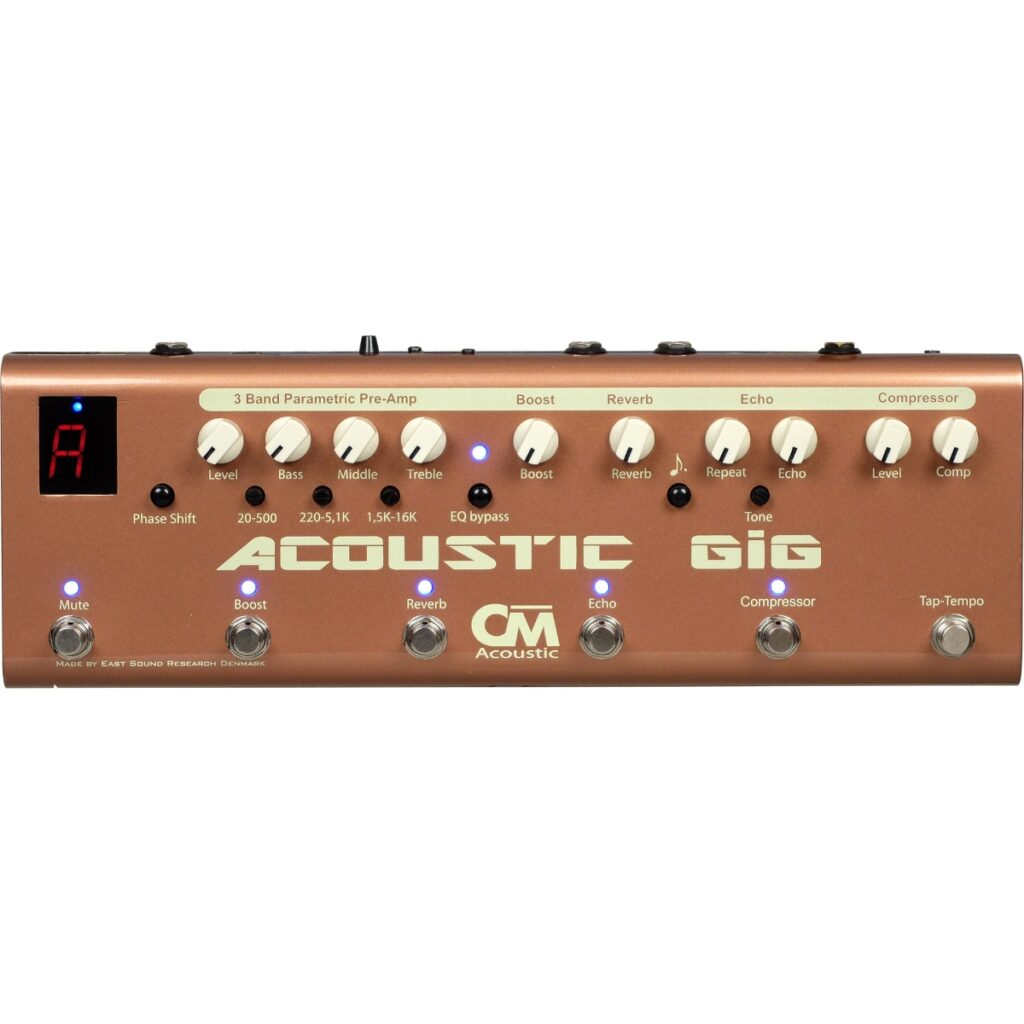
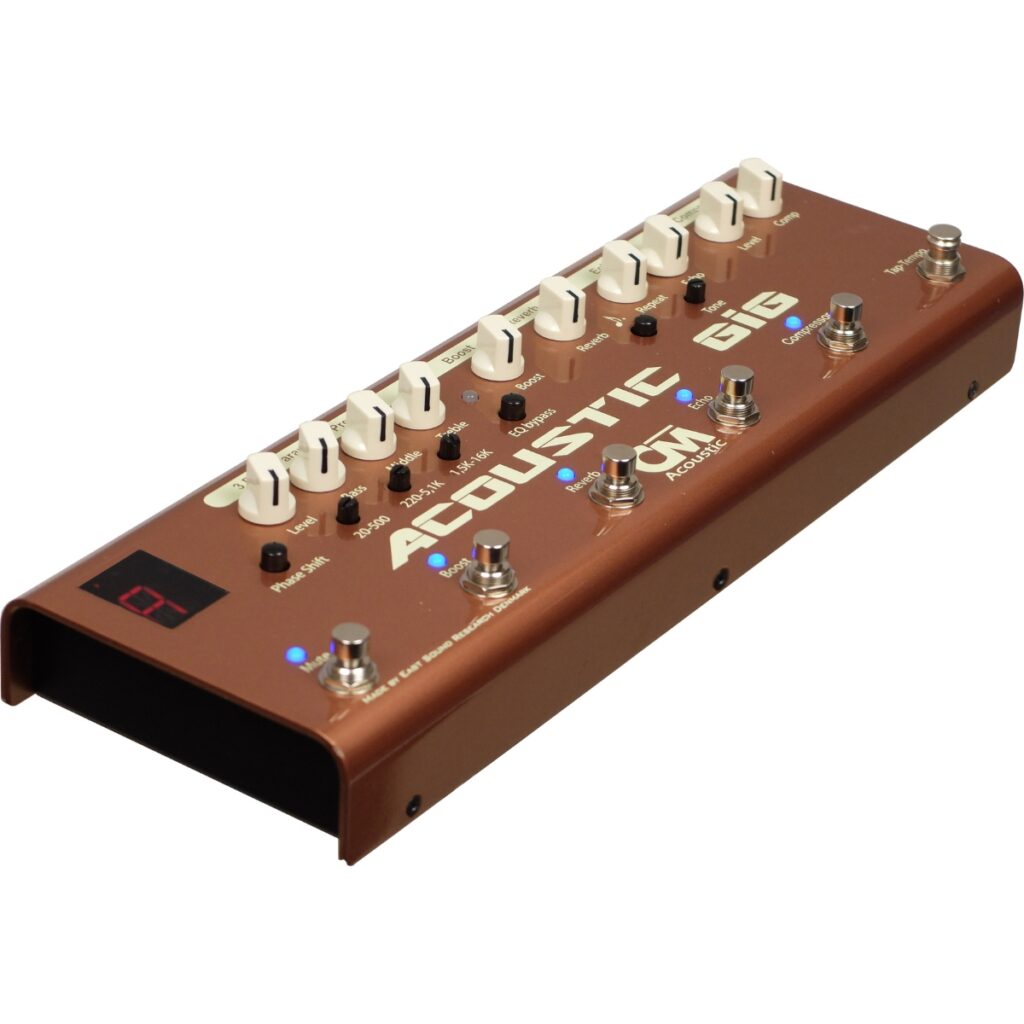
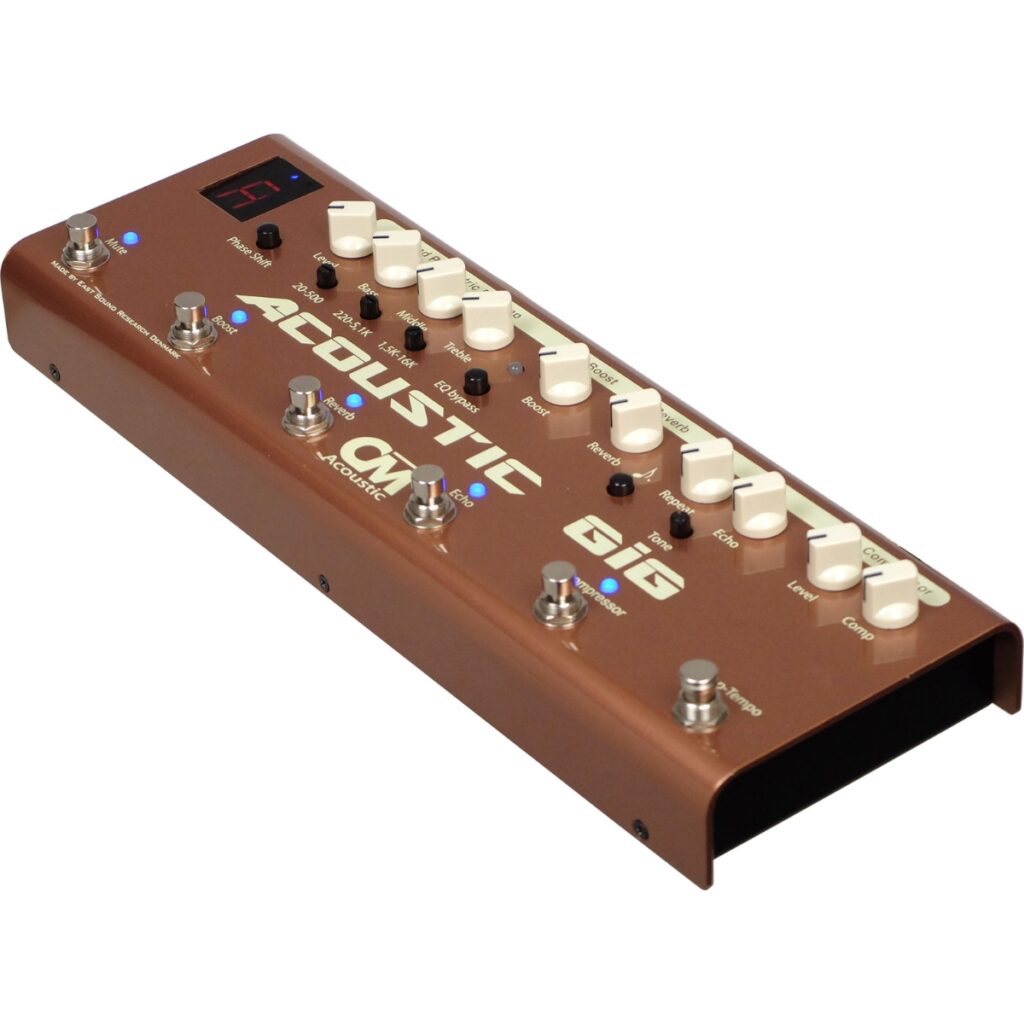
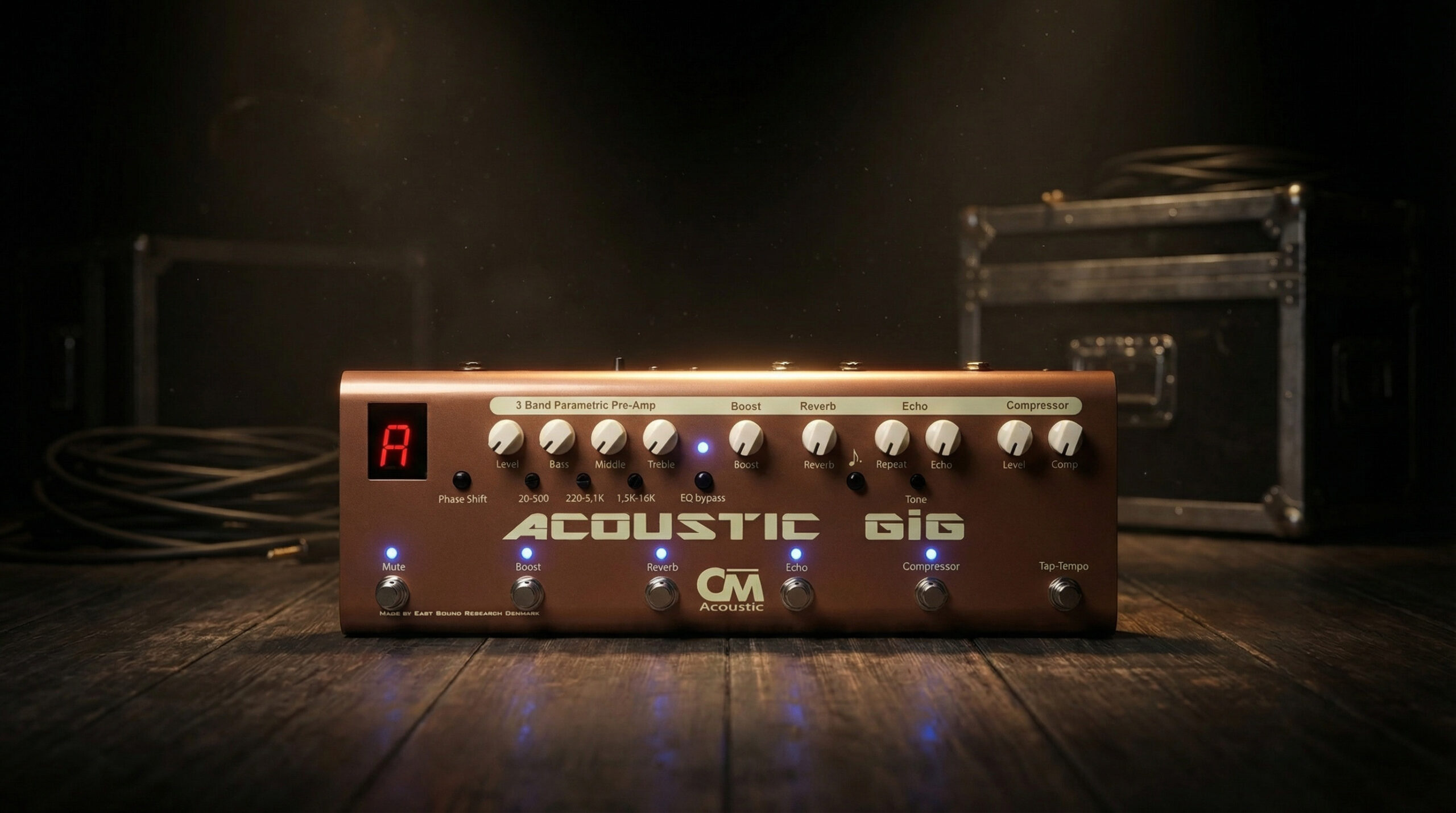
- Complete acoustic signal platform with compressor/limiter, echo, reverb, clean boost, and semi-parametric 3-band EQ.
- Intuitive, stage-friendly layout with dedicated controls for each section—no menus or presets.
- Vintage-style echo with tap tempo and dotted eighth-note option, plus hybrid reverb voiced for acoustic guitar.
- Integrated tuner, global mute, phase shift for feedback control, and insert loop for flexible routing.
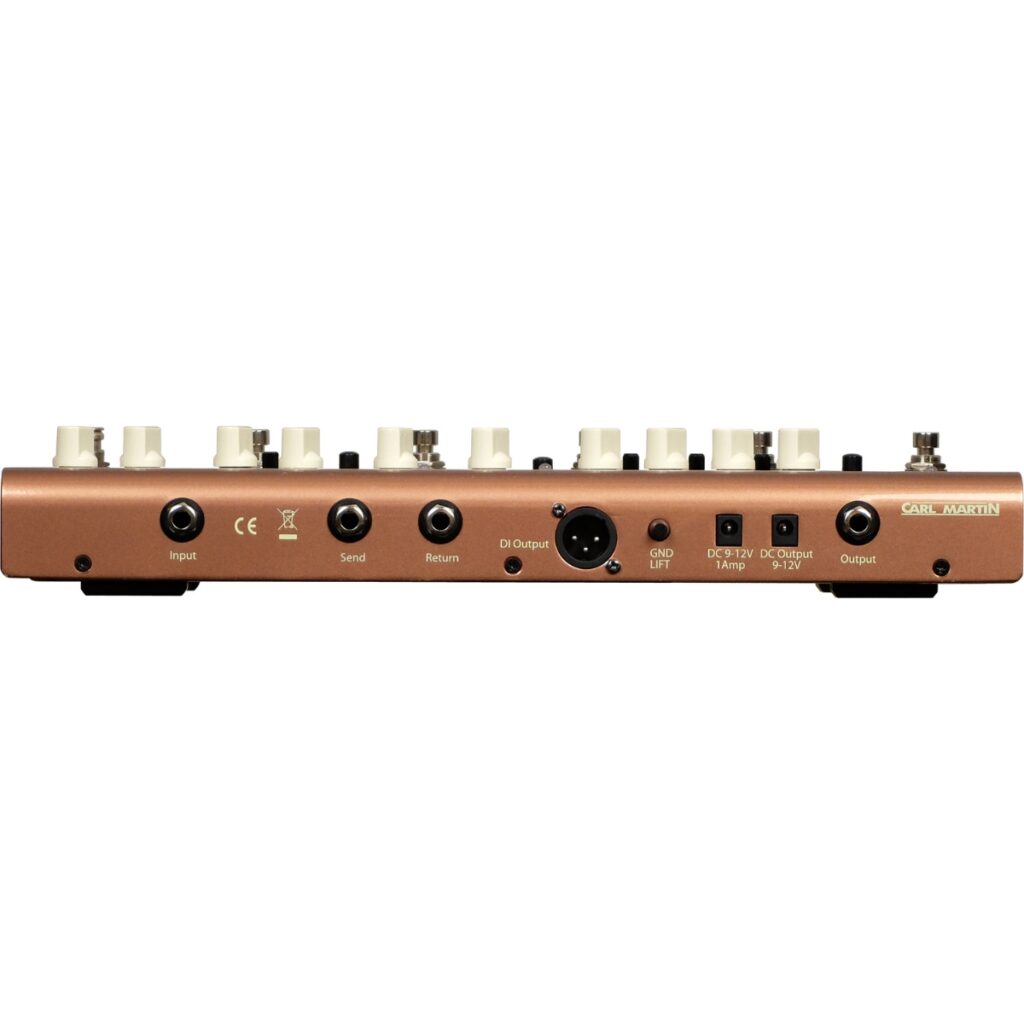
- Multiple output options: unbalanced ¼", balanced XLR DI with ground lift, and extra DC output for powering another pedal.
All about Carl Martin Acoustic Gig
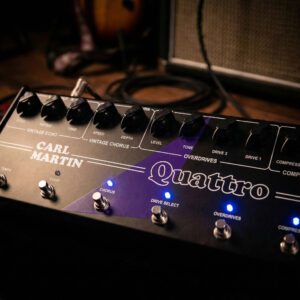
When we developed Acoustic GiG, the idea was simple: take the same straightforward, performance-ready approach we used for Quattro and apply it specifically to acoustic guitars. We wanted a single unit that could handle dynamics, tone shaping, ambience, and routing — without menus, presets, or guesswork.
Acoustic GiG is built as a complete acoustic signal platform. Everything is laid out in the order you actually use it on stage, making it fast to dial in and easy to adjust while playing.
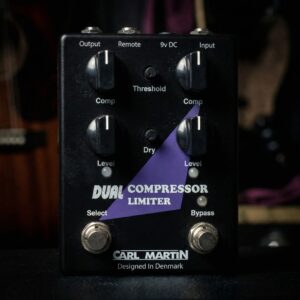
We start with our award-winning Compressor/Limiter circuit. With dedicated controls for compression and level, we can smooth dynamics and add control without choking the natural attack and resonance of the instrument.
From there, the signal moves into our Vintage-Style Echo. With controls for level, tone, repeat, and tap tempo — plus a dotted eighth-note option — we can add anything from subtle rhythmic space to clearly defined musical delays that sit naturally behind the acoustic signal.
The Reverb section is an analog/digital hybrid voiced specifically for acoustic guitar. At lower settings it delivers a warm, spring-inspired ambience. As it’s pushed further, it opens up into a wider, more modulated texture that can add depth and shimmer without becoming artificial.
For cutting through a mix, we included a clean Boost capable of lifting the signal without altering tone or exaggerating piezo artifacts. It’s designed to stay transparent, even at higher boost levels.
To give precise tonal control, we integrated our well-known semi-parametric 3-band EQ directly from the Carl Martin 3-Band Parametric Pre-Amp. This allows us to shape bass, mids, and treble exactly where the instrument and pickup need it — not just with fixed frequencies.
To manage feedback, Acoustic GiG includes a Phase Shift switch, which often makes a critical difference on louder stages. We also built in a tuner and a global mute function, making the unit fully self-contained for live use.
On the rear panel, we included everything needed for real-world setups: standard ¼" input, unbalanced ¼" output, balanced XLR DI output with ground lift, an insert loop placed after the boost and before the EQ, and a 9V DC input with an additional DC output for powering an extra pedal if needed.
Acoustic GiG is designed to be a reliable centerpiece for acoustic players — whether on stage, in rehearsal, or in the studio.
Hear it in action
Watch and hear this product in use. Select more videos below.
More videos
FAQ
Quick answers about this pedal — shipping, power, use-cases and more.
What is the Acoustic GiG pedal?
The Acoustic GiG is an all-in-one acoustic guitar preamp and effects unit designed for performing or recording with acoustic-electric guitars. It combines several essential tools for acoustic players: a high-quality preamp with 3-band semi-parametric EQ, a compressor/limiter, a footswitchable clean boost, an analog/digital hybrid reverb, a tap-tempo echo (delay) with a dotted-eighth setting, a phase inverter (to fight feedback), and even a built-in tuner with mute switch. In short, it’s like having a mini acoustic rig’s front end (preamp + DI + effects) in one floor unit – tailor-made for acoustic guitar tone shaping and problem solving on stage.
What are the main features and controls on the Acoustic GiG?
The Acoustic GiG is sectioned into modules:
Compressor/Limiter: With Compression and Level knobs, based on Carl Martin’s comp circuit, for smoothing out dynamics.
Boost: A footswitchable boost giving up to +15dB crystal clean volume lift for solos.
Echo (Delay): Vintage-style echo with Level, Tone, Repeat knobs and a tap-tempo footswitch; plus a switch for normal or dotted 8th note subdivision (handy for rhythmic delay).
Reverb: An analog/digital hybrid reverb voiced like a warm vintage spring; single Reverb Level knob (the complexity of it is under the hood – it gets more modulated/chorusy at high settings to give lush texture).
3-Band Parametric EQ: Borrowed from their Parametric Pre-Amp – likely knobs for Bass, Mid, Treble and maybe a Freq selector for the mid band (semi-parametric implies the mid frequency is sweepable).
Phase switch: A button or footswitch to invert phase 180° to help cancel feedback when needed.
Tuner/Mute: Built-in tuner display and a footswitch to mute the output for silent tuning.
On the back, connectivity includes a 1/4" input, a 1/4" output to amp, a balanced XLR DI output with ground lift for going to PA, an insert loop (placed
How do I fight feedback with the Acoustic GiG?
The Acoustic GiG provides a couple tools: primarily the Phase Invert switch. When you get low-end feedback (the infamous howling on acoustic at volume), hitting the phase button often reduces or eliminates that by 180° phase cancellation. Additionally, the semi-parametric EQ can help – you can pinpoint a problematic frequency (often around 100–200Hz for body resonance, or a honky mid frequency) and reduce it. The EQ is high quality and specific (from Carl Martin’s 3-band Parametric Pre-Amp), so you can notch out frequencies somewhat if needed. It doesn’t have an automatic notch filter, but careful EQing plus phase invert covers most feedback scenarios. Also, compressing can tame peaks that might trigger feedback. And the mute/tuner footswitch is your failsafe – if things are about to blow, hit mute to stop output instantly (and tune while muted if you like). Essentially, phase invert is step one; if feedback persists, lower the offending frequency with EQ or overall volume.
Is the Acoustic GiG’s reverb and echo specifically tuned for acoustic guitar?
Yes – the reverb is described as “shimmering yet warm,” and it’s analog/digital hybrid tailored to acoustic. That means it gives air and space without harsh digital artifacts. At higher settings, it adds a slight modulation to reverb, which can enhance the richness around the natural acoustic tone without sounding fake. The echo is described as vintage-style and musically voiced – likely analog-voiced repeats, which don’t clutter an acoustic’s clarity. Plus the Dotted 8th switch is something many acoustic players use for rhythmic delay patterns (common in modern worship music and such). They specifically mention it's the “most beautiful musical echo” with that dotted 8th option, indicating it’s not just a generic digital delay – it’s tuned in repeats and tone to complement acoustic strumming or picking (clear enough to add rhythm, but warm enough to blend). Everything suggests the FX were chosen/tweaked with acoustic’s frequency response in mind.
How is the sound quality? Would it replace my standalone DI?
The Acoustic GiG is made to be a professional quality preamp/DI. Its balanced XLR out is “high quality” and includes ground lift, meaning it’s ready to plug into a PA or interface noiselessly. The analog preamp uses high headroom components (they mention it raises the bar with “best combination preamp/parametric EQ available in an acoustic floor pedal”). So yes, it’s meant to be the box between your guitar and the sound system. If you currently use, say, a Fishman Aura or Baggs Para DI, the Carl Martin can likely take that role while adding all the extra features. Users and reviews emphasize the robust construction and “beyond reproach” sound quality. The preamp doesn’t impart noise or bad coloration; it provides transparent yet flexible tone shaping and very low noise floor (the compressor is balanced-sounding and quiet, the EQ is effective yet musical, etc. – in reviews Gitarre & Bass said the reverb sounds great, comp is unobtrusive, overall unit is highest audio quality). If anything, it might improve your tone if you were just running from your guitar’s pickup to the board, because it addresses quackiness (with EQ), dynamic spikes (with comp), etc. plus a little enhancemen
Can I run other pedals through it (like if I have a specific chorus or looper)?
Yes, the Acoustic GiG has an insert loop after the Boost and before the EQ section. That’s a perfect spot to patch in another effect or pedal. For example, if you love a certain chorus or you use a looper or an octave pedal, etc., you can plug the Send from Acoustic GiG to the input of that effect, then from effect out to Return on Acoustic GiG. This way, that effect’s signal goes through the EQ and DI as well. Also, the acoustic gig provides a 9-12V DC output to power an extra pedal off its supply, meaning you might not need a separate power adapter for that pedal. They definitely anticipated someone might add one or two personal touches (like maybe a specific modeler or extra notch filter, etc.). It’s all about giving flexibility while covering 95% of needs in one unit. It’s housed likely in a metal chassis that’s robust enough for stomping multiple footswitches, and they mention it raises the bar – indeed it aims to be the central hub of your acoustic rig.