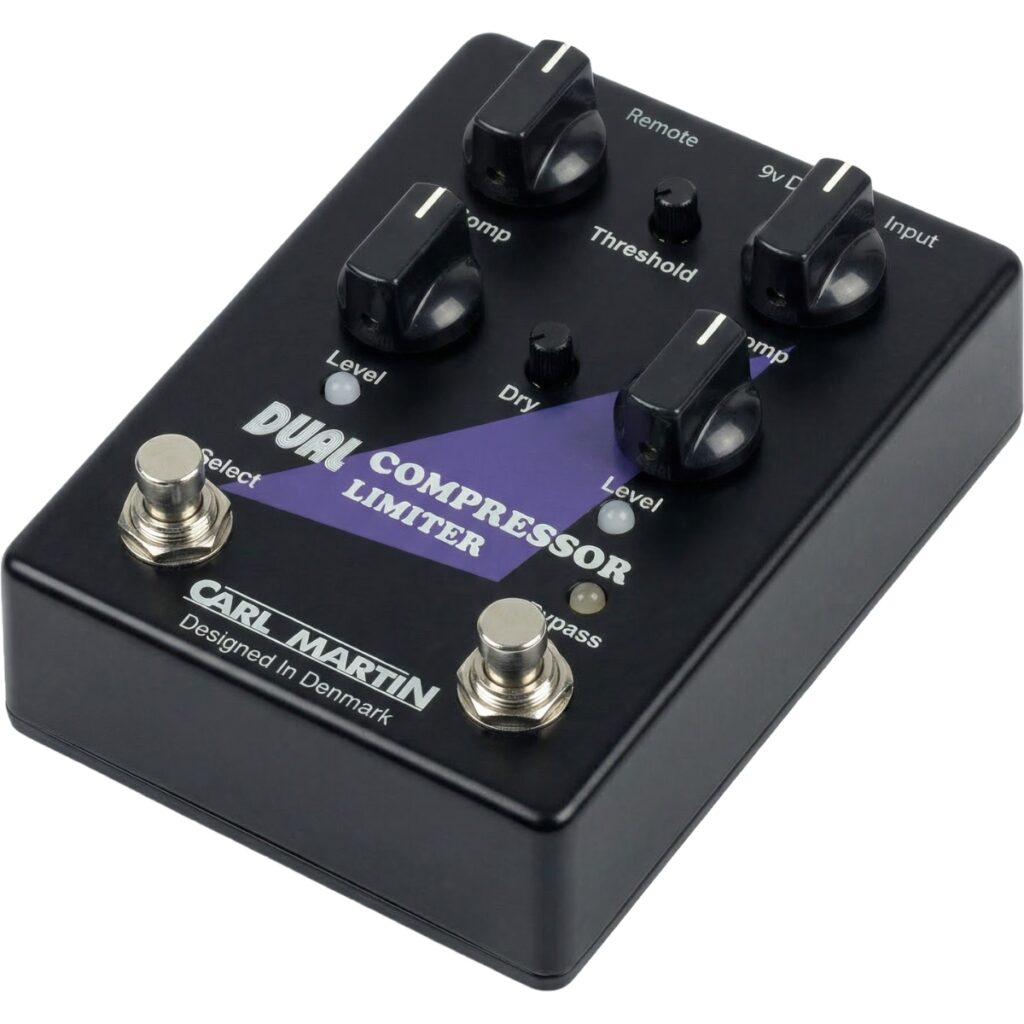
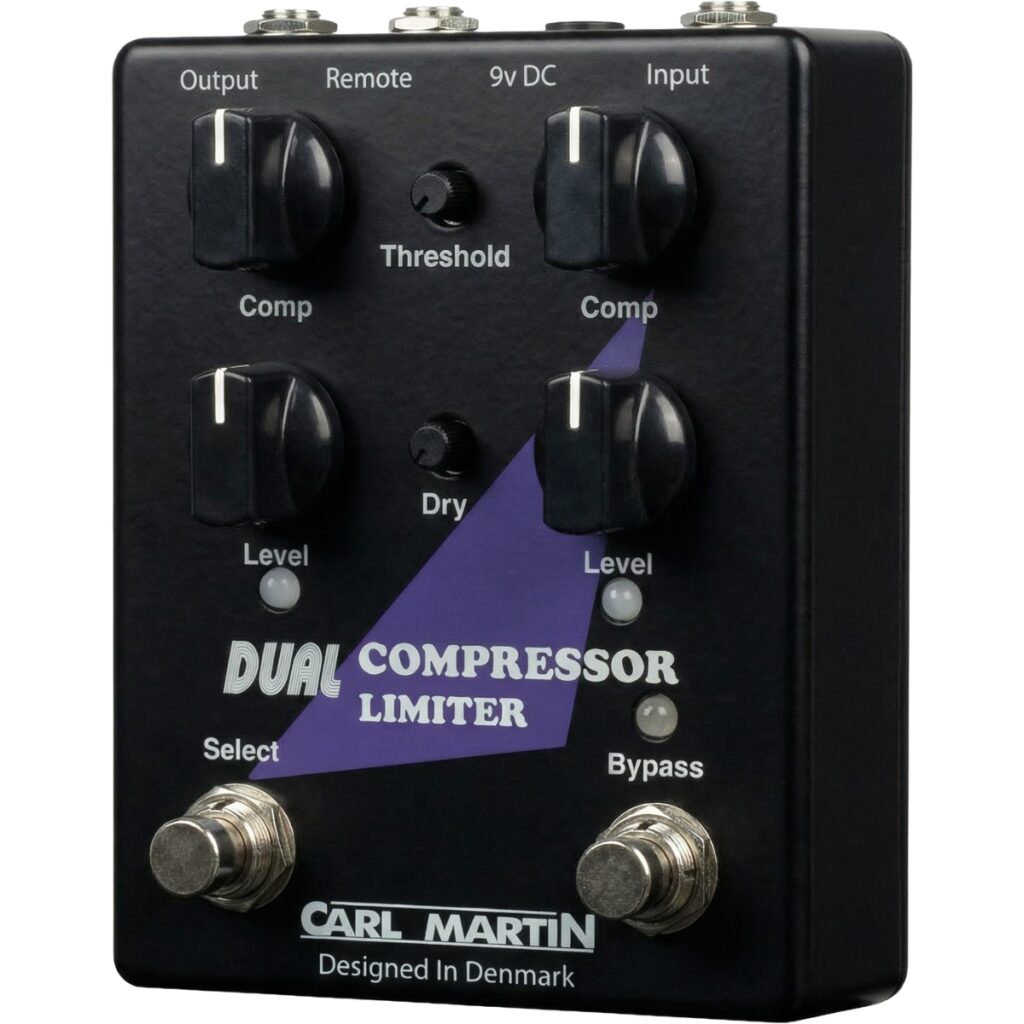
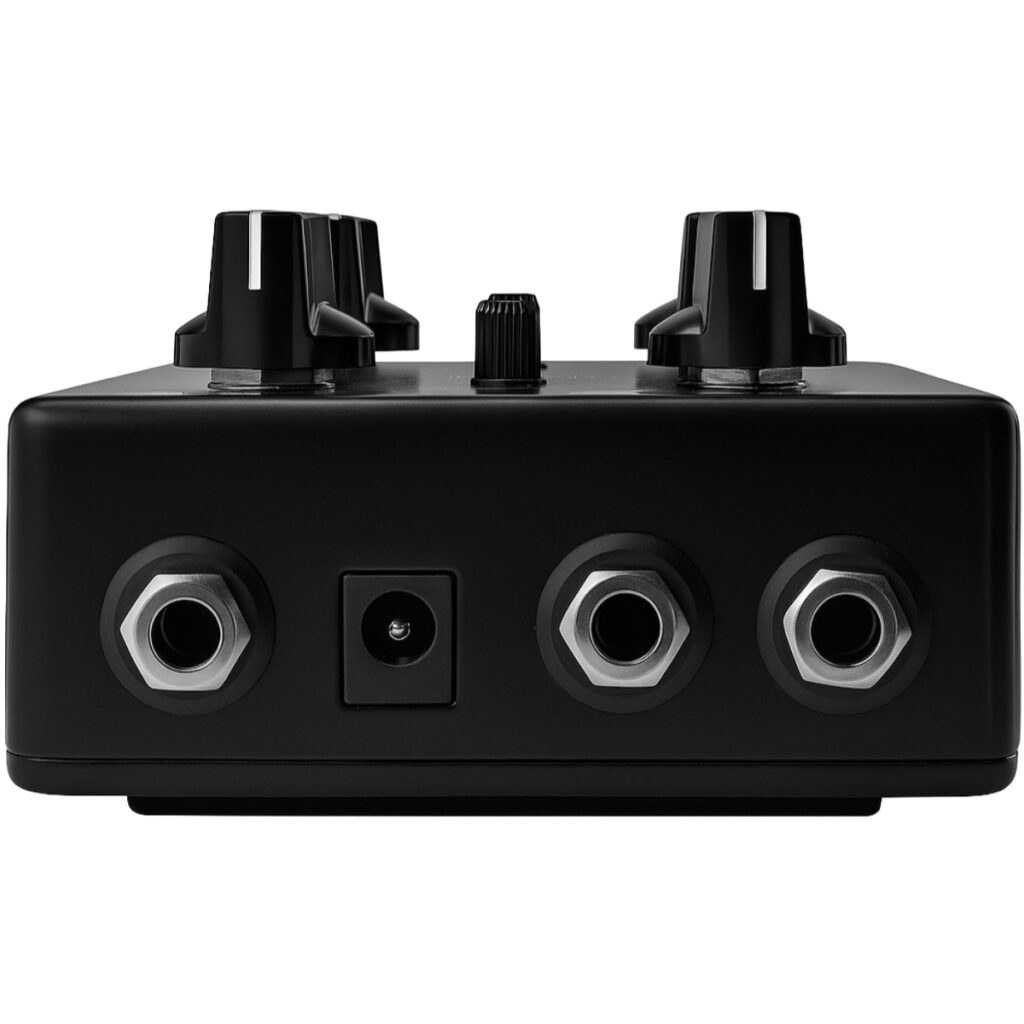
Dual Compressor Limiter
- Two independent compression channels for instant switching between settings.
- Maintains your natural attack and clarity while adding sustain.
- Parallel compression with DRY blend for a fuller, more dynamic sound.
- High headroom 12V operation prevents distortion and preserves tone.
- Easy, precise control with separate COMP/LEVEL and global THRESHOLD.
All about Carl Martin Dual Compressor Limiter
We built the Dual Compressor Limiter to give you control over the part of your tone most players find challenging: dynamics. When your clean tone feels uneven, when single notes disappear sooner than you would like, or when chords hit harder than intended, it becomes clear that dynamic control is not always easy to manage. Many players also want added sustain without sacrificing the initial attack and clarity of their playing.
This pedal is designed to address those challenges while preserving the natural character of your sound, delivering control and consistency without flattening your tone.
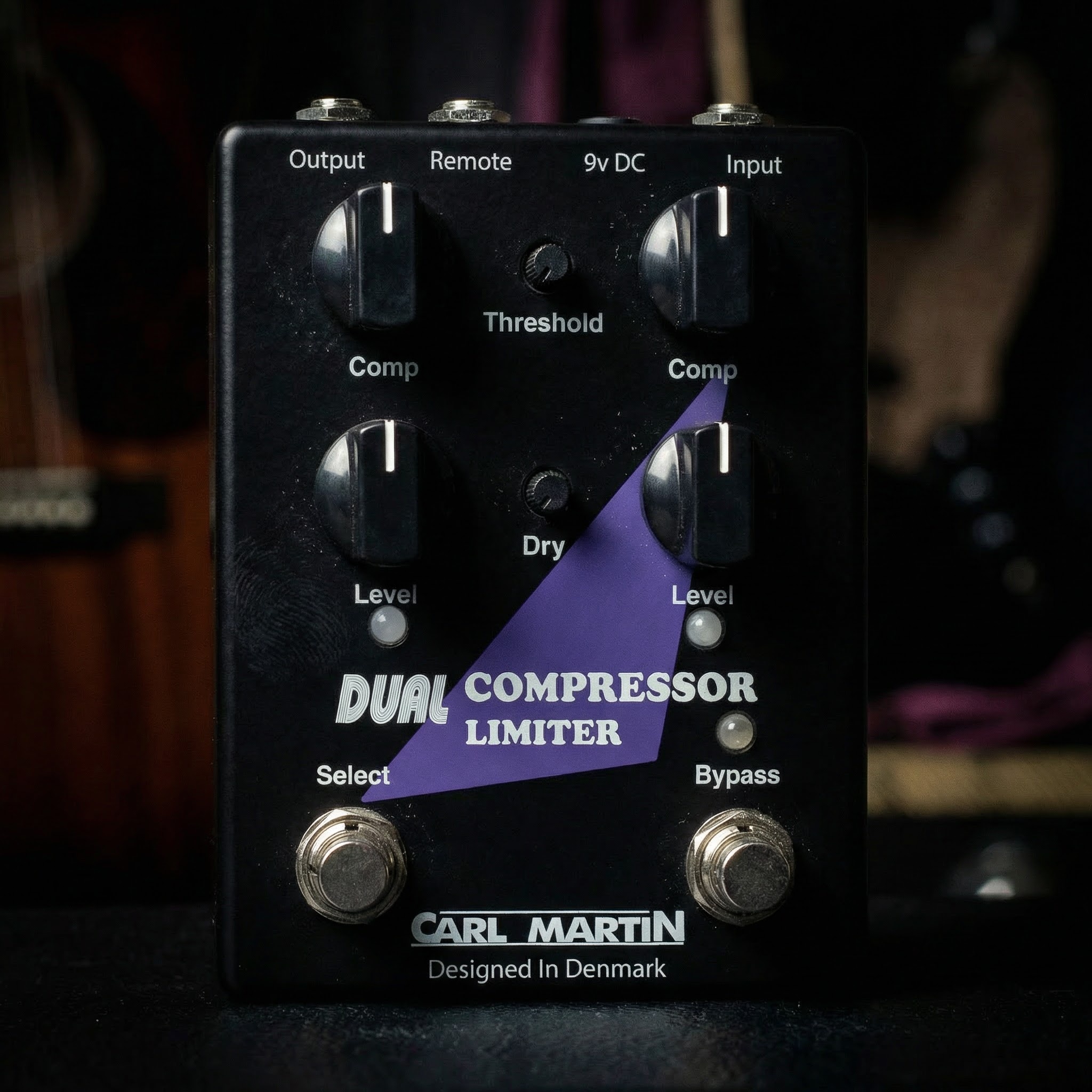
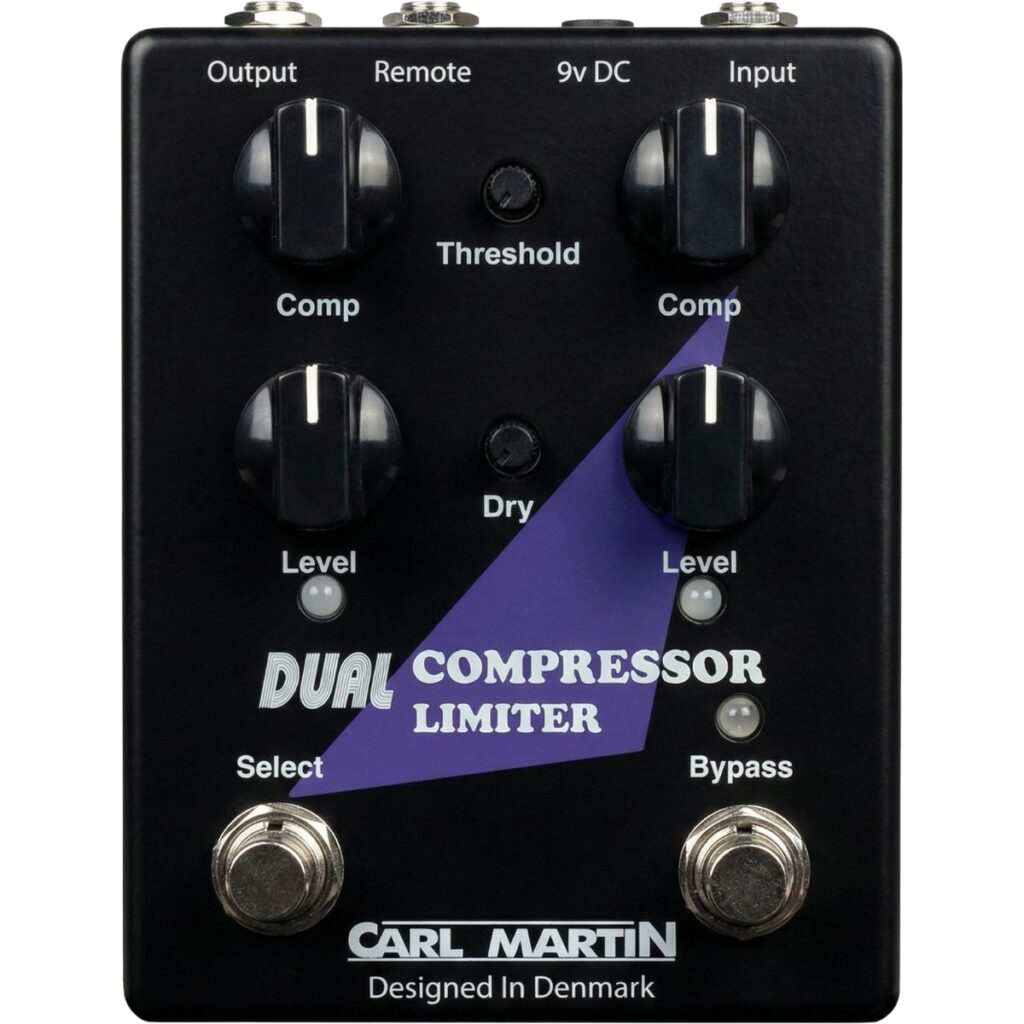
Dual Compressor Limiter gives you two completely independent compression setups in one enclosure. Each side has its own COMP and LEVEL controls, allowing you to set one side for subtle leveling and the other for stronger sustain or peak limiting. The shared THRESHOLD control ensures both sides respond consistently to your playing.
Used lightly, it evens out volume differences and makes your tone feel more stable and finished. Chords sit tighter. Arpeggios sound clearer. Clean funk becomes more controlled. Fingerstyle gains balance without losing articulation.
Push it further, and you get controlled sustain that holds notes longer without collapsing the attack. The low end remains intact. The top end does not turn brittle. Harmonics stay defined instead of smearing together.
The internal 12V operation provides increased headroom and stability. This means the compression remains composed even when your signal is strong. No sudden distortion. No choking of dynamics. Just controlled reduction where it matters.
The DRY blend control allows parallel compression directly inside the pedal. This is where the feel comes alive. You can add density underneath your signal while keeping your original pick attack untouched. The result is a tone that feels more solid under the fingers without sounding obviously compressed.
Switching between the two compression setups gives you instant flexibility on stage. One setting for rhythm consistency. Another for lead sustain. Both predictable. Both repeatable.
Dual Compressor Limiter is for players who want their tone to feel finished, controlled and responsive — not squeezed.
We build what we would trust on stage and what we would rely on in the studio.
FAQ
Quick answers about this pedal — shipping, power, use-cases and more.
What is the Dual Compressor Limiter designed to solve?
It is designed to address uneven dynamics, disappearing sustain, and uncontrolled peaks while preserving the natural character of the instrument. The goal is control without flattening tone or sacrificing attack.
How is this different from a standard compressor pedal?
Dual Compressor Limiter provides two completely independent compression setups in one enclosure. Each side has its own COMP and LEVEL controls, while both share a global THRESHOLD control for consistent response.
What does the DRY control do?
DRY allows parallel compression. You can blend compressed signal with your untouched signal, adding density underneath your attack without making the compression obvious. This preserves feel while adding sustain.
What does internal 12V operation provide?
The pedal runs internally at 12V (generated from a 9V input), increasing headroom. This keeps the compression stable under stronger signals and prevents unwanted distortion or choking.
Is it transparent?
Yes. Even at higher compression ratios, low-end remains intact and harmonics stay defined. It is engineered to control dynamics without tonal smear.
Can it function as a limiter?
Yes. With higher compression settings (up to 30:1), it can act as a peak limiter, controlling transient spikes in a controlled and predictable way.
Is it true bypass?
Yes. It uses true bypass switching to preserve signal integrity when disengaged.
Is it suitable for studio use?
Absolutely. With 105 dB signal-to-noise ratio and low THD (0.05%), it performs cleanly in recording environments as well as live rigs.