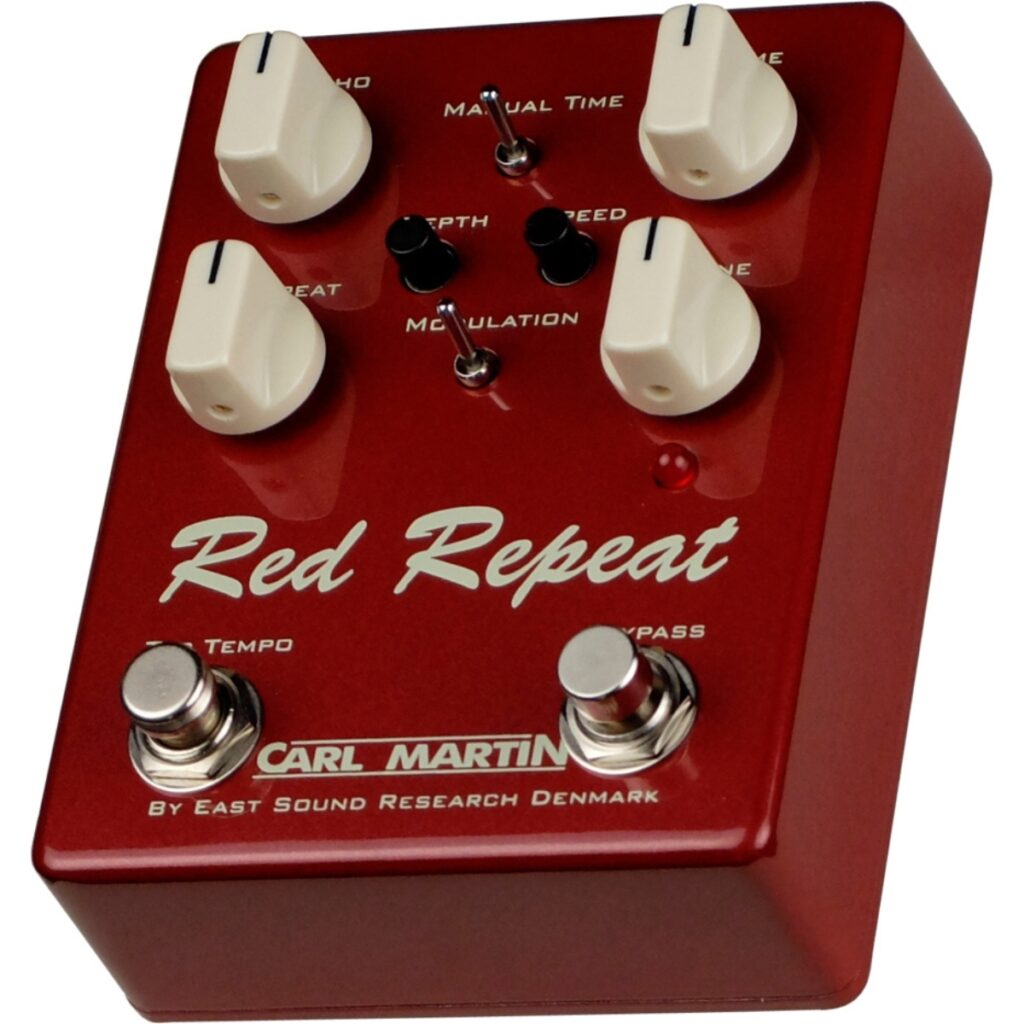
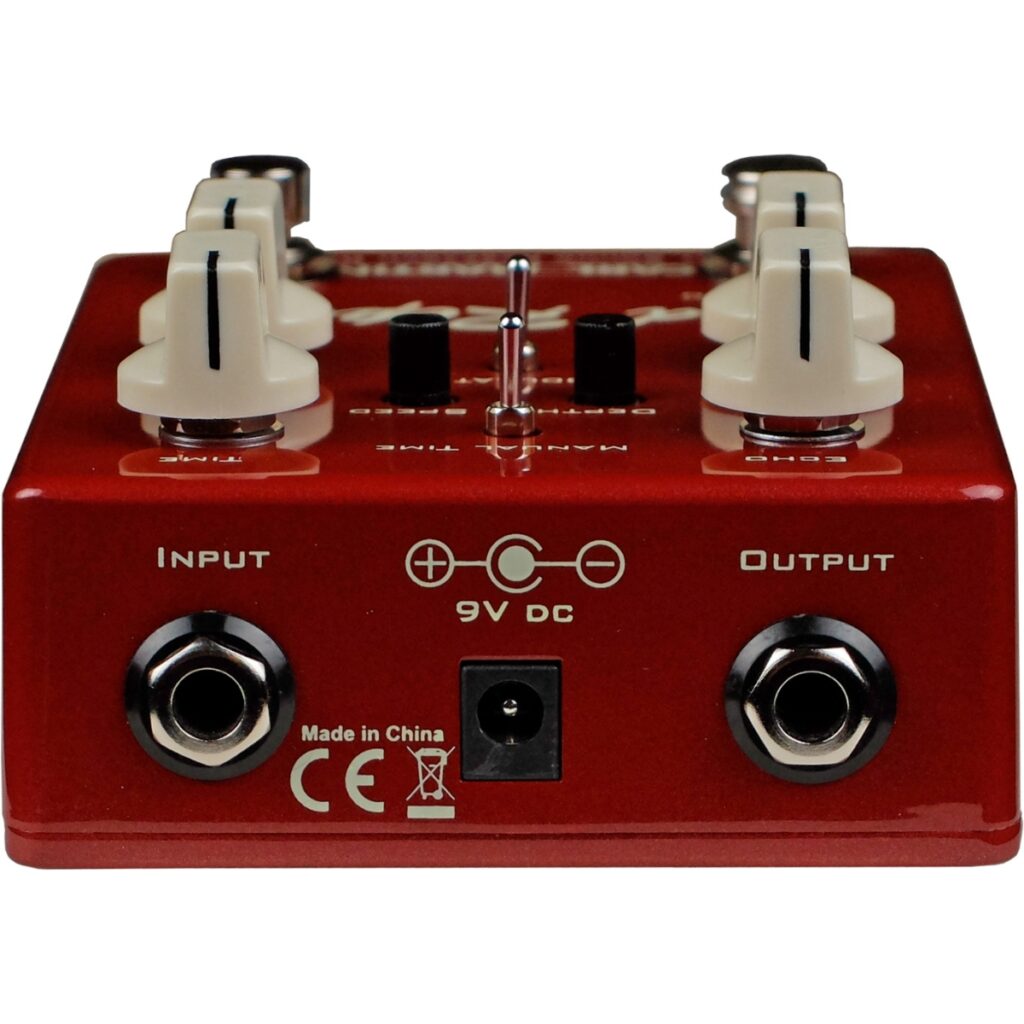
Red Repeat
- Intuitive controls deliver classic tape-style echo, from subtle slap-back to rhythmic, musical repeats.
- Echo, Repeat, Time, and Tone controls allow precise shaping of delay prominence, number, spacing, and brightness.
- Tap Tempo function enables easy, on-the-fly syncing of delay time to the song’s tempo.
- Modulation section adds adjustable pitch movement for authentic vintage tape echo character.
- Flexible design works for thickening single notes, replacing reverb, or creating long, expressive delays.
All about Carl Martin Red Repeat
When we designed Red Repeat, we wanted to keep the experience intuitive while capturing the musical feel of classic tape-style echo. Rather than overloading the pedal with complexity, we focused on controls that react immediately and make sense the moment you start playing.
At its core, Red Repeat recreates the character of early echo units — the sense of space created when a signal is repeated after a short delay. From subtle slap-back to longer, rhythmic repeats, the pedal stays musical and clear, with the original signal left intact.
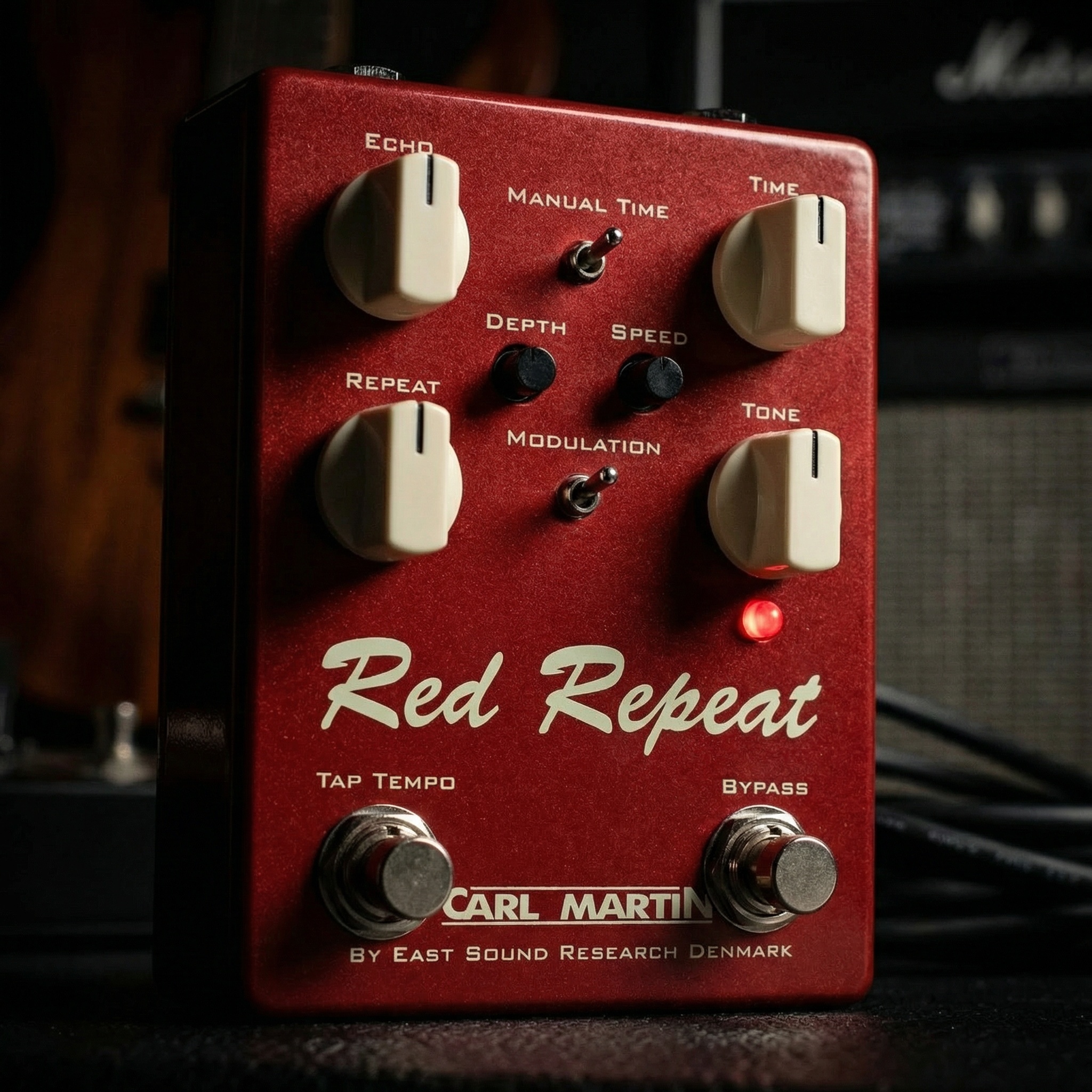
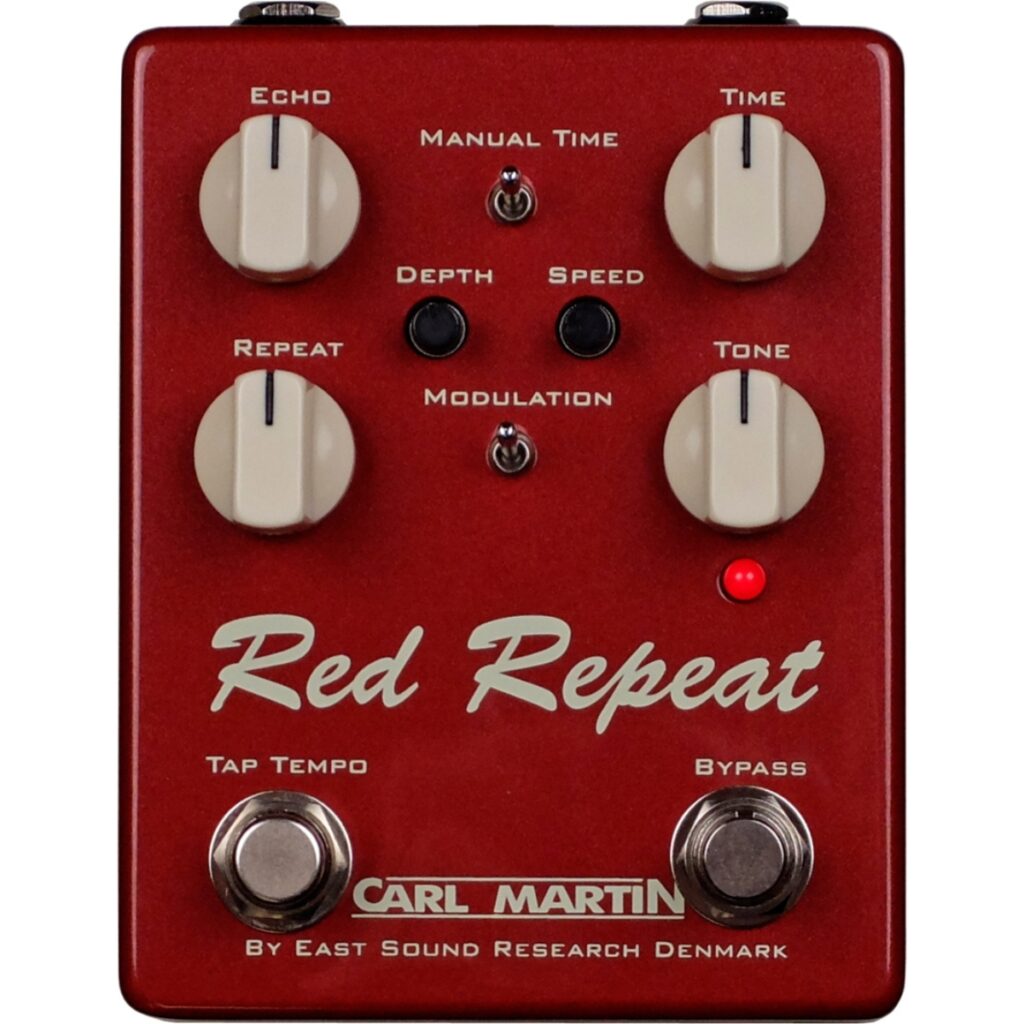
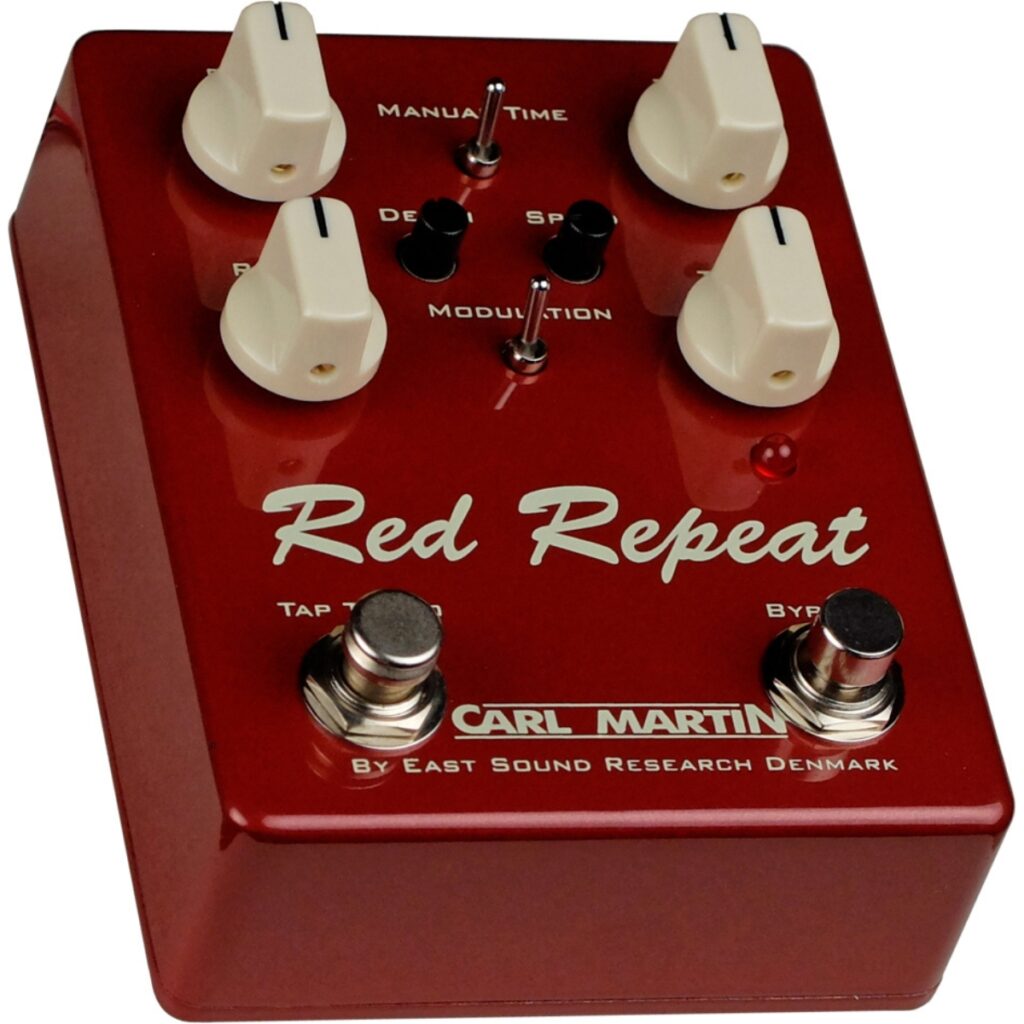
The Echo control sets how prominent the repeats are, while the Repeat control determines how many echoes follow each note. Time adjusts the spacing between repeats, ranging up to approximately 600 milliseconds. The Tone control works as a high-cut filter applied only to the echoed signal, allowing us to soften or brighten the repeats without altering the dry tone.
We added Tap Tempo to make Red Repeat easy to use in live situations. By switching to Tap Tempo mode, the delay time can be set directly from the footswitch, locking the repeats to the tempo of the song. Switching back returns control to the Time knob for manual adjustment.
To bring in the character of vintage tape echo, we included a Modulation section. Engaging modulation and adjusting the Depth and Speed controls introduces subtle pitch movement, recreating the natural wow and flutter associated with older tape-based delays. Used lightly, it adds warmth and movement; pushed further, it becomes a clearly audible texture.
Red Repeat is designed to be flexible in real-world rigs. It works equally well for thickening single-note lines, replacing reverb in tighter mixes, or creating longer delays you can play against. Simple to operate, expressive in use, and built to perform on stage.
Hear it in action
Watch and hear this product in use. Select more videos below.
More videos
FAQ
Quick answers about this pedal — shipping, power, use-cases and more.
What kind of delay is the Carl Martin Red Repeat?
The Red Repeat is an analog-voiced digital delay pedal capable of up to 600 milliseconds of delay time. It’s voiced to sound like a warm vintage tape or analog echo – the repeats are intentionally “warm” and slightly dark, not crystal-clear clinical. The 2016 edition of the Red Repeat also includes modern features like Tap Tempo and a Modulation option to add wow/flutter to the repeats. In essence, it’s a compact delay that ranges from quick slapback to moderate ambient repeats, giving you that classic echo sound with easy control.
How do I set the Tap Tempo on the Red Repeat?
The Red Repeat 2016 has a footswitch dedicated to Tap Tempo. There’s a small toggle switch labeled “Manual Time / Tap Tempo”. Flip that switch toward “Tap Tempo” (the Red Repeat logo side), and then use the right footswitch to tap in your desired delay tempo (tap twice or more in rhythm). The pedal will ignore the Time knob and use your tapped tempo. If you flip the toggle switch away (to Manual), then the delay time is set by the Time knob as usual. This means you can choose on the fly whether to dial a tempo or tap it – very handy. An LED likely blinks to show the tempo as you tap. Remember, max delay is ~600ms, so if you tap slower than that, it’ll probably just max out.
What does the Modulation switch do?
The Red Repeat has a two-position Modulation mini-switch. When you engage Modulation, it activates an analog-style wow & flutter effect on the delay repeats (kind of like tape warble). There are two tiny trim knobs for Depth and Speed of modulation on the pedal (the “black mini-pots” mentioned). You can dial those internally or via small external knobs (depending on design) to set how pronounced the modulation is. Essentially, turned on, it can make your echoes wobble slightly like an old tape echo (from subtle chorusy shimmer to more obvious seasick wavering at extreme settings). Turned off, you get straight repeats. It’s a cool feature for those who love the character of vintage tape echoes with their imperfections. Many players keep it subtle – just to give repeats some depth.
Is the Red Repeat an analog delay?
No, it’s a digital delay pedal that’s voiced to sound analog. It uses a digital chip (likely PT2399 or similar) with filtering to roll off highs on repeats, mimicking analog and tape delay characteristics. The upside: it’s more reliable, and you get extras like tap tempo and modulation which pure analog delays often lack. The downside: it’s limited to 600ms, similar to many analog units (which for most guitar uses is fine). But make no mistake, in blind tests many say it sounds very analog-ish – dark repeats, slight compression, and none of that crisp “digital ping” on echoes. So you get the warmth of analog with the convenience of digital control.
What are the controls on the Red Repeat?
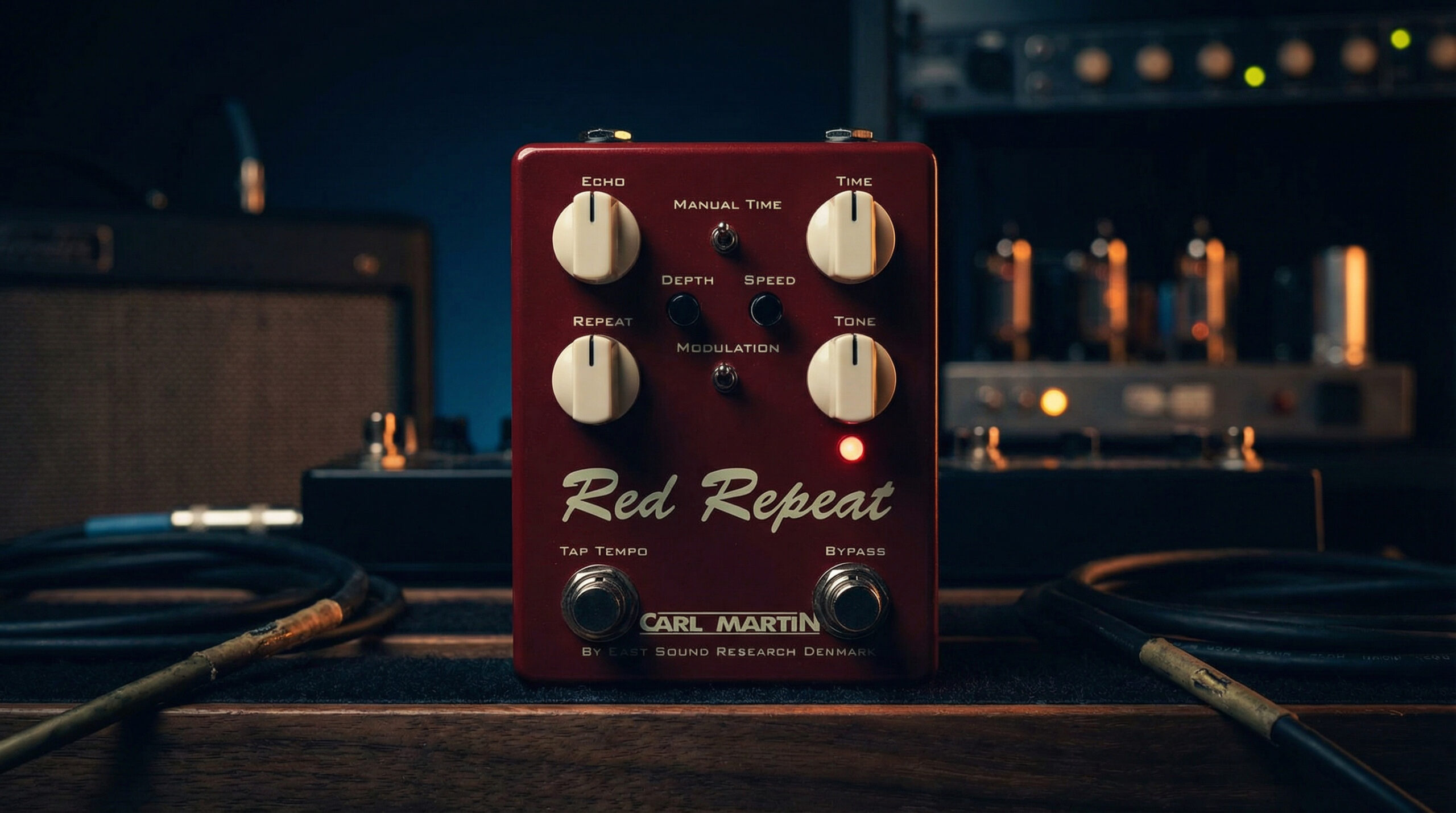
The main knobs are: Echo (which is the mix level of repeats – from barely audible to about equal with dry), Tone (which adjusts the brightness of the repeats only – fully clockwise yields brighter repeats, though still somewhat dark; fully counter-clockwise makes repeats very dark and muffled), Time (delay length, 0 to 600 ms), and Repeat (feedback – how many repeats, from one single echo up to oscillation). Then there’s the Manual/Tempo toggle, the Modulation on/off toggle with Depth/Speed trim controls, and two footswitches: one for effect Bypass and one for Tap Tempo. The layout is user-friendly: basically set your delay sound with the knobs, and use the toggles to engage tap mode or modulation if desired.
Does the Red Repeat have true bypass and do trails cut off when bypassed?
The Red Repeat is buffered bypass – it uses an active circuit when bypassed to allow delay trails to spillover. This is generally how it’s described: when you turn it off, any existing echoes fade out naturally rather than abruptly stopping. That’s a plus for musicality. The buffer also ensures no tone suck and easier integration at end of chain. So, not true bypass, but deliberately so – to preserve the effect’s decay and maintain output clarity. The buffer in this pedal is well-regarded (no tone coloration, and they even include an optional input buffer switch on some units). So expect smooth operation. If you require true bypass (some rare cases, like running it 100% wet in parallel rig), that might be a downside, but for most, the trails and buffer are desirable features.
How noisy is the Red Repeat? Does it hiss with high repeats or Tone high?
It’s pretty quiet for a delay. The repeats are intentionally dark, which also helps mask noise. Even so, the 2016 version improved the signal-to-noise; users and reviews often mention the clarity of the dry and relative quietness of operation. If you dime the Echo level and have modulation and very high feedback, you might hear a little noise as it self-oscillates (normal for analog-style delays). But in normal use, it’s not a noisy pedal. It also has a decent output level – unity is around noon on Echo knob, meaning it can slightly boost repeats if needed without adding noise floor. Always use a quality power supply (standard 9V DC, ~60 mA draw). Some older digital delays could be hissy, but this one is praised for analog-like warmth without the old analog hiss. Premier Guitar noted that even though it’s not a long delay, it “sounds and feels spacious” and can go from gentle to aggressive modulation without weird noise. So noise is not a concern here beyond what any delay would normally produce.
Can the Red Repeat self-oscillate?
Yes, if you turn the Repeat knob up high (past about 3 o’clock), the feedback will go into self-oscillation (runaway repeats). This can be used creatively – some players like to make spaceship noises or swelling waves of sound by manipulating the Repeat knob at the verge of oscillation. With modulation on, oscillation can become even more textural and wild (almost synth-like). Just be careful with volume – oscillation can get loud. The Red Repeat’s design does allow it, as indicated by Brian May joking reference in a review about “Brian May would ask what’s going on in here?” when doing crazy repeats. The pedal’s range is tuned so that it won’t oscillate uncontrollably unless you intend it (feedback at max). At more sane settings, it will give a healthy number of repeats then naturally die out, which is ideal for musical echo usage.