HeadRoom Mini
- Compact, pedalboard-friendly design recreates the depth and warmth of spring-style reverb using a digital engine.
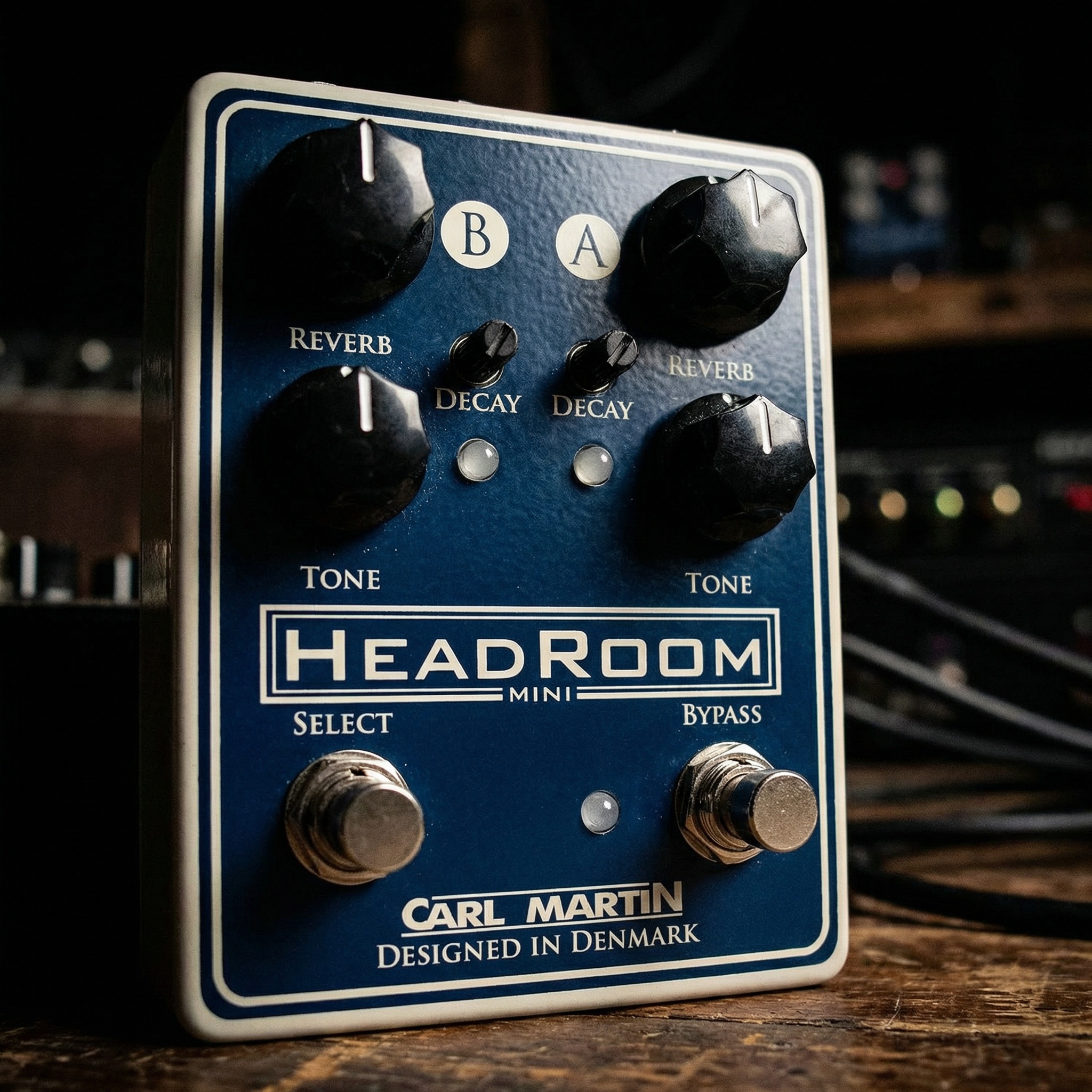
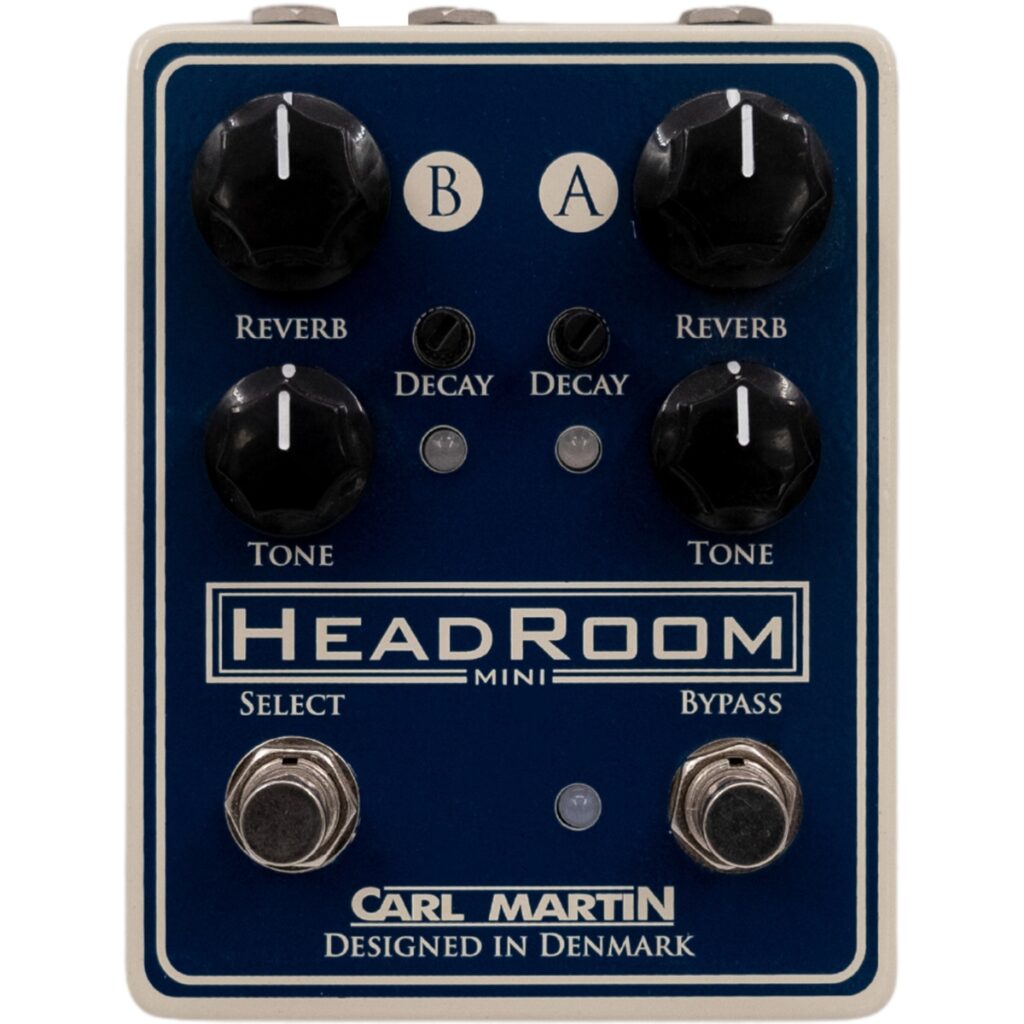
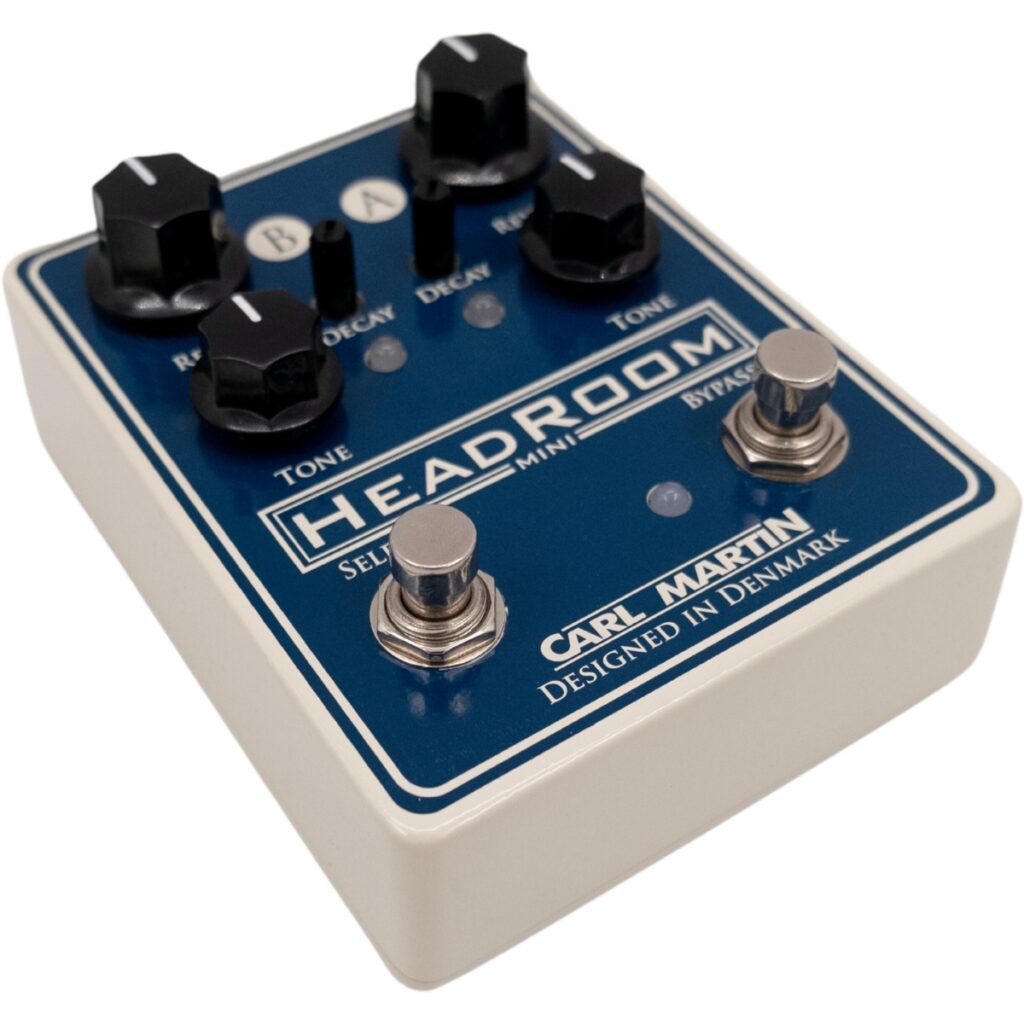
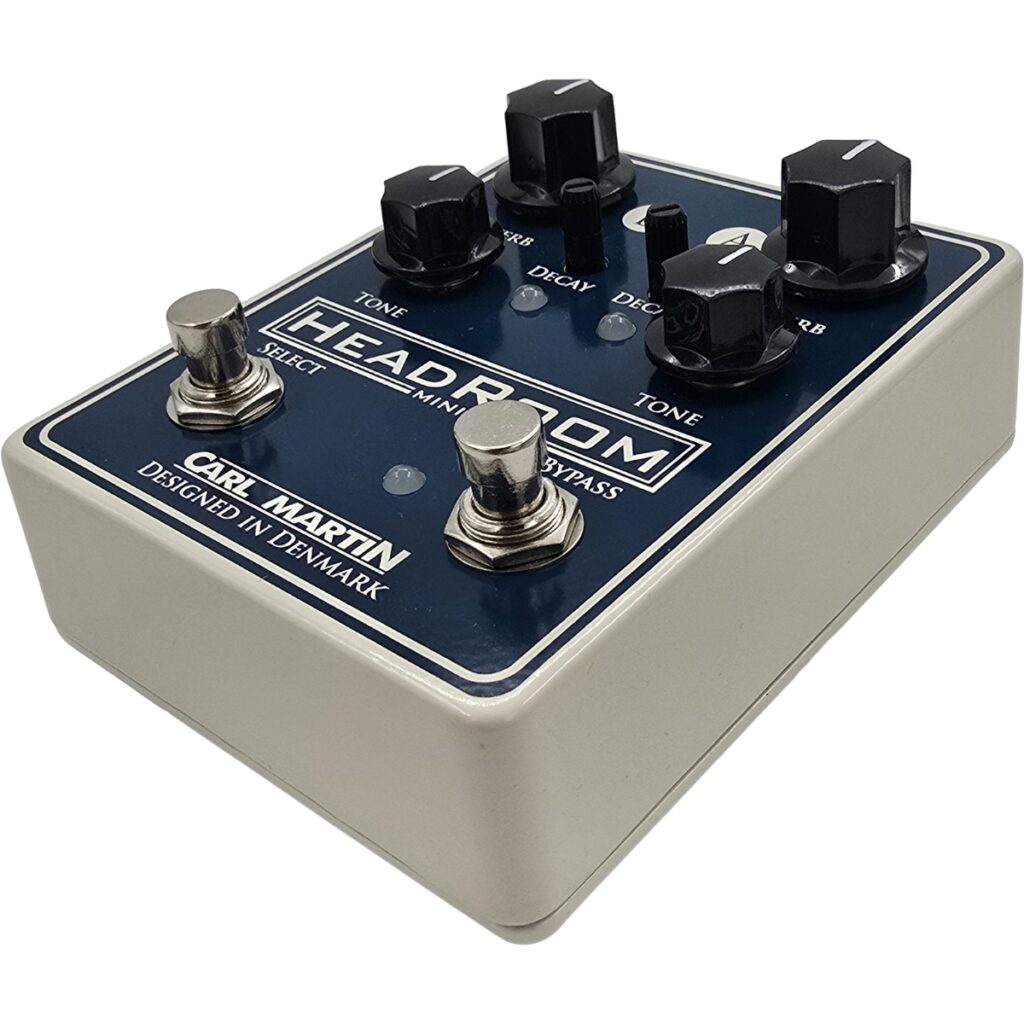
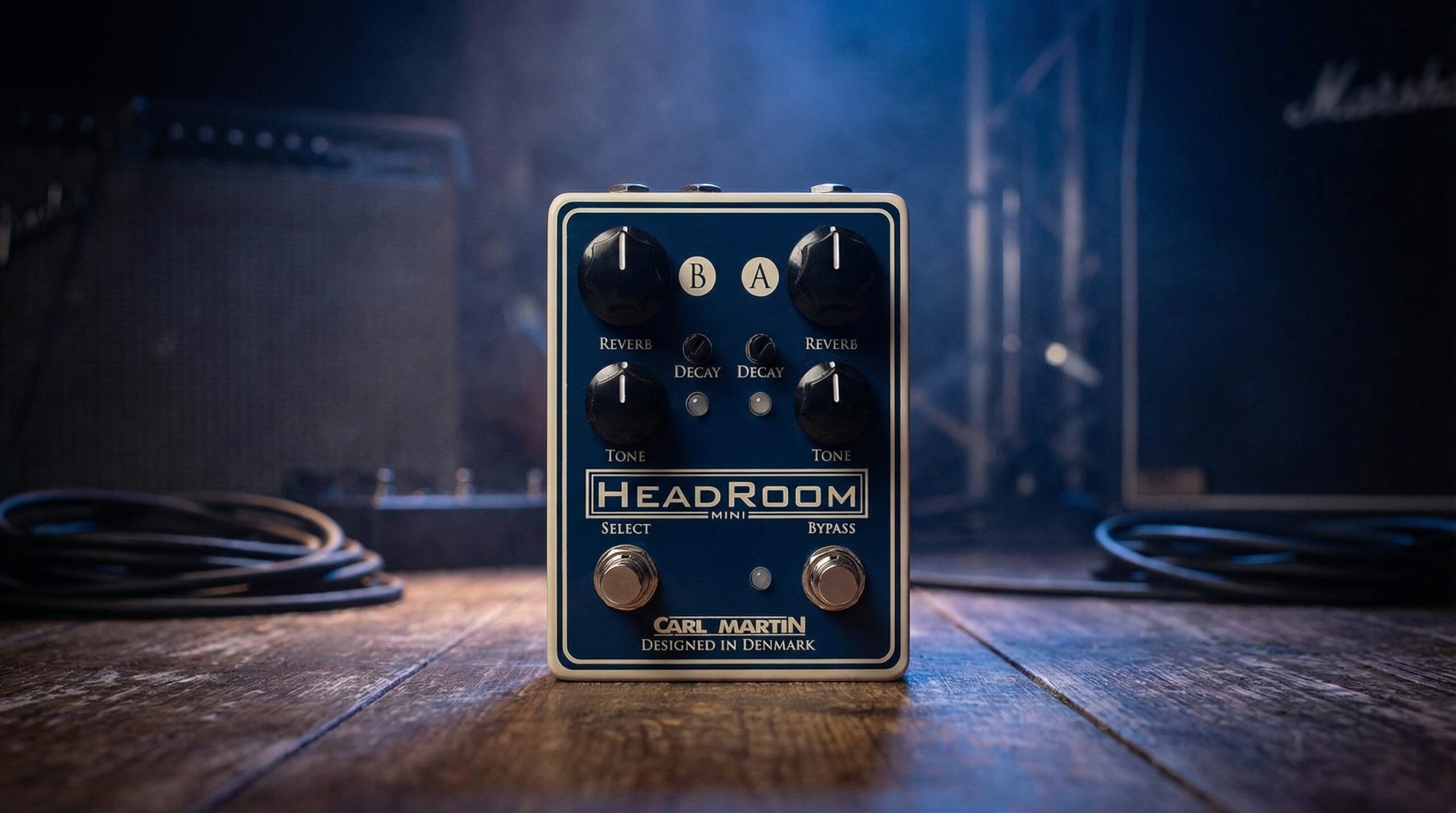
- Two independent reverb channels, each with Tone, Reverb Level, and Decay controls for instant switching between distinct sounds.
- Decay control allows a wide range from tight, reflective spaces to long, ambient reverb tails.
- Buffered output preserves signal integrity, and remote input enables external channel switching.
- Supports both mono and stereo operation, making it versatile for traditional amps and complex setups.
All about Carl Martin HeadRoom Mini
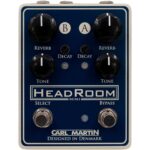
When we developed HeadRoom Mini, our goal was to capture the character and flexibility of the original HeadRoom — but in a more compact, pedalboard-friendly format. Instead of real springs, we chose a digital reverb engine that allows us to recreate the depth, warmth, and movement of spring-style reverb while keeping size, weight, and power requirements practical.
We built HeadRoom Mini around two identical reverb channels, each with its own Tone, Reverb Level, and Decay controls. This lets us set up two completely different reverb characters and switch between them instantly. One channel can handle a short, bright room sound, while the other delivers a longer, darker, more expansive reverb — all without touching the knobs mid-song.
The decay control adds another layer of control, allowing us to move from tight, reflective spaces to long, ambient tails that feel far larger than the pedal itself. Used subtly, it adds depth and dimension. Pushed further, it opens up wide, atmospheric textures that still remain controlled and musical.
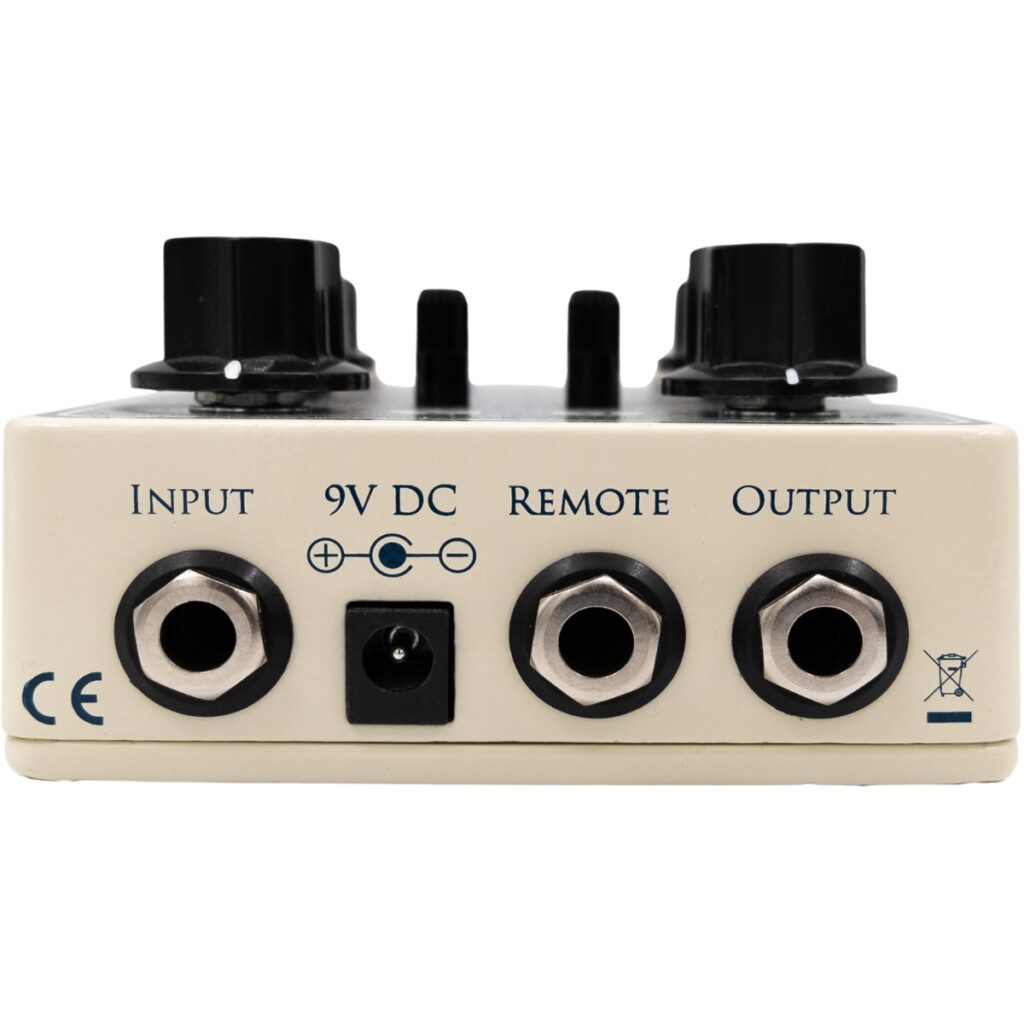
HeadRoom Mini is designed to integrate easily into modern rigs. The buffered output preserves signal integrity, especially in pedalboards with longer cable runs, and the remote input allows external switching between preset A and B if needed. Despite its compact enclosure, the pedal supports mono or stereo signal paths, making it equally useful on traditional amps and more complex setups.
Simple to operate, flexible in use, and built with the same design philosophy as the original, HeadRoom Mini delivers two instantly accessible reverb sounds in a format that fits naturally on today’s pedalboards.
Hear it in action
Watch and hear this product in use. Select more videos below.
More videos
FAQ
Quick answers about this pedal — shipping, power, use-cases and more.
What’s the difference between the HeadRoom Mini and the original HeadRoom?
The HeadRoom Mini is a digital emulation of the HeadRoom’s spring reverb, packed into a much smaller and more modern pedal. It still offers two independent reverb channels A and B with separate Level and Tone controls, but instead of real springs, it uses a high-quality digital algorithm to simulate those spring reverb sounds. Because it’s digital, the Mini also adds features like stereo inputs/outputs and a switchable buffered bypass with spillover. Essentially, the Mini gives you the beloved warm, natural tone of the big HeadRoom’s spring, but in a compact, lightweight unit better suited for modern pedalboards – and with stereo capability and no maintenance (no springs to potentially clunk).
Does the HeadRoom Mini still have two switchable reverb settings?
Yes! Just like the big HeadRoom, the Mini has two channels (A and B) that you can toggle between with a footswitch. Each channel on the Mini has its own Tone and Level knobs (labeled A and B) to customize the depth and brightness of the reverb. So you might set A to a light “room” reverb and B to a deep “cathedral” reverb, for instance. One stomp on the left footswitch switches between A and B in real time, and the right footswitch is Effect On/Bypass. This is a direct carryover of the dual preset idea, which users loved in the original – now in smaller form. The Mini’s digital implementation even allows stereo reverb if you’re running two amps or a stereo rig, which the original couldn’t do.
Is the HeadRoom Mini true bypass or buffered?
The HeadRoom Mini uses a buffered bypass with spillover trails. That means when you bypass the pedal, it’s not cutting the reverb tails off abruptly – any lingering reverb will decay naturally (no “hard cut”). This is a great feature of many digital reverbs. Also, the buffered bypass ensures your signal stays strong through the pedal even when off (important since it’s stereo and digital). There is also a switch on the Mini to select mono or stereo operation; in stereo mode, it sums or splits appropriately. So short answer: not true bypass – it’s an always-buffered digital circuit, but for good reason (to keep your reverb tails sounding smooth).
How does the Mini’s sound compare to the original HeadRoom’s analog spring?
Impressively close. Carl Martin modeled the digital algorithm to mimic the warm, musical character of their analog spring unit. Reviews highlight that it retains the “same warm and rich tone as the original, in a more practical format”. You still get that drip and spaciousness reminiscent of a real spring. The advantage of digital is you can dial the reverb from small room to “grand cathedral” lengths – the Mini’s range actually exceeds the original’s short springs (the copy even says from “small room… to very large cathedrals!”). So the Mini can do bigger and longer reverbs too, making it more versatile. Most importantly, it responds dynamically and has zero latency issues – players note you might forget it’s not a real spring while playing because it reacts naturally. In summary, sound-wise Carl Martin nailed the spring emulation, plus you can get extremes (if you want a massive ambient wash, the digital can oblige where the analog was limited by physical spring length).
What does the “Voicing” or “Presence” switch do on the Mini (if any)?
The original analog HeadRoom didn’t have a voicing switch, but the Mini introduced a few new features. On the back panel, the Mini has a Stereo In/Out jacks and a Remote jack for channel switching via external controller. It doesn’t have a separate voicing toggle per se, but it does have the buffered bypass (with presumably an internal option to sum or something, but that’s fixed). It also draws more power (since it’s digital). Essentially, any “voicing” differences would be handled by the Tone knobs for each channel. The presence of a remote jack is great – you can integrate it with loop switchers or MIDI controllers (with a relay) to toggle A/B remotely. So if anything, the “Voicing” aspect might refer to the slight low-end cap voicing switch which the original HeadRoom didn’t have, but actually in this context of the Ampster mention, “Voicing switch” was on the Ampster, not the HeadRoom Mini. So in the Mini’s case, just know: A/B channel tone shaping is via Tone knobs, and the pedal is tuned from small room to huge hall via those controls, no extra voicing toggles needed because the algorithm covers that range.
Does the HeadRoom Mini have trails when bypassed?
Yes, because it’s buffered bypass, the reverb decays naturally when you hit bypass – the echoes don’t cut off abruptly. This means if you play a chord with big reverb then bypass the pedal, you’ll still hear the reverb tail fading out, which is usually desirable. If you prefer “hard bypass” (no trails), that’s not the default mode – the Mini prioritizes smooth operation. Most players appreciate this, as it sounds more professional between song changes, etc. If you really needed to kill the reverb instantly, you could always use the mute on your amp or a volume pedal; but generally, trails are considered a positive feature here.