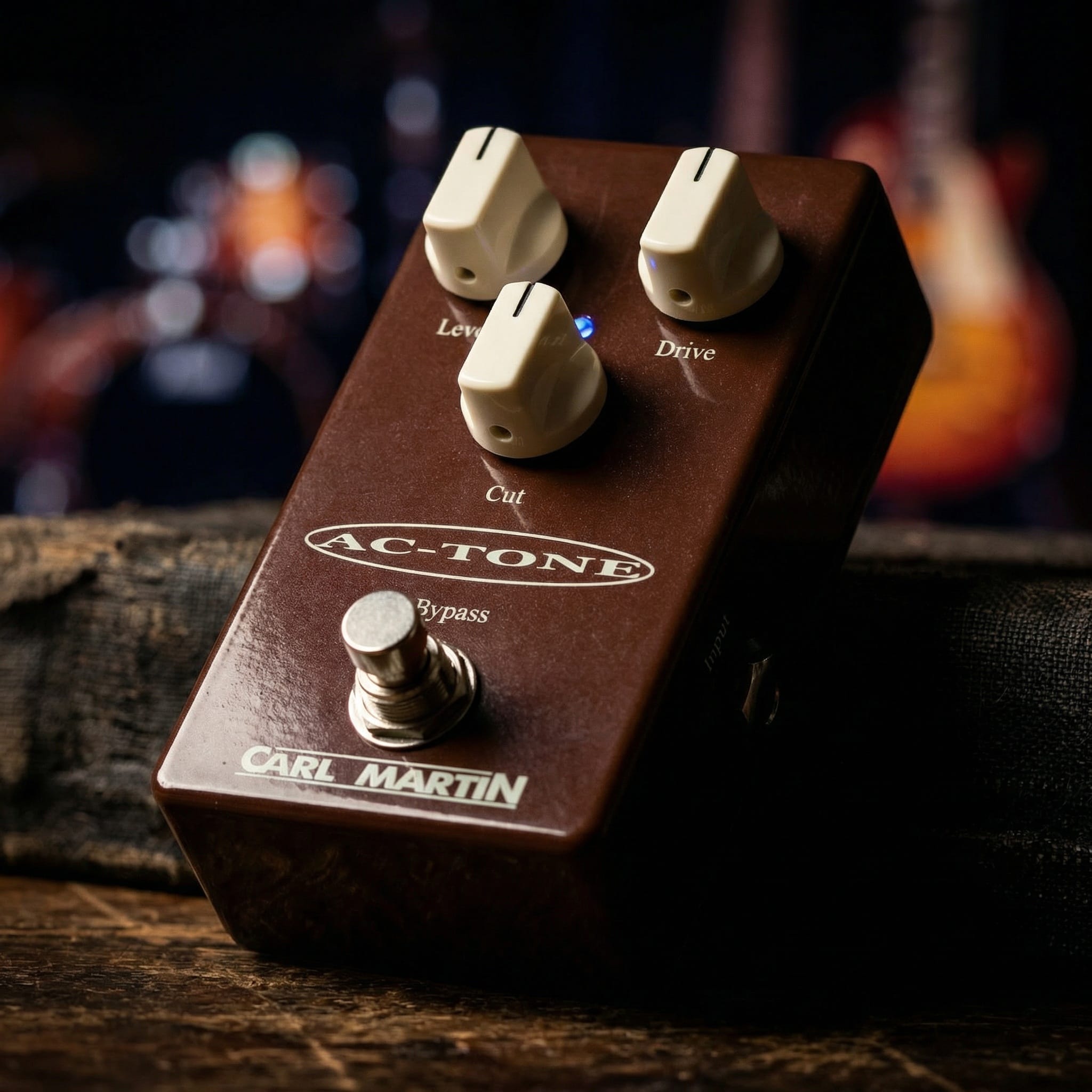
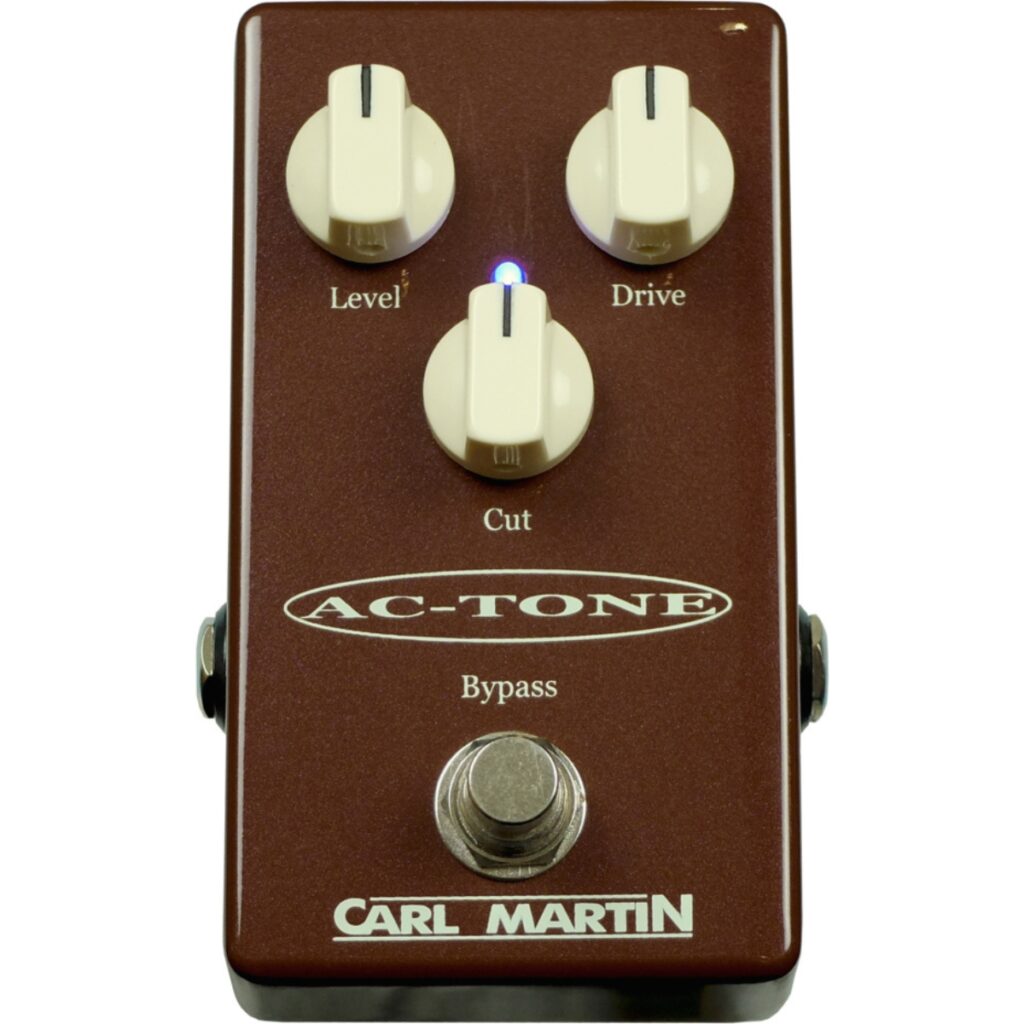
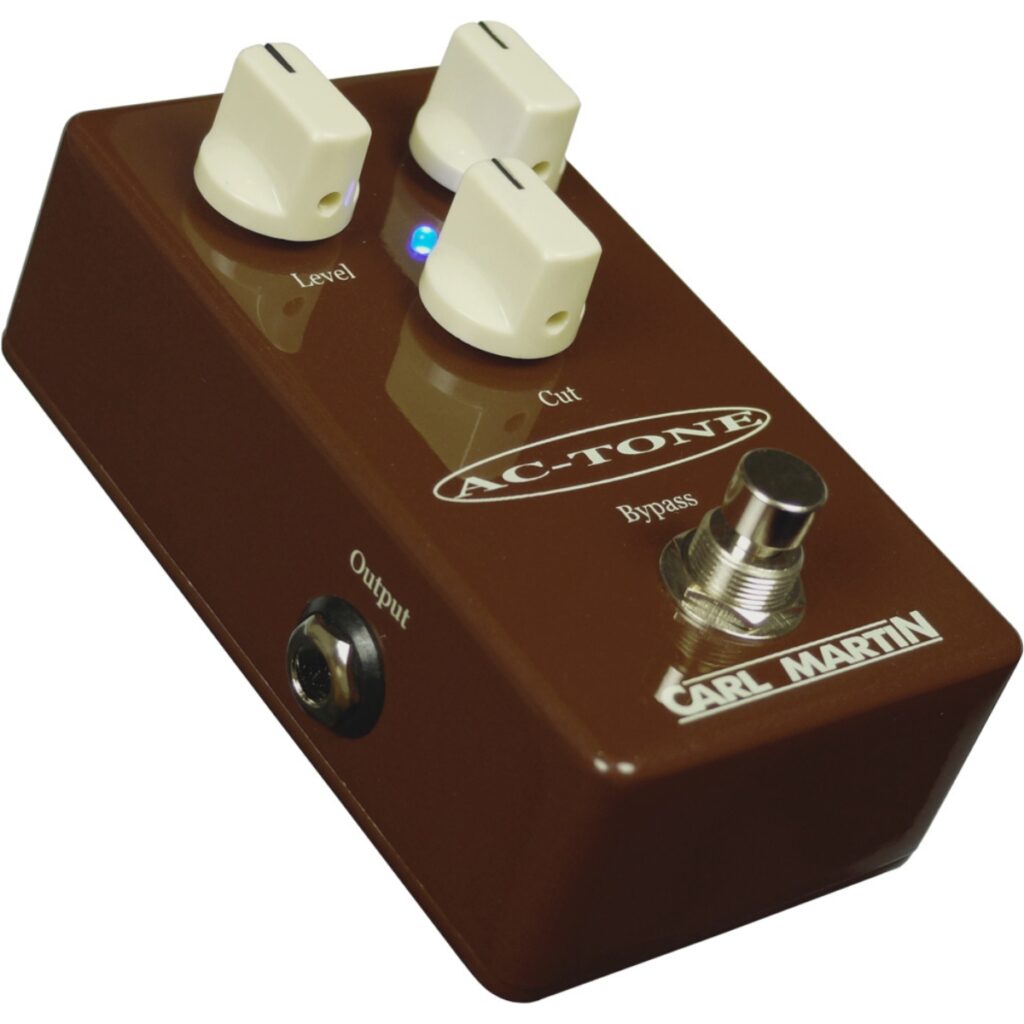
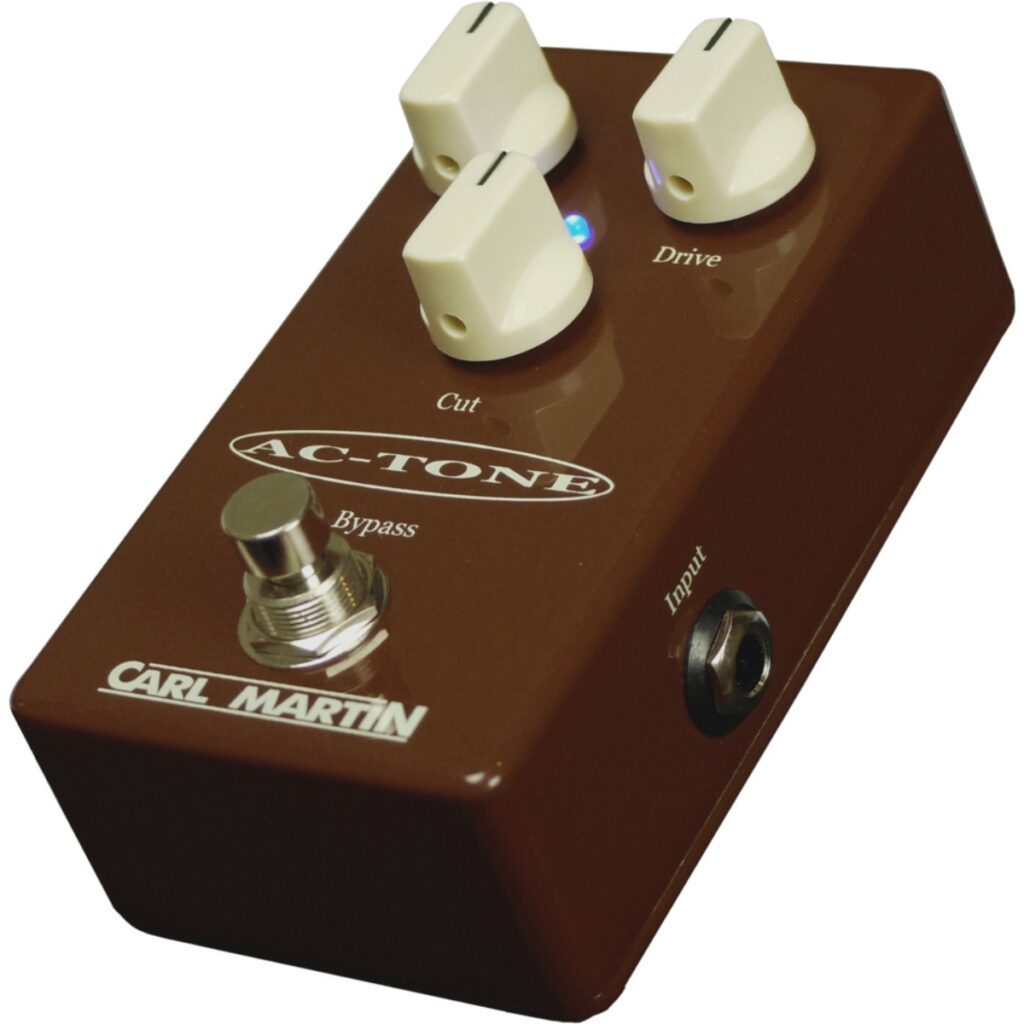
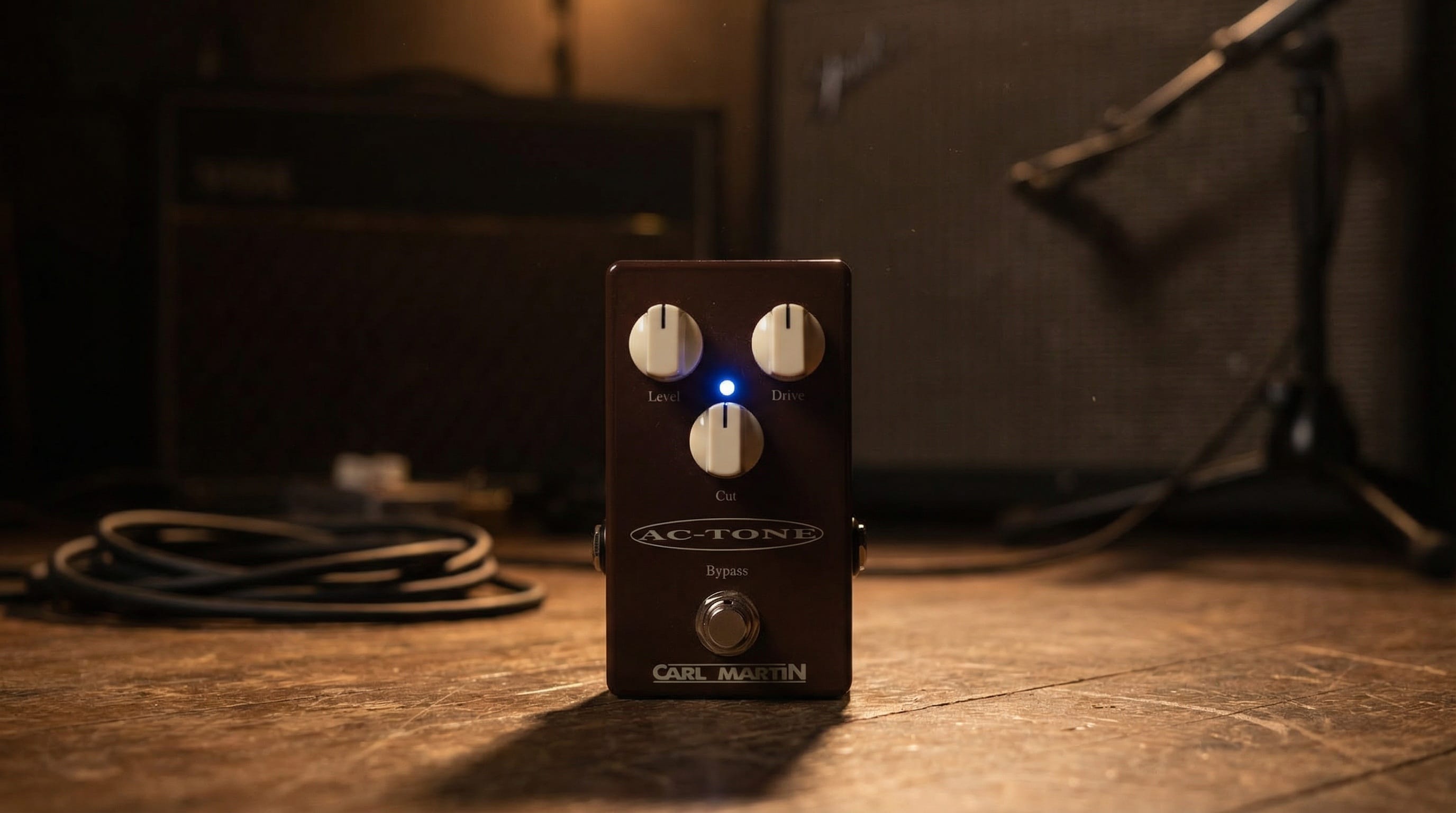
AC-Tone Single
- Focused British-style overdrive with dynamic, touch-responsive feel.
- Unique Cut control acts as a low-pass filter to tame high-end without dulling your tone.
- Compact single-channel design fits easily on modern pedalboards.
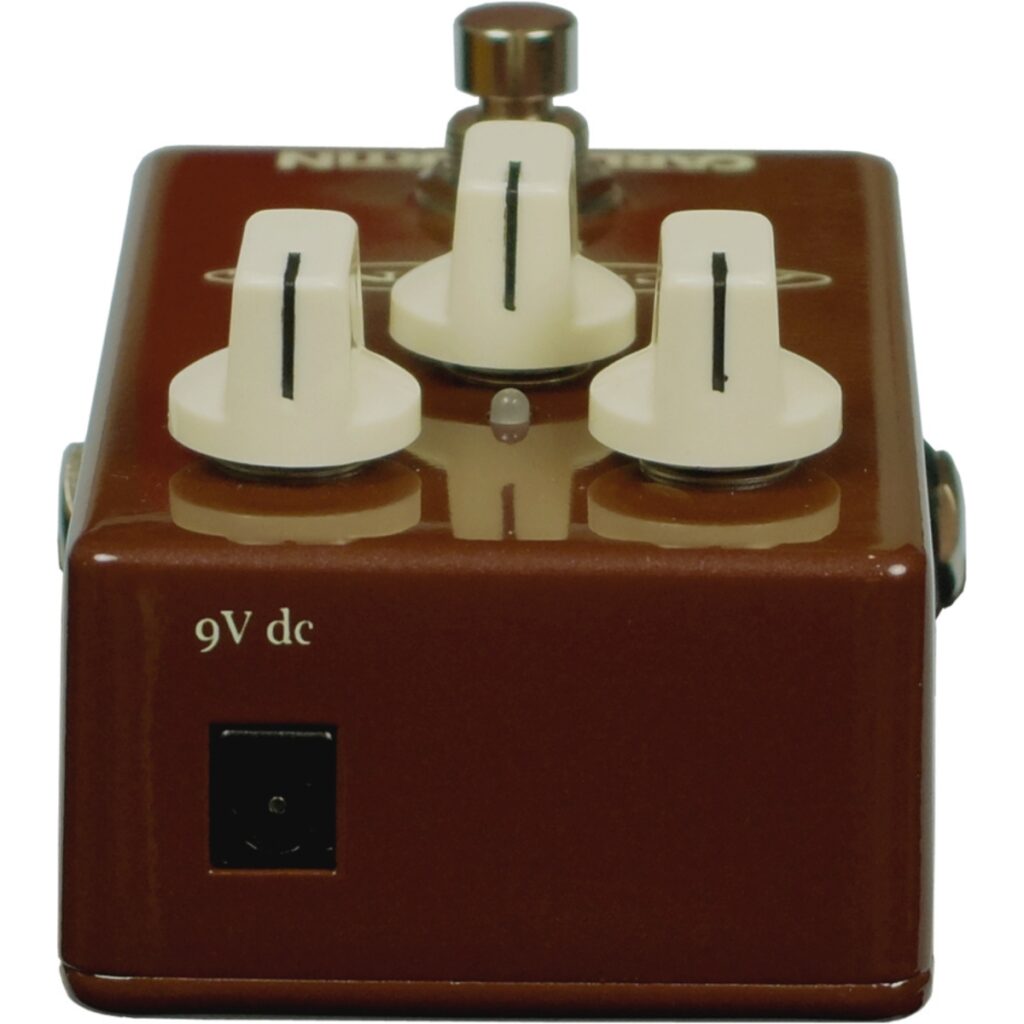
- Runs internally at ±12V for extra headroom and clarity, powered by a standard 9V supply.
- Simple, intuitive controls: Level, Drive, and Cut — everything you need at your fingertips.
All about Carl Martin AC-Tone Single
When we set out to make AC-Tone Single, the idea wasn’t to simplify the sound — it was to make it more focused. This pedal carries the same core voice as its bigger sibling, the Pro Series AC-Tone, but in a single-channel format that fits naturally into modern pedalboards.
We kept the character intact and pushed the overdrive section a bit further, giving it more authority when you lean into it. From open, chiming cleans to saturated British-style drive, the feel stays dynamic and touch-responsive throughout. The goal was always to let your playing control how far things go.
A key part of that is the Cut control. Rather than shaping the entire EQ, it works like a low-pass filter, allowing you to tame high-end content without flattening the tone. It’s especially useful when switching guitars, amps, or speakers — or when a sound that works at home suddenly feels too sharp on stage.
Despite its compact size, AC-Tone Single isn’t a compromise. Under the hood, we use our DC-DC converter circuitry, allowing the pedal to run from a regulated 9V supply while internally operating at ±12V — just like the original AC-powered AC-Tone. That extra headroom is a big part of why the pedal stays articulate and controlled, even at higher drive settings.
It’s a straightforward design, built around Level, Drive, and Cut — and that’s very much the point. Everything you need is right there, ready to respond when you play.
Hear it in action
Watch and hear this product in use. Select more videos below.
More videos
FAQ
Quick answers about this pedal — shipping, power, use-cases and more.
What kind of tones does the AC-Tone Single produce?
The AC-Tone Single is voiced after the classic Vox AC30 amp, delivering everything from shimmering, chiming clean tones to full-on British rock overdrive. It nails that vintage British sound – think Beatles-like cleans up to crunchy AC/DC-style rhythms – all in a compact pedal.
What does the “Cut” control do on the AC-Tone Single?
The Cut knob on the AC-Tone acts as a low-pass filter to tame high frequencies. Turning up Cut will roll off some treble, helping dial back any harsh high-end. This is useful for smoothing out the tone when the AC-Tone’s brightness is too pronounced, especially at higher gain settings.
How is the AC-Tone Single different from the original Pro Series AC-Tone?
he Single is a one-channel version of the dual-channel Pro Series AC-Tone. Carl Martin beefed up the gain for this smaller unit and added the Cut control for extra tone shaping. Unlike the old AC-powered big pedal, the AC-Tone Single runs on a standard 9V DC supply but internally converts to ±12V, so it maintains the same headroom and sound quality as the larger AC-Tone.
Is the AC-Tone Single true bypass?
The AC-Tone uses an active buffered bypass circuit rather than true bypass. This means when the pedal is off, your signal still goes through a high-quality buffer. The benefit is you won’t lose tone or volume over long cable runs – the buffer keeps your bypassed sound clear and strong. (No tone-suck issues here, as Carl Martin’s buffers are excellent.)
What are the power requirements? Can I use a battery?
The AC-Tone Single requires an external 9V DC power supply (regulated, center-negative) providing at least ~100 mA. It cannot run on a 9V battery – the pedal’s design doesn’t include a battery compartment. Power consumption is around 62 mA, so any standard pedalboard power unit will drive it easily (just be sure it’s regulated 9V DC).
What kind of amplifier setup is AC-Tone best into?
The AC-Tone Single is designed to emulate an amp, so it works great into a clean guitar amp or even straight into a power amp or recording interface. It shines into a clean channel, where it can essentially be your Vox-style amp sound. You can also run it into an effects return or amp sim setup. Many players use it as their “amp-in-a-box” for direct recording or live rigs when they want that British AC30 flavor.
Does the AC-Tone handle high gain sounds (Brian May-style lead tones)?
Yes – within the classic Vox range. The AC-Tone has plenty of gain on tap, more than the original Pro Series unit. It can absolutely get into Brian May territory (think singing, midrangy lead sustain), though its core character remains that vintage Vox-style overdrive. At max gain it produces a smooth, harmonically rich distortion, but it’s not a modern metal pedal – it’s voiced for classic rock saturation.
Where should I place the AC-Tone in my signal chain?
Treat the AC-Tone like an amp-in-a-pedal or overdrive pedal. It typically works best before time-based effects (delay, reverb) and after any fuzz or wah pedals. A common order is: Guitar → Fuzz/Wah → AC-Tone → Modulation/Delay → Amp. This way, the AC-Tone’s overdrive is adding harmonics that your delays and reverbs will then echo, preserving clarity. Since it has a buffered bypass, it can even serve as a buffer at the start of your chain to keep your tone strong.