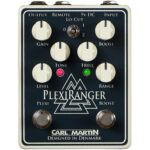
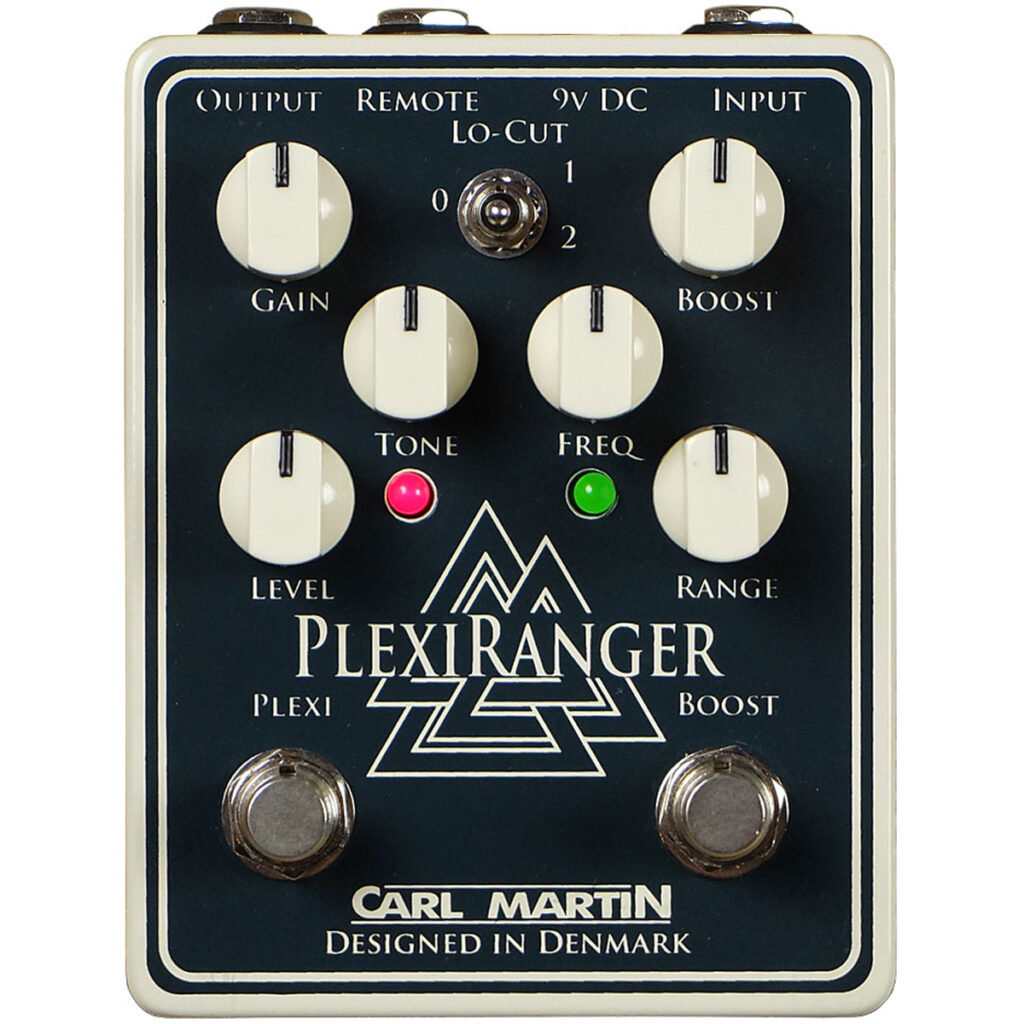
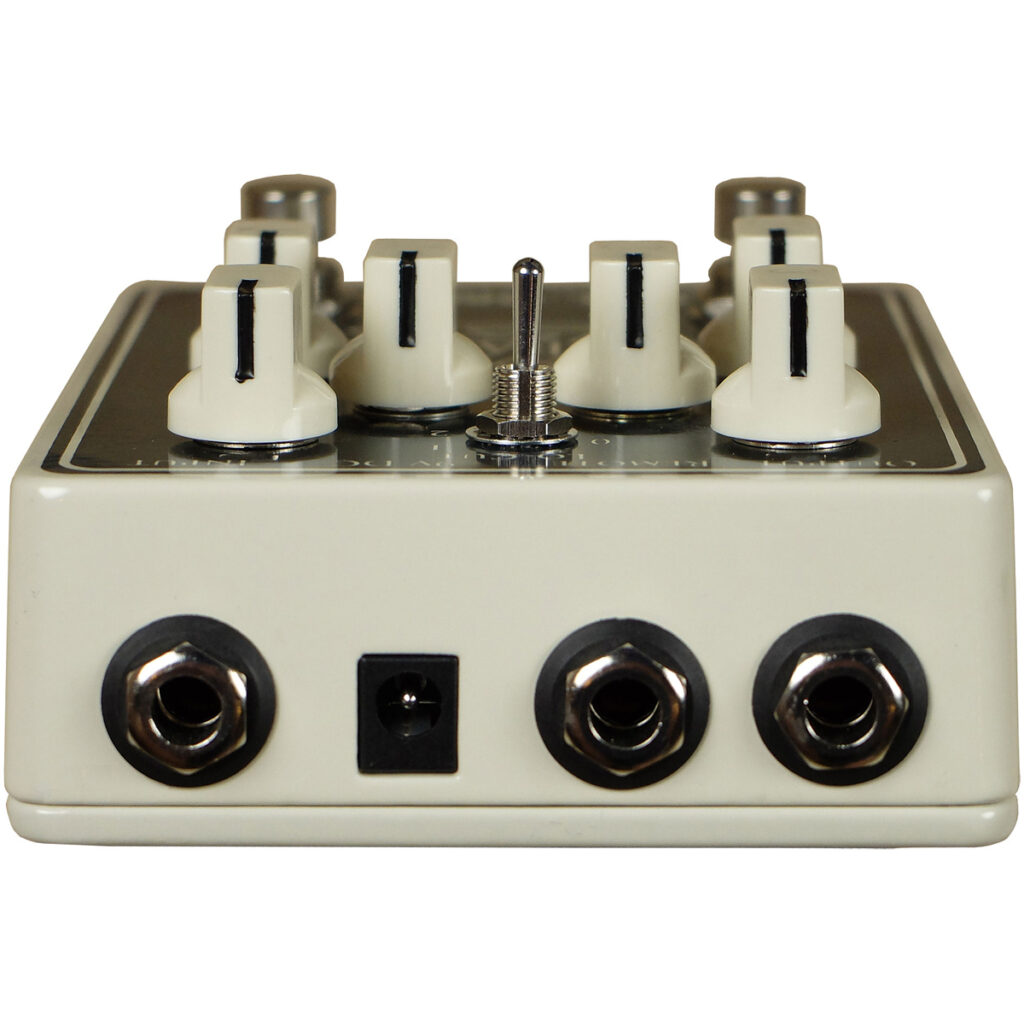
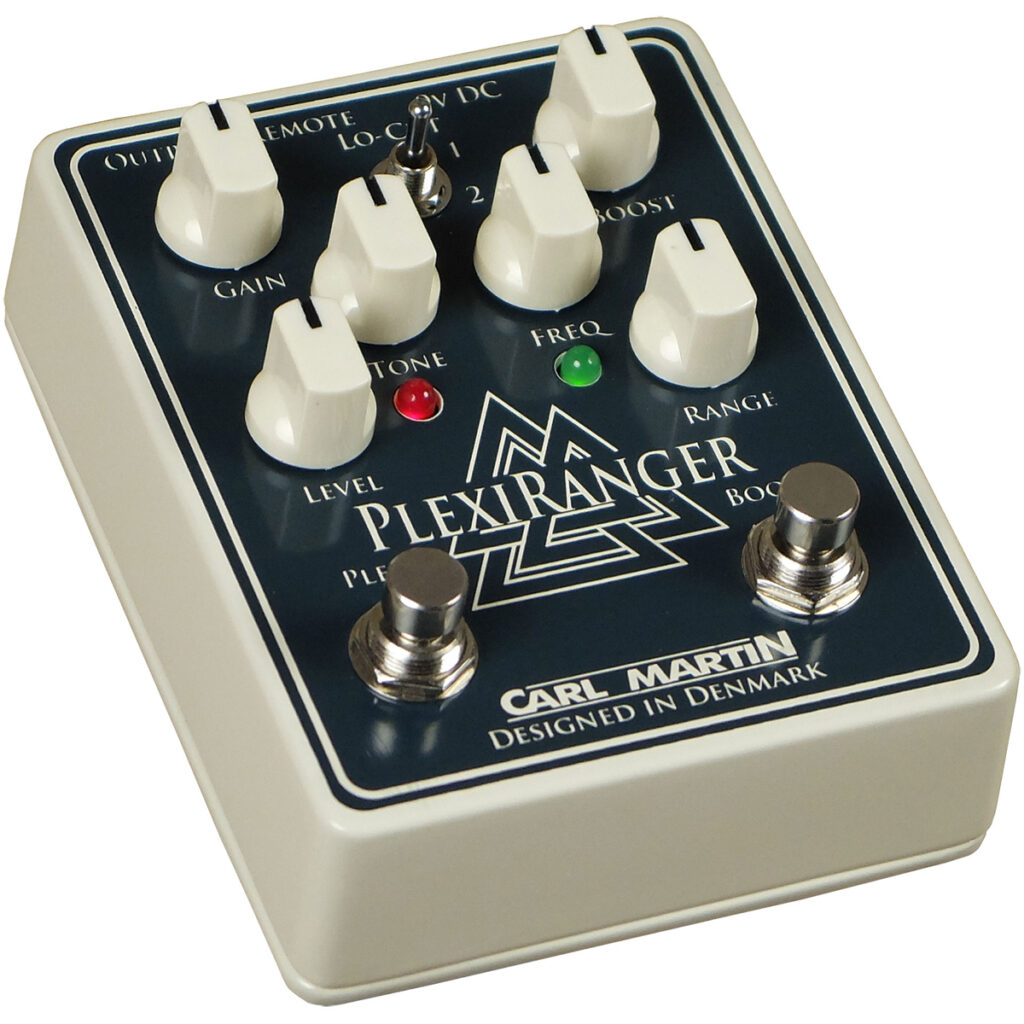
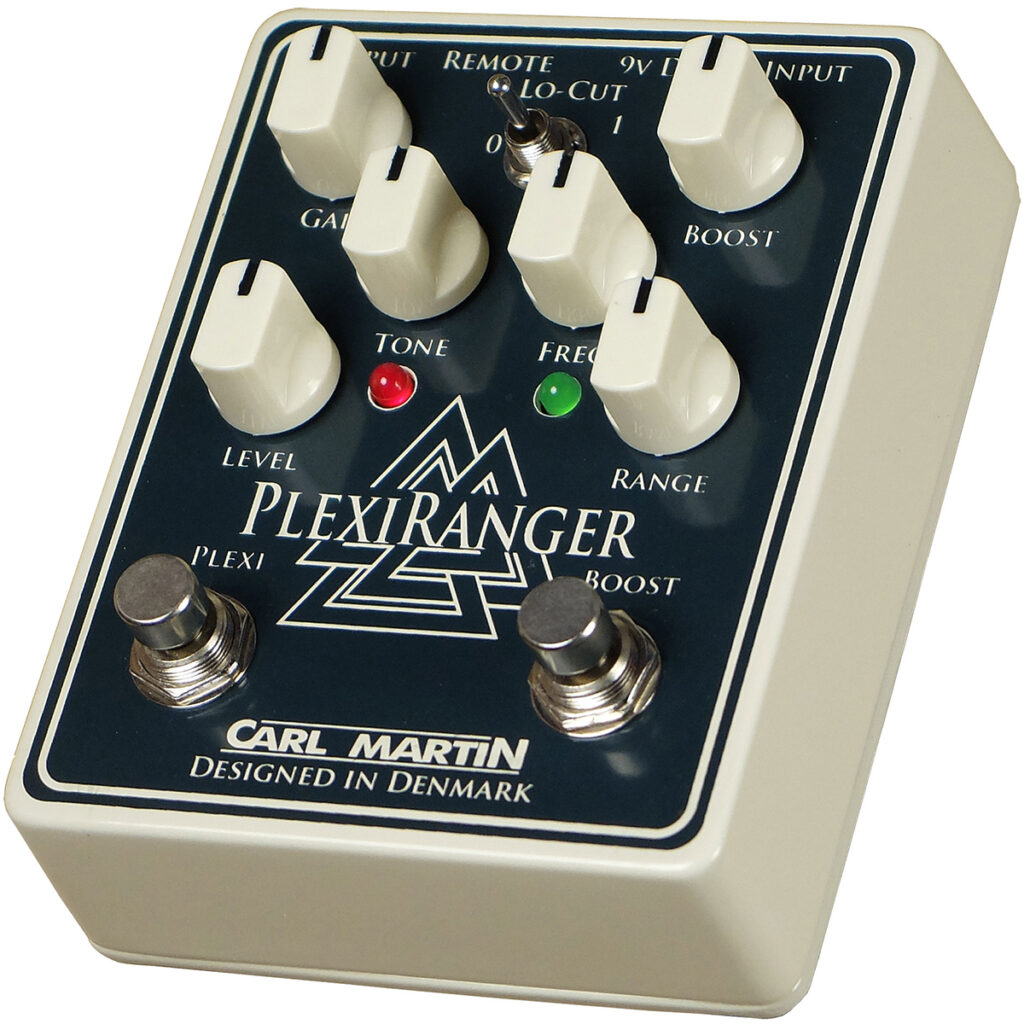
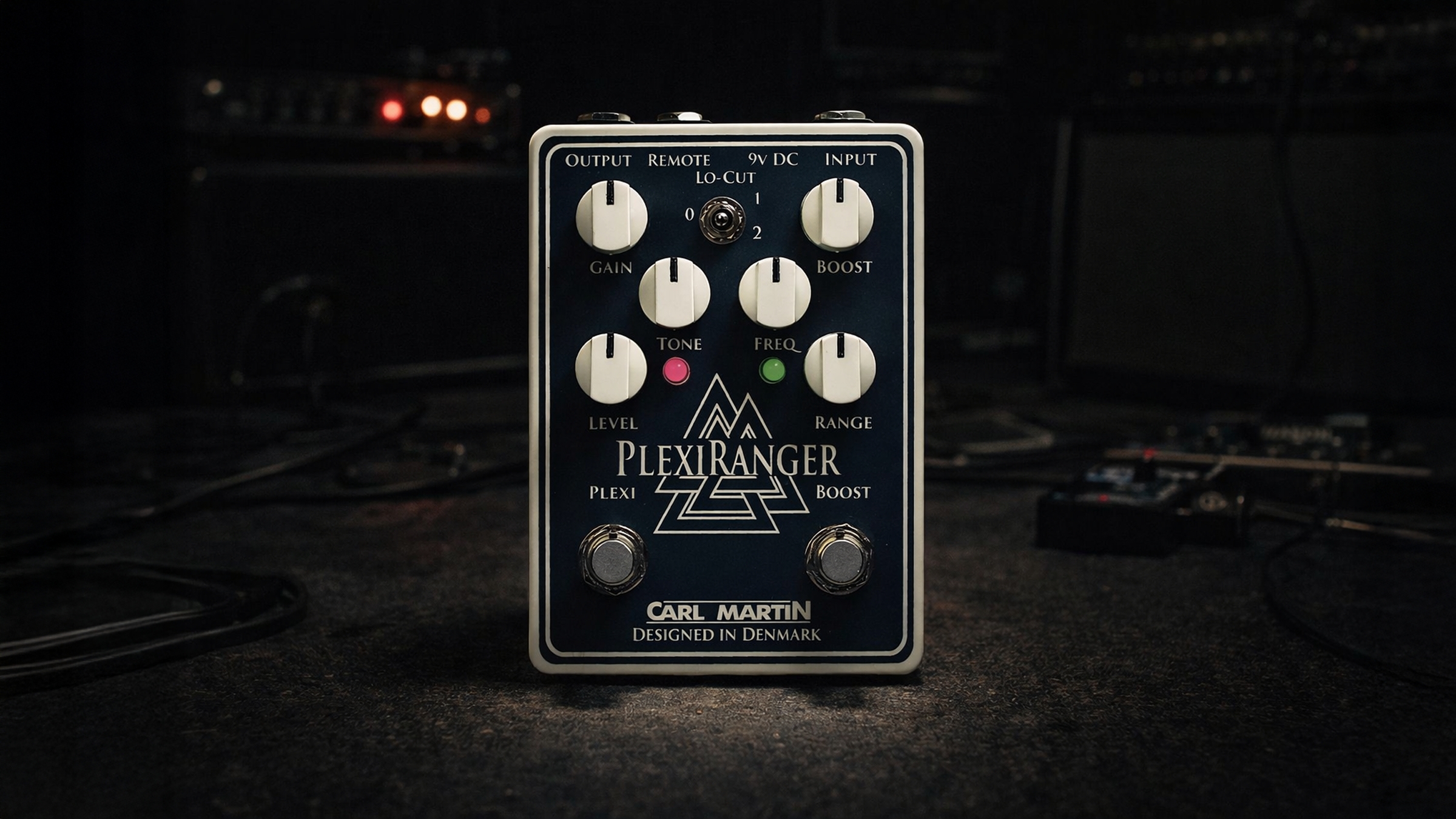
PlexiRanger
- Treble booster and Plexi-style gain in one
- Midrange shaping and high cut controls
- Authentic classic rock tones
- Compact footprint
- True bypass switching
All about Carl Martin PlexiRanger
Our take on the classic treble booster – expanded, refined and made unmistakably Carl Martin
When we look back at the golden era of rock guitar – from the mid-60s to the mid-70s – we hear a sound that shaped everything that followed. British amplifiers, big cabinets and loud stages defined the tone of players like Tony Iommi, Ritchie Blackmore and Brian May. But those powerful rigs also came with a challenge: an overwhelming low end that needed control.
The answer was the treble booster.
By pushing upper frequencies into the front of already loud tube amps, treble boosters didn’t just solve a problem – they created a new sound. More bite, more presence, and a raw, expressive overdrive that became part of rock history. When we designed PlexiRanger, our goal was to bring that sound back in a way that works for modern players, modern amps and real-world pedalboards.
The boost side of PlexiRanger is inspired by the classic treble booster circuits we all know, but carefully voiced to be more flexible and predictable. From subtle high-end lift to aggressive upper-mid push, we designed it to add clarity and authority without becoming harsh or brittle.
But we didn’t want to stop at recreating the past.
That’s why we added a dedicated gain channel. With PlexiRanger, we wanted a pedal that could function as a pure boost, a drive pedal, or a powerful combination of both. The gain section adds body, saturation and sustain, while still retaining the dynamics and touch sensitivity we expect from a proper analog circuit.
Used in front of a clean amp, a breaking-up amp or an already driven rig, PlexiRanger lets us shape the low end, focus the mids and push the front end exactly where it needs to go. To us, it’s not just a tribute to classic British tone – it’s a practical, modern tool built to deliver that sound night after night.
Hear it in action
Watch and hear this product in use. Select more videos below.
More videos
FAQ
Quick answers about this pedal — shipping, power, use-cases and more.
What is the PlexiRanger pedal?
The PlexiRanger is a two-in-one pedal: it combines a Marshall Plexi-style overdrive/distortion and a vintage treble booster (à la Dallas Rangemaster) in one box. Essentially, you get that classic British amp overdrive tone and a powerful boost that can focus on specific frequencies. It’s Carl Martin’s way of recreating the tones of players like Tony Iommi, Brian May, and Ritchie Blackmore – who often hit a cranked Marshall with a treble booster for sustain and cut
Can I use the drive and boost independently?
Yes – the PlexiRanger has separate footswitches for the Plexi drive channel and the Boost channel, and they can be engaged independently or together. This means you can use it as: just an overdrive pedal (Plexi side on, boost off), just a boost (boost on, Plexi off) for pushing your amp or another pedal, or both together for maximum rock fury (boost hitting the Plexi drive). The independent switching makes it very versatile; it’s like having an overdrive and a boost pedal in one housing.
What controls does the PlexiRanger have?
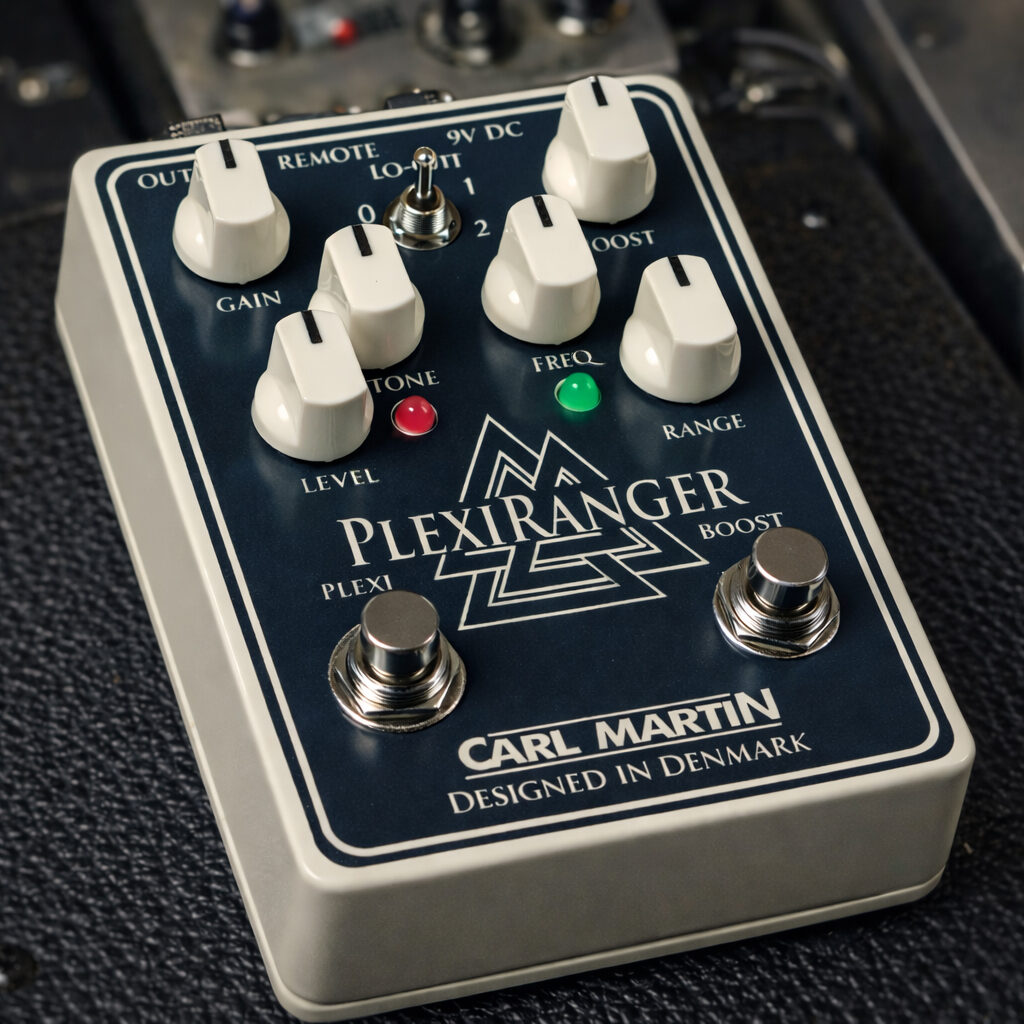
On the Plexi (drive) side, you have Gain, Tone, and Level knobs to dial in the distortion tone. On the Boost side, it’s a bit more involved: there’s a Boost Level knob (up to +15dB of clean boost), and a Frequency selector and Range knob which together control a frequency boost (this is the “treble booster” part). The Frequency knob chooses which frequency band to emphasize, and the Range knob sets how much boost at that frequency. Additionally, there’s a 3-position Low-Cut switch (actually a 4-way rotary with 3 active positions) that lets you apply no low-cut, a mild low-cut, or a strong low-cut to the boost side. That low-cut is basically simulating how classic treble boosters cut bass – useful to prevent flubby lows when boosting a high-gain amp or pedal.
How do the Frequency and Range knobs on the boost work?
Think of the PlexiRanger’s boost as an adjustable treble/mid boost. The Frequency knob selects the center frequency (which part of the spectrum to boost) – lower settings boost lower mids, higher settings boost upper mids/treble. The Range knob then determines how much of that selected frequency range gets boosted. At low Range, the boost is subtle and more full-range; at max Range, you get a pronounced peak at the chosen frequency (really great for, say, pushing the midrange for solos). In essence, you can tune the boost to be like a classic treble booster (set Frequency high and Range up) or a fatter full boost (Frequency lower, Range lower). This flexibility means you can tailor the boost to different guitars and amps – it’s not one fixed “treble boost” but many.
What does the Lo-Cut switch do exactly on the Boost?
The PlexiRanger’s boost has a 4-way selector for low-cut filtering, labeled 1, 2, 3 (and an off position) internally. Position 1 = slight low-cut, Position 2 = heavy low-cut, Position 3 = no low-cut (full range). This is to emulate how old school treble boosters would cut bass to prevent muddiness. If you find the boost makes your tone too bassy or flubby, use the low-cut (especially useful with neck pickups or already bass-heavy amps). If you want a fuller boost (like for fattening single-coils), you might leave it at no cut. It’s a great tweak to ensure the boost complements rather than muddies your tone.
Is the PlexiRanger true bypass?
Yes – the pedal uses gold relays for true-bypass switching on all loops of the signal. That means when both the drive and boost are off, your signal is not going through any circuitry (and even when on, those relays and buffers are high quality, impedance-friendly components). Carl Martin specifically notes the loops are “impedance free, gold relays” which is a fancy way of saying it preserves tone and is effectively true bypass when not engaged.
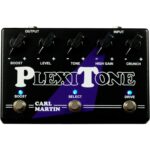
How does the PlexiRanger differ from the classic PlexiTone pedal?
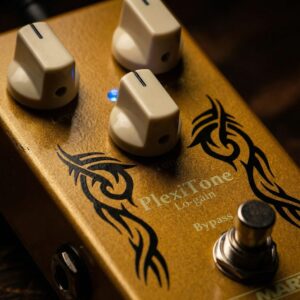
The PlexiRanger’s Plexi side is akin to a PlexiTone (Marshall-in-a-box drive) but the PlexiRanger adds the rangemaster-style boost section. The original Carl Martin PlexiTone was just an overdrive/distortion. Here you get that plus the footswitchable boost that can hit the front end of the drive. Also, the PlexiRanger’s drive is a single channel (one flavor of gain adjustable by the Gain knob), whereas the big PlexiTone had multiple gain channels. So, PlexiRanger is perfect if you love classic Marshall tone but also want the option of a Brian May or Blackmore style treble boost to slam it. In short: PlexiRanger = PlexiTone-style drive + tunable boost in one. It’s more versatile in shaping overall tone due to the boost’s Frequency/Range controls.
Can I use the boost side in front of other pedals/amps?
Definitely. The boost output can be used independently, so you could run the boost into a different overdrive pedal or directly into your amp as a standalone boost. For example, if you have the PlexiRanger on your board, you might sometimes leave the Plexi drive off and just use the boost to push your real tube amp or another distortion pedal. It’s an excellent solo boost – and because you can tailor the frequencies, you can avoid boosting frequencies that would cause muddiness or feedback on your rig. Just remember that the boost is pre the Plexi drive when both are on (the boost will drive the Plexi harder). But if Plexi drive is off, the boost is simply a high-quality EQ/boost. Many bass players even like the boost side (in Low-Pass mode) to get a Rangemaster effect for bass – it’s that flexible.
What is the power requirement for the PlexiRanger?
The PlexiRanger runs on a standard 9V DC supply and draws about ~100 mA. It does not accept a 9V battery (most of Carl Martin’s newer pedals forego batteries due to current draw and internal dual-voltage design). Use a good isolated power source to avoid any ground loops, especially since this pedal will likely be first in chain (with the boost, you might have it early to shape your tone). But overall, it’s not a picky pedal power-wise – anything that can supply a stable 9V @ 100 mA or more will do.