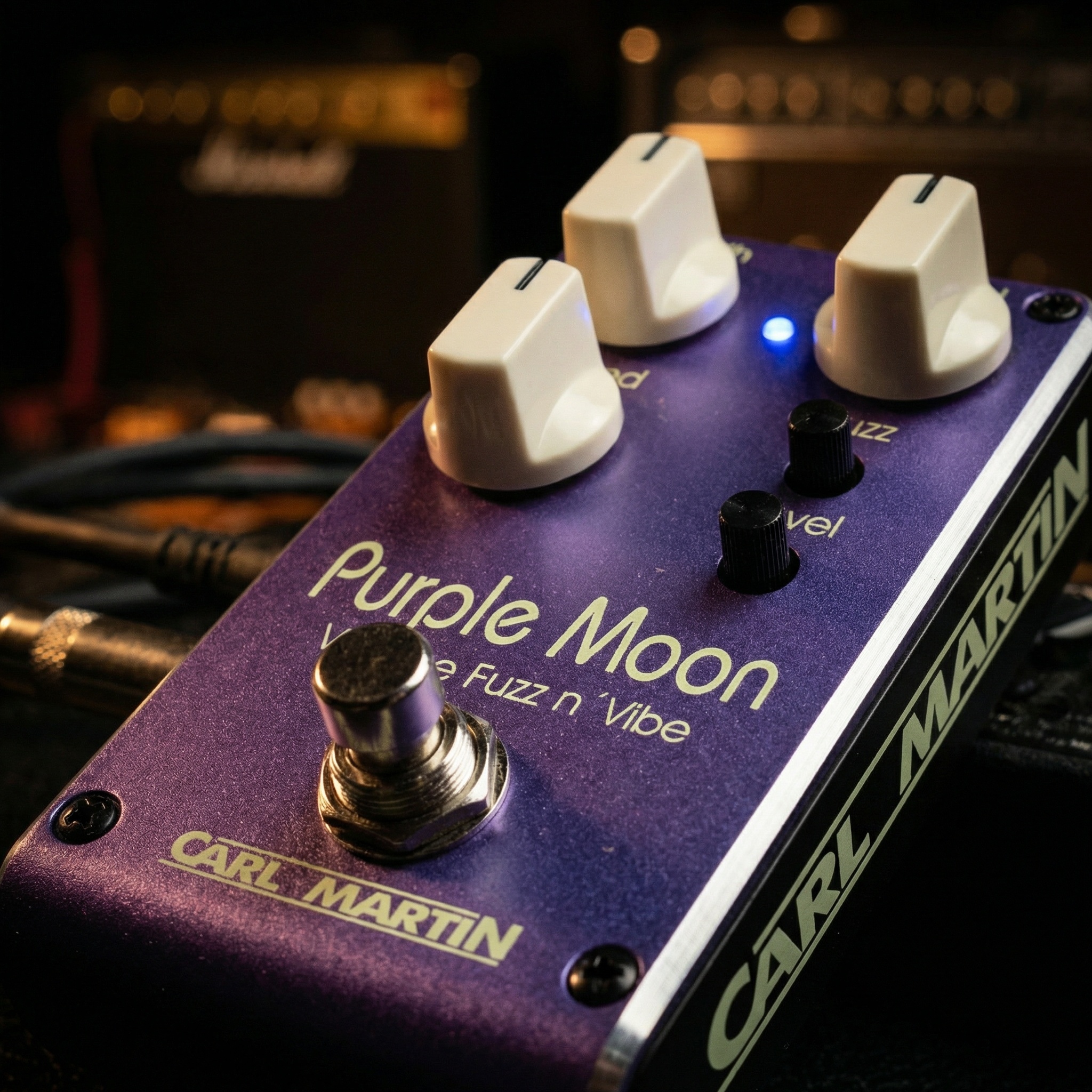
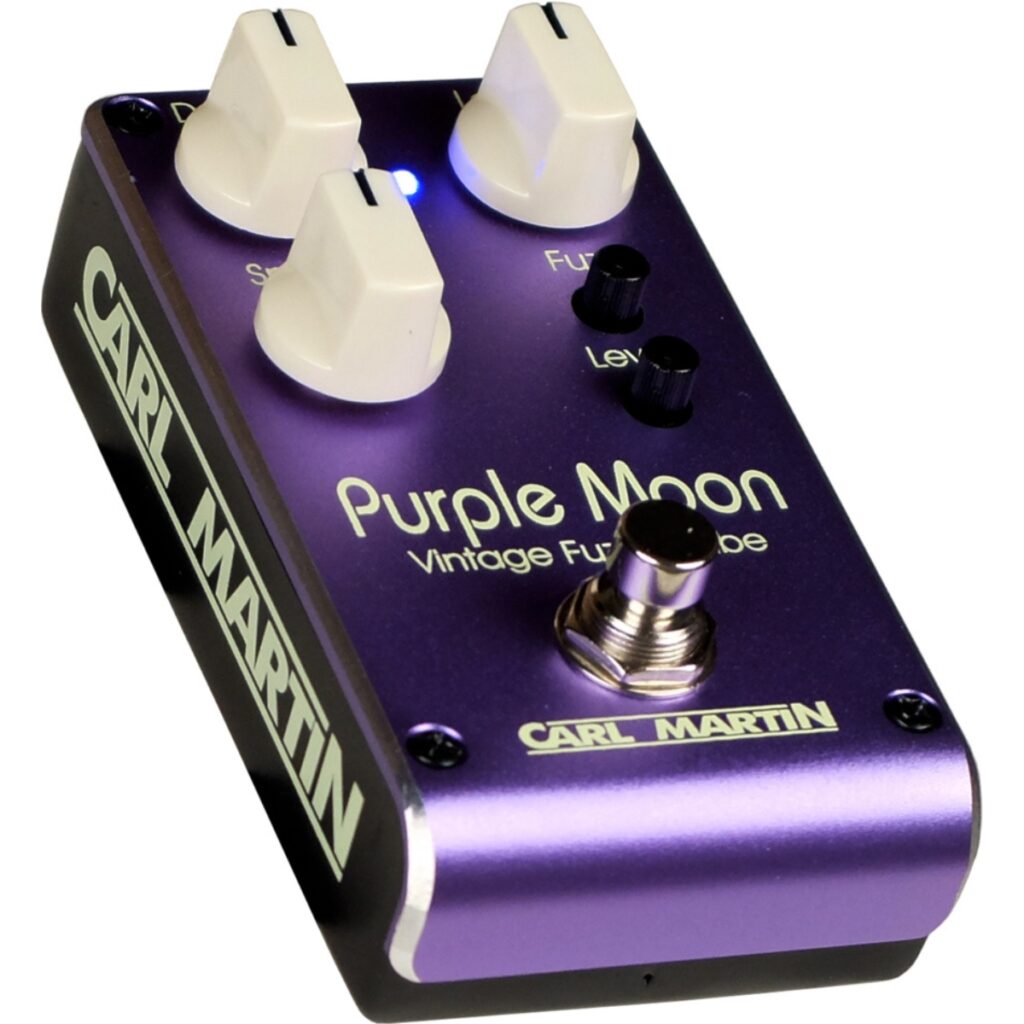
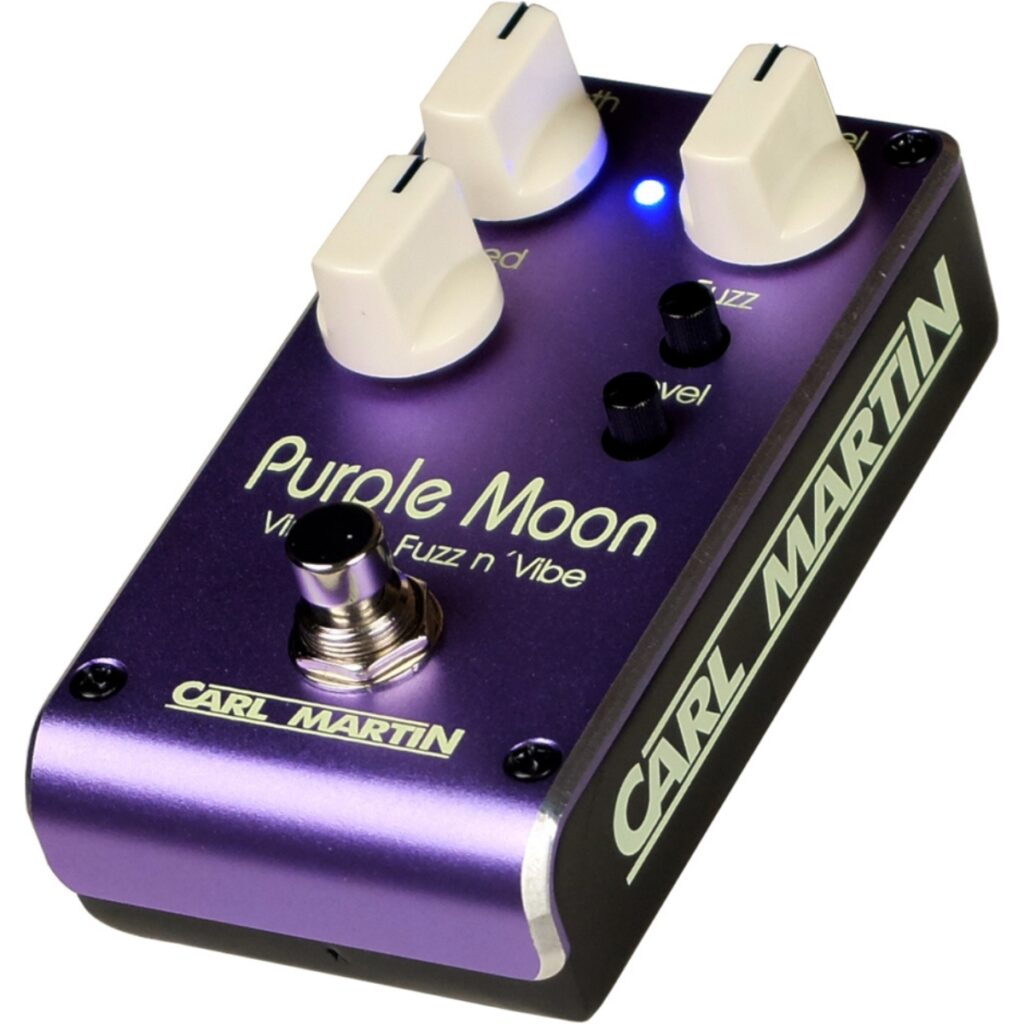
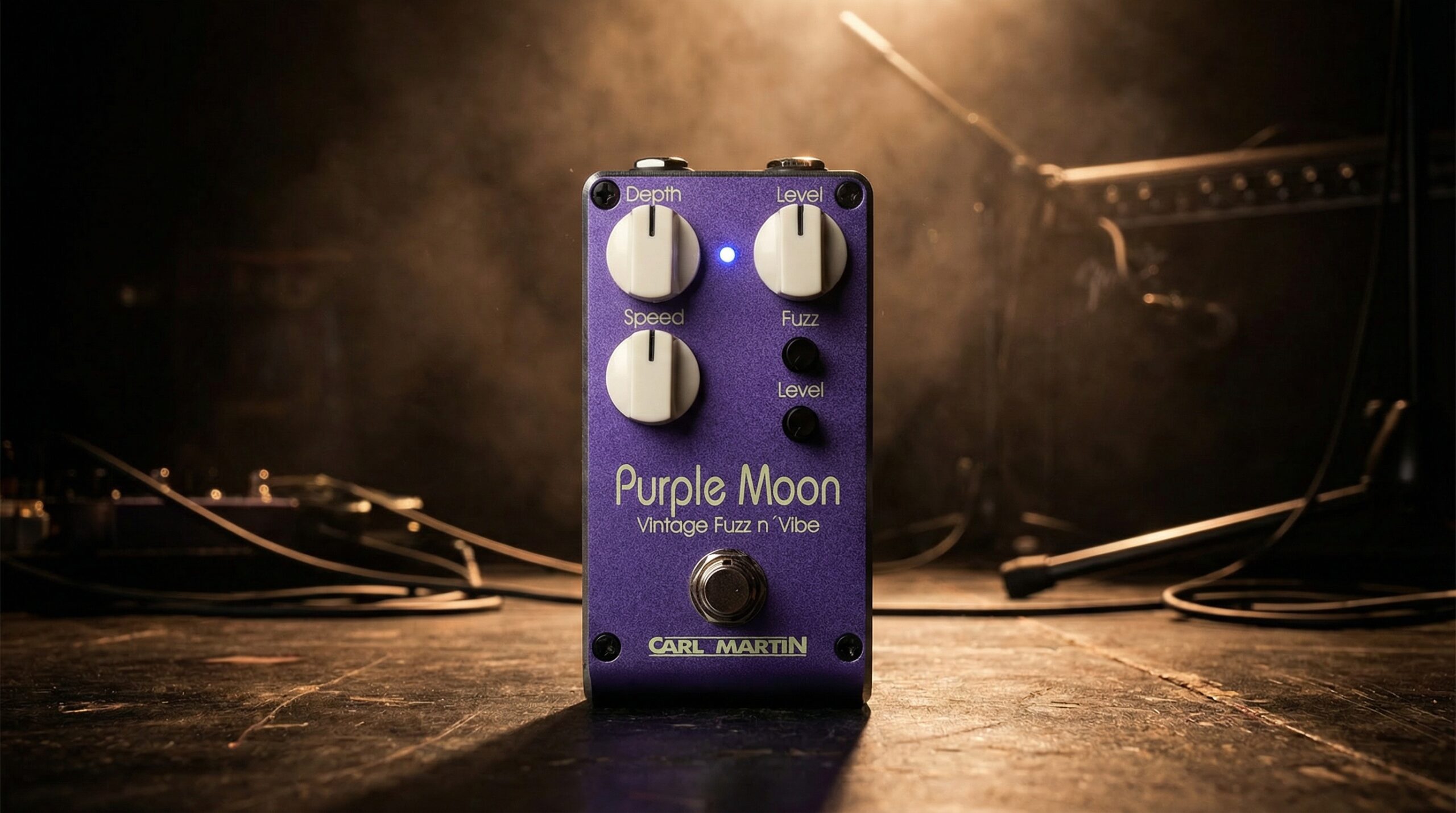
Purple Moon
- Combines vintage-style fuzz with classic vibe-style modulation for rich, expressive tones.
- Fuzz circuit delivers organic, musical saturation with natural note bloom and chord movement.
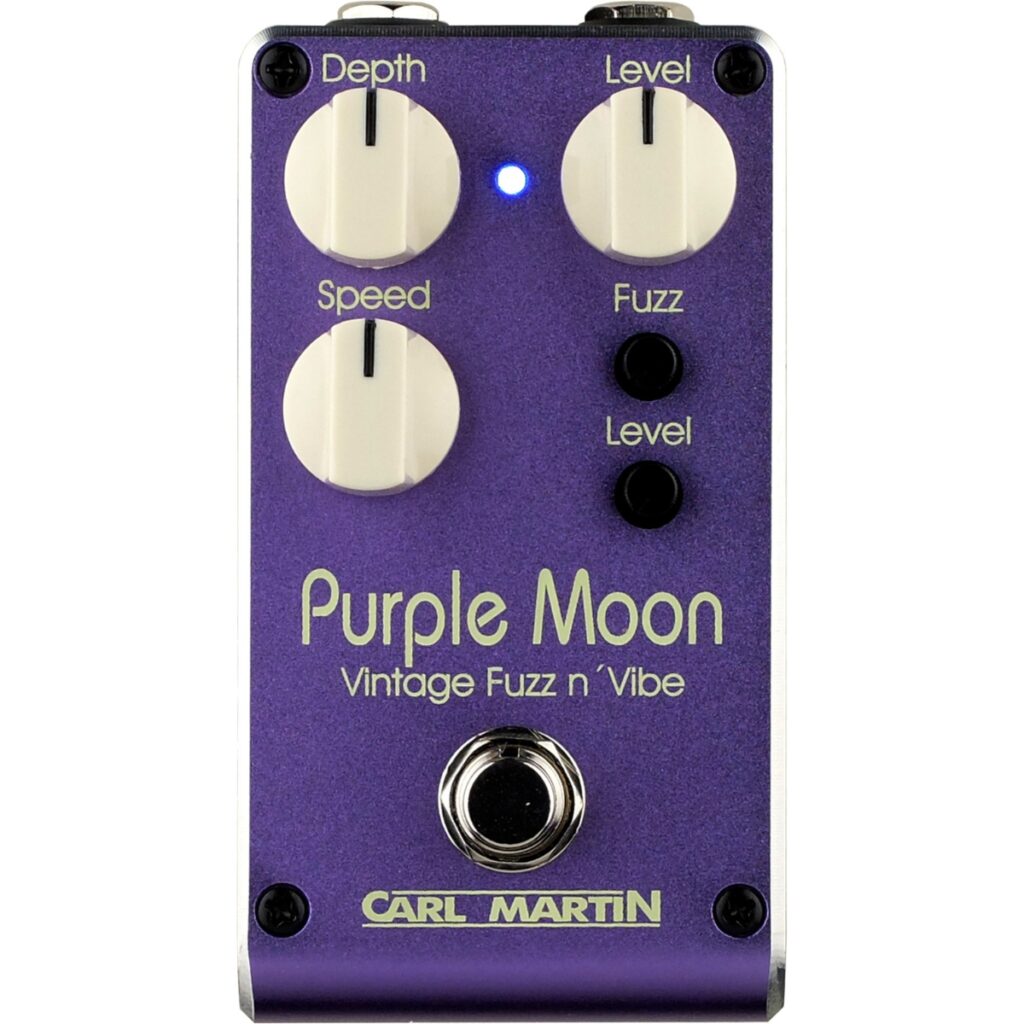
- Modulation section offers Speed and Depth controls for everything from subtle width to psychedelic textures.
- Separate Level controls for fuzz and overall output ensure easy balancing in any setup.
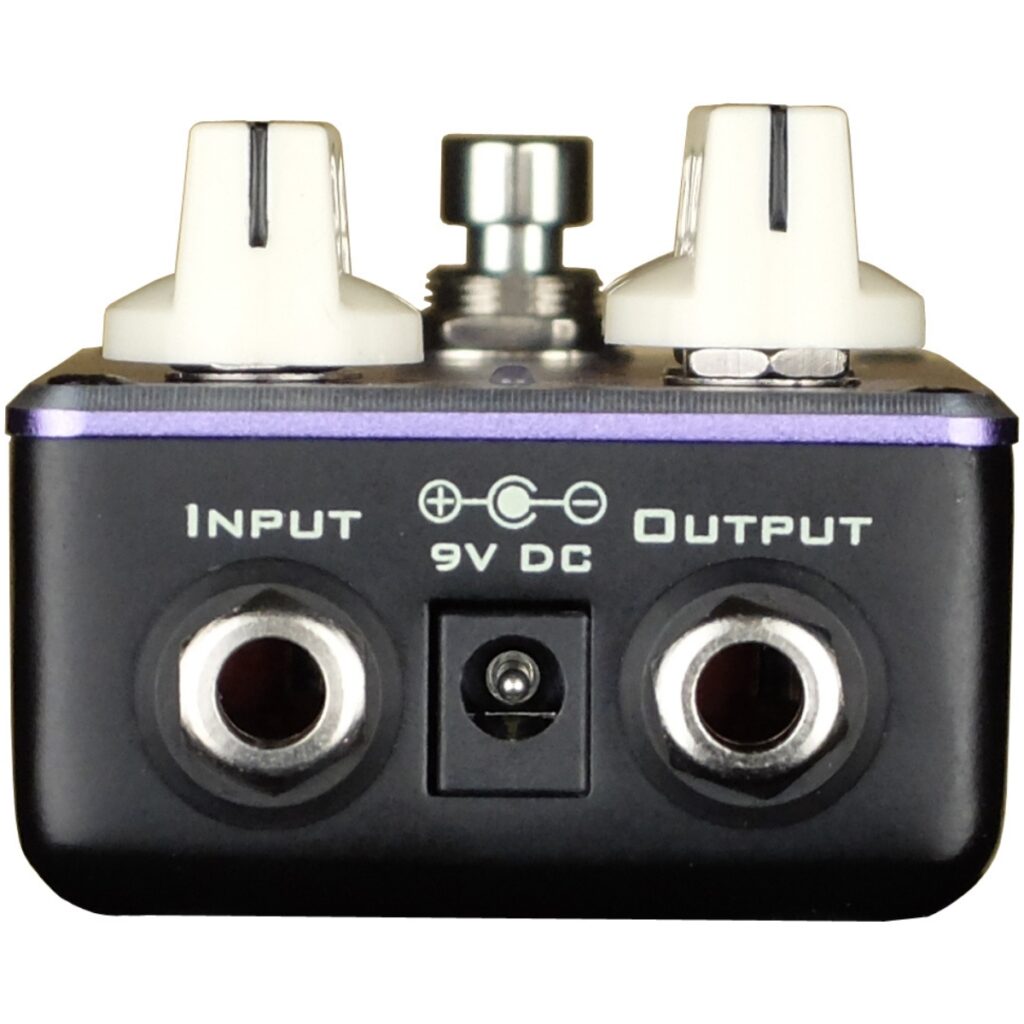
- Fully analog, true bypass design in a compact, road-ready enclosure for reliable performance.
All about Carl Martin Purple Moon
Purple Moon was created from a deep dive into the sounds that shaped an era. Instead of recreating a single pedal or circuit, the idea was to capture a broader feel — the combination of fuzz saturation and swirling modulation that defined so many expressive guitar parts from the late 60s and 70s.
At its core, Purple Moon blends a vintage-style fuzz circuit with a classic vibe-style modulation. The fuzz side delivers rich harmonic content with a raw, organic response that stays musical rather than abrasive. Notes bloom naturally, and chords retain movement instead of collapsing into compression.
The modulation section adds motion and depth. Speed and Depth controls allow anything from subtle movement to pronounced, pulsing textures. Used lightly, it adds dimension and width. Pushed harder, it becomes unmistakably expressive and psychedelic, without overpowering the core tone.
Separate Level controls for the fuzz and the overall output make it easy to balance the effect in different setups. Whether used as a featured sound or blended into a larger pedal chain, Purple Moon remains controllable and responsive.
Built as a fully analog design with true bypass switching, Purple Moon is housed in a compact, road-ready enclosure. It’s a pedal designed for players who see effects as part of the instrument — not just something added at the end of the signal chain.
Hear it in action
Watch and hear this product in use. Select more videos below.
More videos
FAQ
Quick answers about this pedal — shipping, power, use-cases and more.
What is the Purple Moon pedal?
The Purple Moon is a vintage-style “fuzz ‘n’ vibe” pedal – it combines a chewy Uni-Vibe style analog vibrato effect with a built-in fuzz circuit. It’s Carl Martin’s take on capturing the psychedelic late-60s guitar sounds (think Jimi Hendrix “Band of Gypsys” or Robin Trower tones) in one box. Notably, it’s a dual-speed vibe (you can toggle between two preset speed settings) and the fuzz can blend with the vibe to various degrees. So, Purple Moon = analog Uni-Vibe (vibrato/chorus) + vintage silicon fuzz, all true bypass and analog.
Can I use the vibe and fuzz separately?
The Purple Moon is designed to have both effects active together – there isn’t a separate footswitch to independently turn off the fuzz or vibe. There’s one footswitch to bypass/engage the pedal (when on, vibe is active), and a small toggle to select between two vibe speeds. The fuzz is built into the circuit and controlled by the Fuzz knob. However, you can dial the Fuzz knob to zero for essentially no fuzz (just vibe effect), or crank it for thick fuzz combined with the vibe. So while not independently switchable, you can get just vibe (fuzz down) or vibe+fuzz (fuzz up). It’s really meant to emulate the combination of fuzz and vibe used simultaneously in those classic recordings, but it’s flexible in that you can minimize the fuzz if you want a cleaner warble.
Is the Purple Moon true bypass?
Yes – the Purple Moon is true bypass (which is somewhat unique given it has an analog modulation; many vibe pedals are buffered but Carl Martin managed true bypass here). So when it’s off, it’s completely out of your signal chain. No tone loss or change when bypassed. And since it’s analog, there’s no latency or conversion. One thing to note: because it’s true bypass, if you switch it off, any ongoing vibe modulation (and fuzz) cuts out immediately (there’s no effect “trail,” which is expected for modulation pedals).
Does the Purple Moon emulate a specific vintage pedal?
It’s inspired by the classic Uni-Vibe (Shin-ei Univibe) unit that Hendrix, Trower, Gilmour used, and also incorporates a Fuzz Face flavored fuzz. In a sense, it packages the combination of a Fuzz Face into a Uni-Vibe. The vibe portion gives that “liquidy” rotating speaker-esque modulation (the pedal can do both chorus and vibrato sounds – internally it’s a vibe circuit). The fuzz portion is a vintage-style silicon fuzz; it’s described as thick and saturated, very period-correct to late ’60s sound. When combined, the interaction is magical: the fuzz into the vibe creates those swirling, harmonically rich lead tones (think the Woodstock “Star-Spangled Banner” or Trower’s “Bridge of Sighs” vibe). So while not a clone of any one pedal, Purple Moon is definitely built to nail a specific era of tone by marrying two legendary effects in one.
Can I get just a straight fuzz sound out of Purple Moon (with no modulation)?
Not exactly – the vibe circuit is always on when the pedal is engaged. Even if Depth is at minimum, there may still be a slight tonal coloration from the vibe circuit (though practically at zero depth it’s very subtle). The design intention is that you’ll always use some vibe with the fuzz. If you wanted strictly fuzz, you might need a separate fuzz pedal. That said, you could set Depth to zero and Speed anywhere (the modulation becomes nearly imperceptible) and use it as a fuzz box in a pinch. But truly, Purple Moon shines when you let the two effects interact – if you want a standalone fuzz, Carl Martin has other pedals or you could simply dial your fuzz pedal into Purple Moon’s vibe input (some users run an external fuzz into Purple Moon with its fuzz turned down, for different flavors).
What is the power requirement for Purple Moon?
It uses standard 9V DC (center-negative) at about 50–60 mA. Like other Vintage Series Carl Martin pedals, it does not have a battery compartment (no battery use) – the expectation is you’ll run it off a pedalboard power supply. Being analog and having a small incandescent lamp or LED circuit for the vibe (Uni-Vibes traditionally used a light cell), keeping it at a steady 9V is recommended. If you feed it an isolated, filtered 9V, you’ll get the lowest noise performance. And do note, because it’s analog and true bypass, you won’t get any weird digital noises or anything – it’s just power it and go.