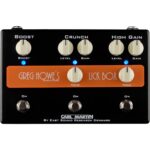
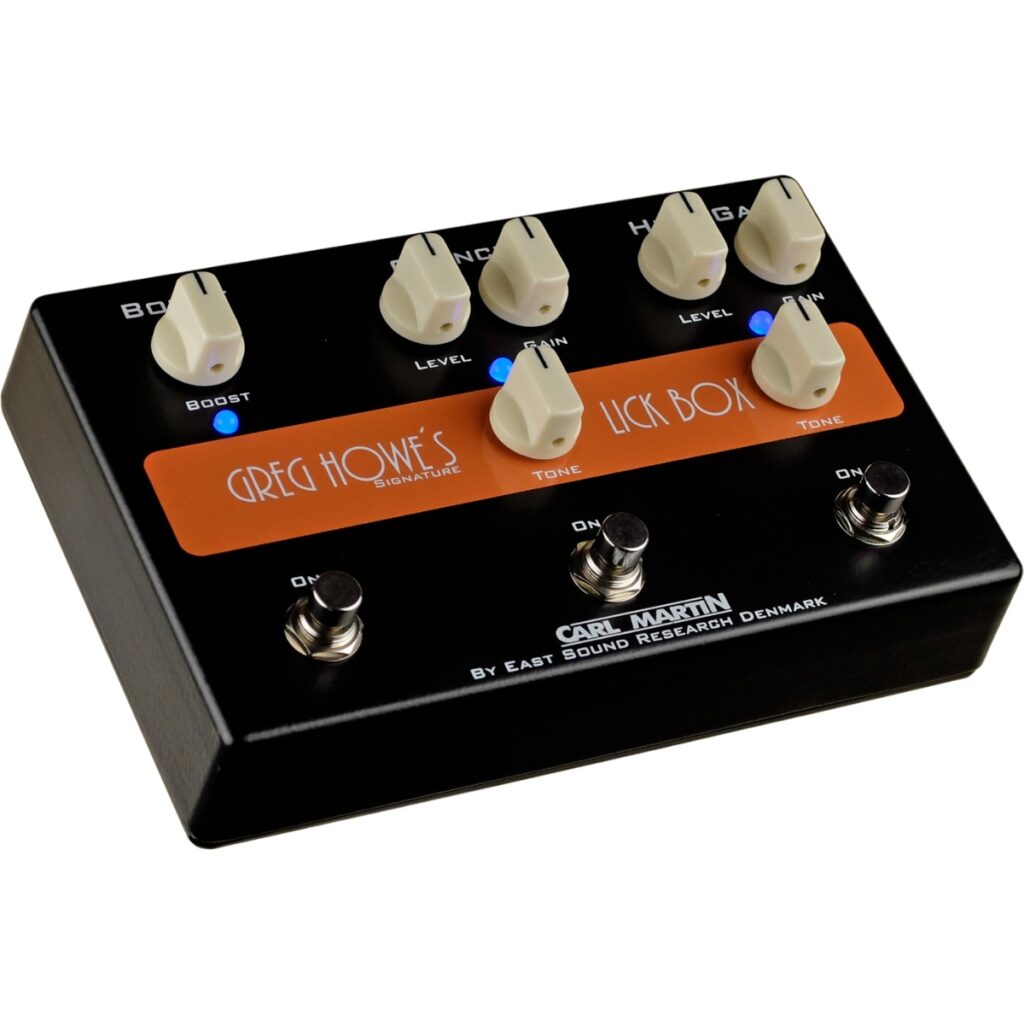
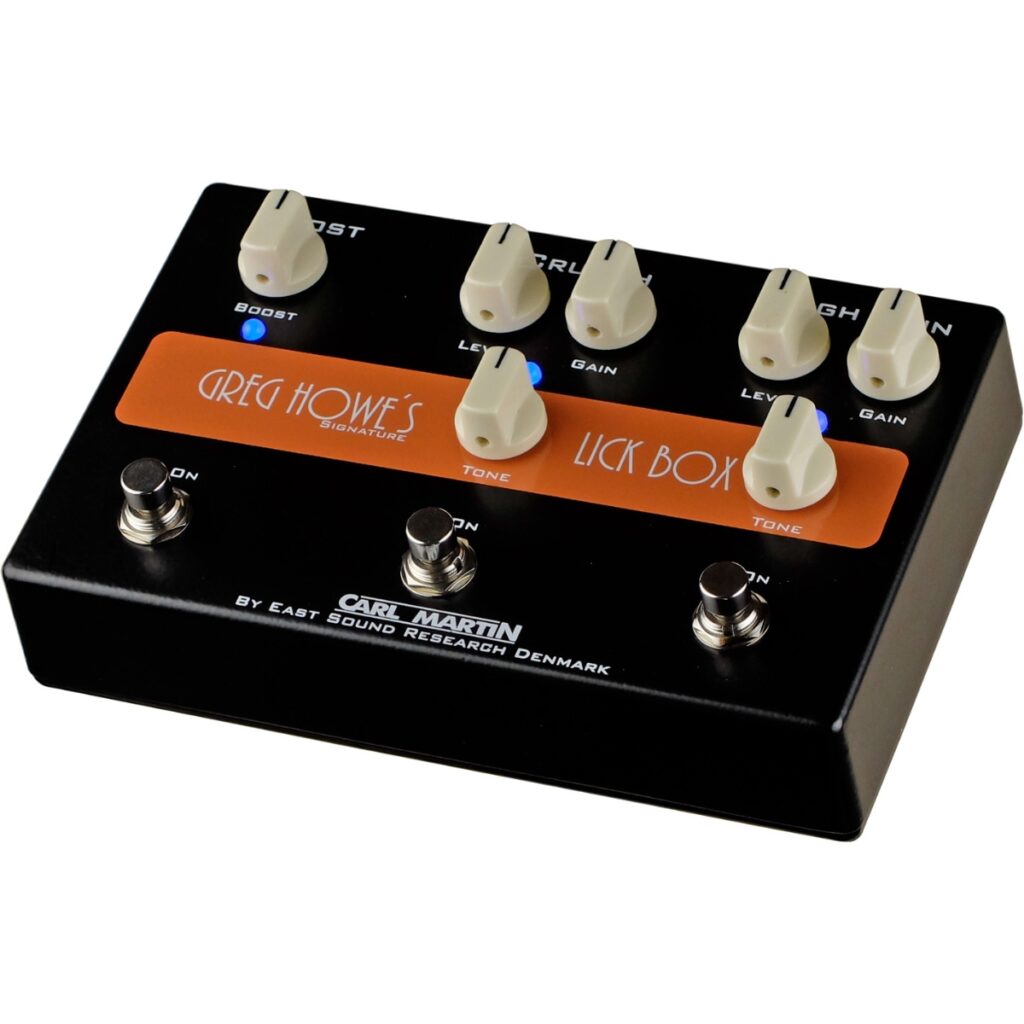
Greg Howe's Lick Box
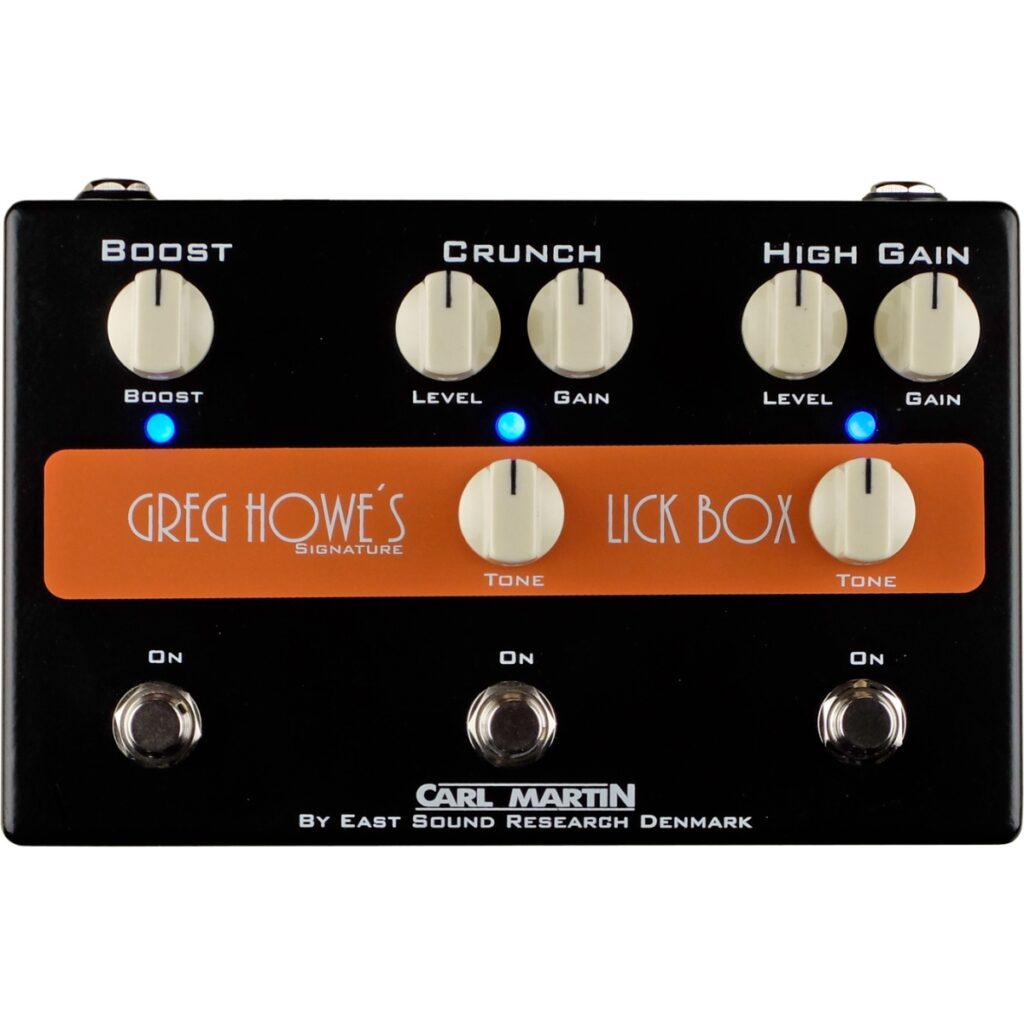
- Three independent sections: High Gain, Crunch, and a clean Boost (up to 12 dB), each with dedicated controls.
- Channels can be used alone or combined for layered, musical tones.
- High Gain and Crunch channels interact for tight, mid-focused lead sounds that cut through the mix.
- Internal DC/DC converter allows operation at ±12V for extra headroom and clarity, powered by a standard 9V supply.
- Designed in collaboration with Greg Howe for signature versatility, but flexible for any rig.
All about Carl Martin Greg Howe's Lick Box
When we started working with Greg Howe on what would become the Lick Box, the brief was clear: create a pedal that could cover his core tones, but also allow them to be combined, layered, and pushed in ways that feel musical rather than complicated.
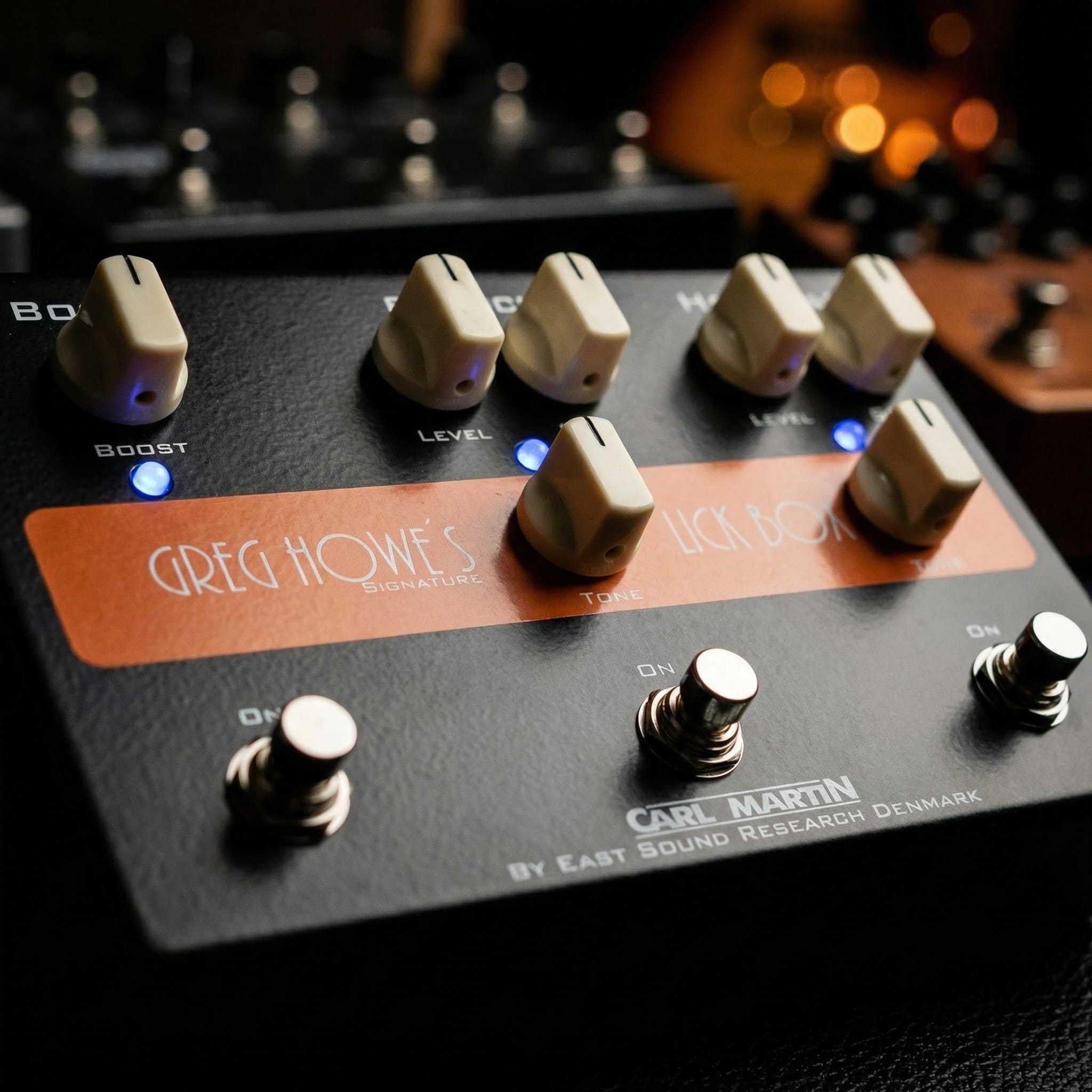
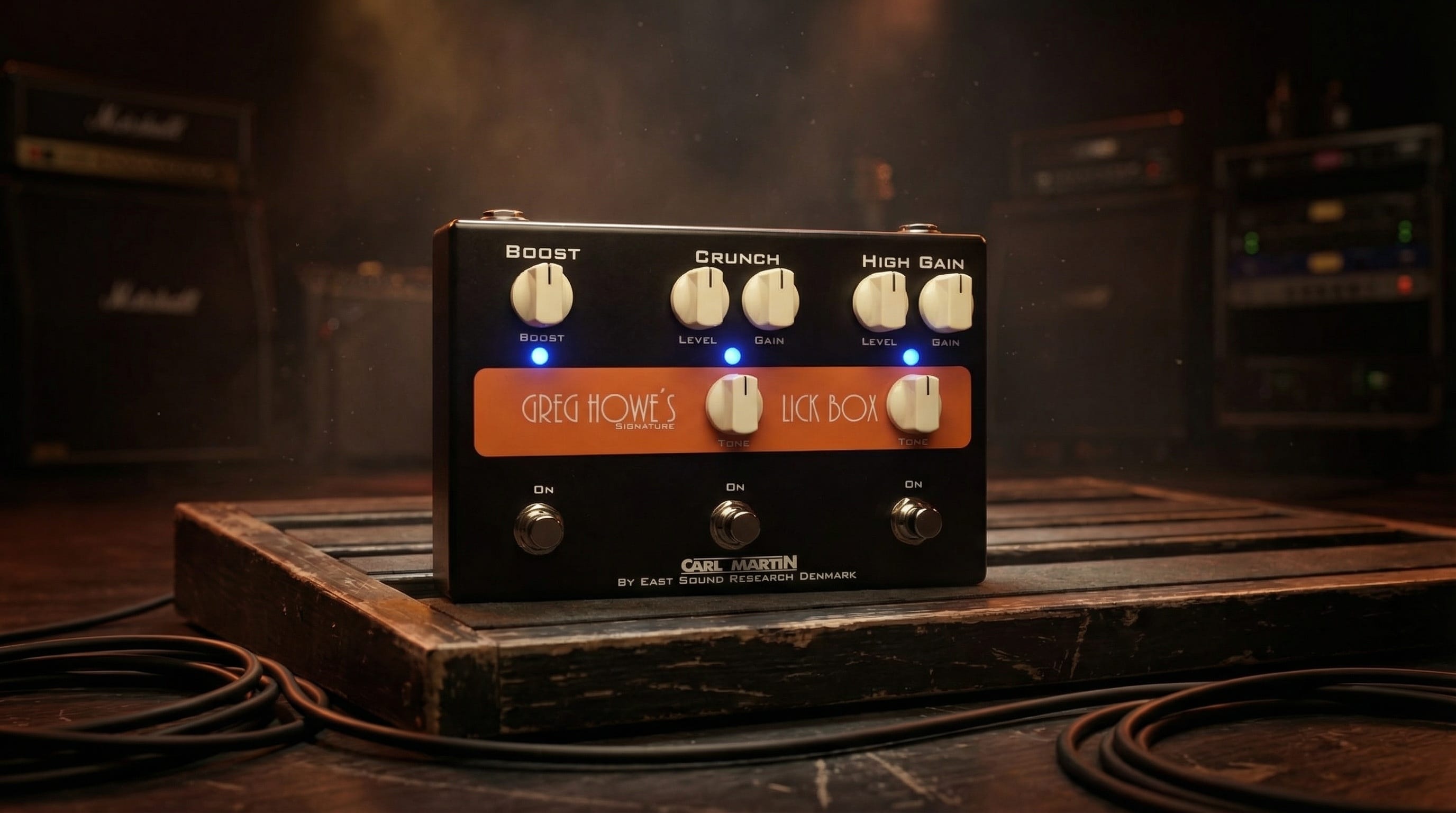
At a glance, the layout feels familiar. There’s a High Gain channel with extended low end and clear highs, a Crunch channel focused on the midrange with very little compression, and a clean Boost capable of adding up to 12 dB. Each gain channel has its own Level, Gain, and Tone controls, allowing them to be shaped independently.
But the real idea behind Lick Box isn’t just the individual sounds — it’s how they work together.
You can run High Gain or Crunch on their own, add clean Boost to either, or engage all three sections at once. With High Gain placed first in the internal signal path, engaging Crunch afterwards reshapes the response: some lows and highs fall away, the mids come forward, and the sound tightens up in a way that cuts through a mix without feeling forced. Add Boost on top, and the result is a focused, articulate lead tone with increased sustain and presence.
It’s not about stacking gain for the sake of it. It’s about control, balance, and understanding how different voices interact when you play.
Under the hood, Lick Box uses our DC/DC converter circuitry, allowing the pedal to run from a standard regulated 9V supply while operating internally at ±12V. That extra headroom is essential here — it keeps the pedal articulate and stable, even when multiple sections are engaged at higher levels.
This is a signature pedal in the truest sense: built around how one player actually uses gain, but flexible enough to become part of many different rigs.
Hear it in action
Watch and hear this product in use. Select more videos below.
More videos
FAQ
Quick answers about this pedal — shipping, power, use-cases and more.
What is the Greg Howe Lick Box?
The Lick Box is a signature pedal Carl Martin designed with guitar virtuoso Greg Howe. It’s essentially three pedals in one box: a High Gain distortion channel, a Crunch (lower gain) overdrive channel, and a 12dB Clean Boost – all foot-switchable. Greg wanted a pedal that could cover his searing lead tone, a dynamic crunch rhythm, and a boost for solos, and the Lick Box delivers exactly that in a single unit.
Can the three channels be used together?
Yes – that’s a key feature. You can use the High Gain or Crunch individually or run both gain channels at the same time. Stacking the Crunch and High Gain together gives a unique mid-focused lead tone: because the Crunch channel is voiced to cut mids, when combined with the High Gain (which comes first in the chain), you get a tighter, more focused midrange that really cuts through. And on top of either (or both), you can add the clean Boost for up to +12dB volume lift. This flexibility means you can have multiple levels of drive – from light crunch, to heavy, to insane saturated sustain with both engaged and boosted.
What are the controls for each section?
The pedal has three sets of controls: High Gain channel has its own Drive, Level, and Tone knobs; Crunch channel has Drive, Level, and Tone knobs; and the Boost channel has a single Level knob (it’s a clean boost). So you can dial in the tone and volume of the High Gain and Crunch independently. For example, Greg Howe might set Crunch with lower gain for rhythm and High Gain with more drive for leads, each EQ’d separately, then kick in Boost for solos. There’s also a master on/off footswitch for each channel (and an LED for each) making it intuitive to toggle combinations on stage.
Does the Lick Box use a tube or is it all solid-state?
It’s a solid-state analog pedal (no tube inside). Carl Martin’s design still achieves very tube-like response and tone though. When Greg Howe first asked for it, he wanted it to feel like an amp – and indeed players report that it’s dynamic and responsive to pick attack (cleans up when you play lighter or roll guitar volume down, etc.). The use of an internal ±12V power conversion also gives it more headroom and “amp-like” punch, despite being a solid-state circuit.
How do I power the Greg Howe Lick Box? Can it use batteries?
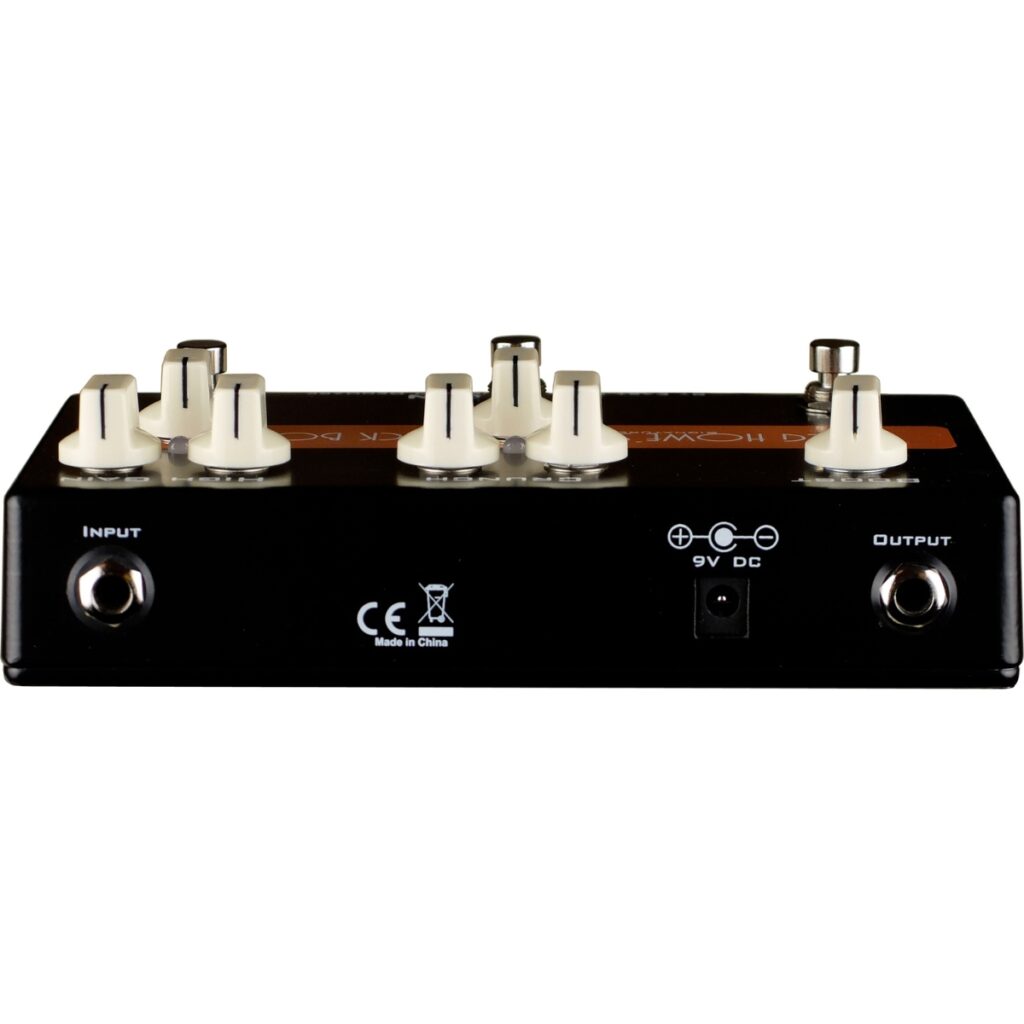
The Lick Box requires a 9V DC power supply (standard center-negative jack) and draws around 100–150 mA. It cannot run on batteries – due to the power needs of the pedal (it has an internal DC-DC converter to ±12V, a real battery hog), Carl Martin designed it for power supply use only. Use a quality regulated adapter; Carl Martin recommends their Pro Power or any supply that can provide at least 150 mA at 9 volts. Running it at the proper voltage ensures you get the intended headroom and tone.
What’s the advantage of the Lick Box’s internal ±12V circuitry?
The Lick Box’s internal power converter bumps the 9V input up to dual 12V rails. In practical terms, this means higher headroom and more “amp-like” tone – the pedal can deliver strong output without clipping in unpleasant ways, and it retains punch and clarity even at high gain. It uses high-quality components that operate at ±12V, so the tone is big and dynamic like a pro-level rack unit or amplifier, rather than compressed or starved like some 9V pedals can be. This is part of why the Lick Box sounds so open and why the Boost stays crystal clean up to 12dB – the pedal isn’t running out of voltage internally.
The Boost is 12dB – is it before or after the drive channels, and can I use it alone?
The 12dB Boost in the Lick Box is a clean boost placed after the two drive channels in the signal chain. That means if you engage Boost along with either drive, it will increase volume (and a bit of saturation) without altering the tone you set on the drives. Yes, you can also use the Boost by itself – kick on the Boost footswitch while leaving Crunch and High Gain off, and you’ve got a clean volume lift for hitting the front of your amp harder or for solo passages on a clean tone. Many users love that the Boost can act independently as a solo boost whether you’re using the pedal’s drives or not.
Greg Howe uses this pedal for high-gain shred – is it noisy with all that gain and stacking?
The Lick Box is impressively quiet for a high-gain device. It’s designed with quality components and a low-noise circuit. Of course, any time you stack two drives and add boost, some noise will be present (that’s just cumulative gain), but Carl Martin built in as much noise reduction as possible. Users often comment that even with both Crunch + High Gain engaged, the pedal remains relatively quiet – certainly gig-friendly. As always, using proper power and keeping cables short will help. But rest assured, Greg Howe wouldn’t tolerate a pedal that hisses like a snake – and he’s using the Lick Box live with great results.
Can the Lick Box be used for styles other than shred/fusion?
Absolutely. While it was designed around Greg Howe’s needs, it’s essentially a versatile dual overdrive/distortion + boost, which can fit many genres. The Crunch channel on its own is dynamic and works for blues or classic rock (it’s voiced with less compression). The High Gain channel can do hard rock or metal leads. Stacking them yields a smooth, mid-rich lead tone great for fusion or sustaining rock solos. And the clean Boost is universally useful. So whether you play rock, prog, metal, or even need a fat blues lead tone, the Lick Box can cover a lot of ground. It’s like having a mini pedalboard of carefully tuned drives in one unit.