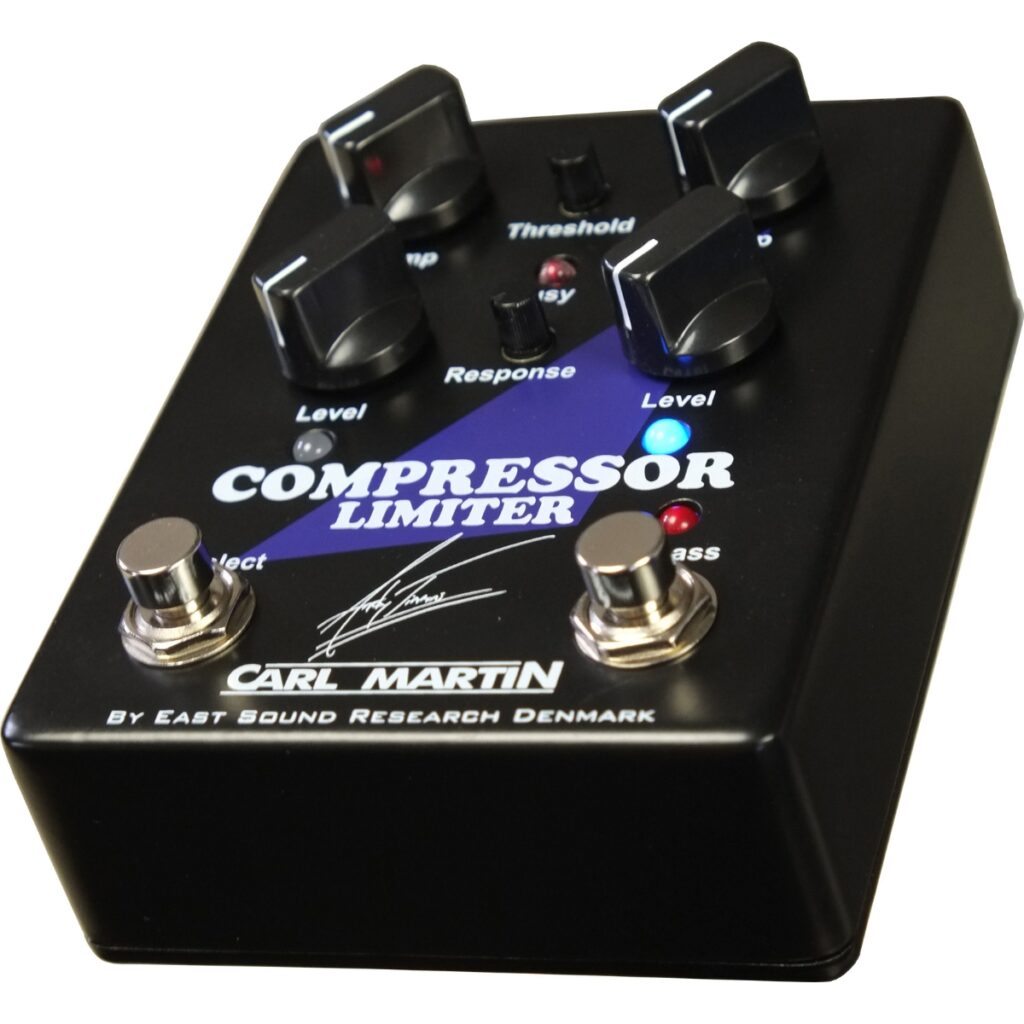
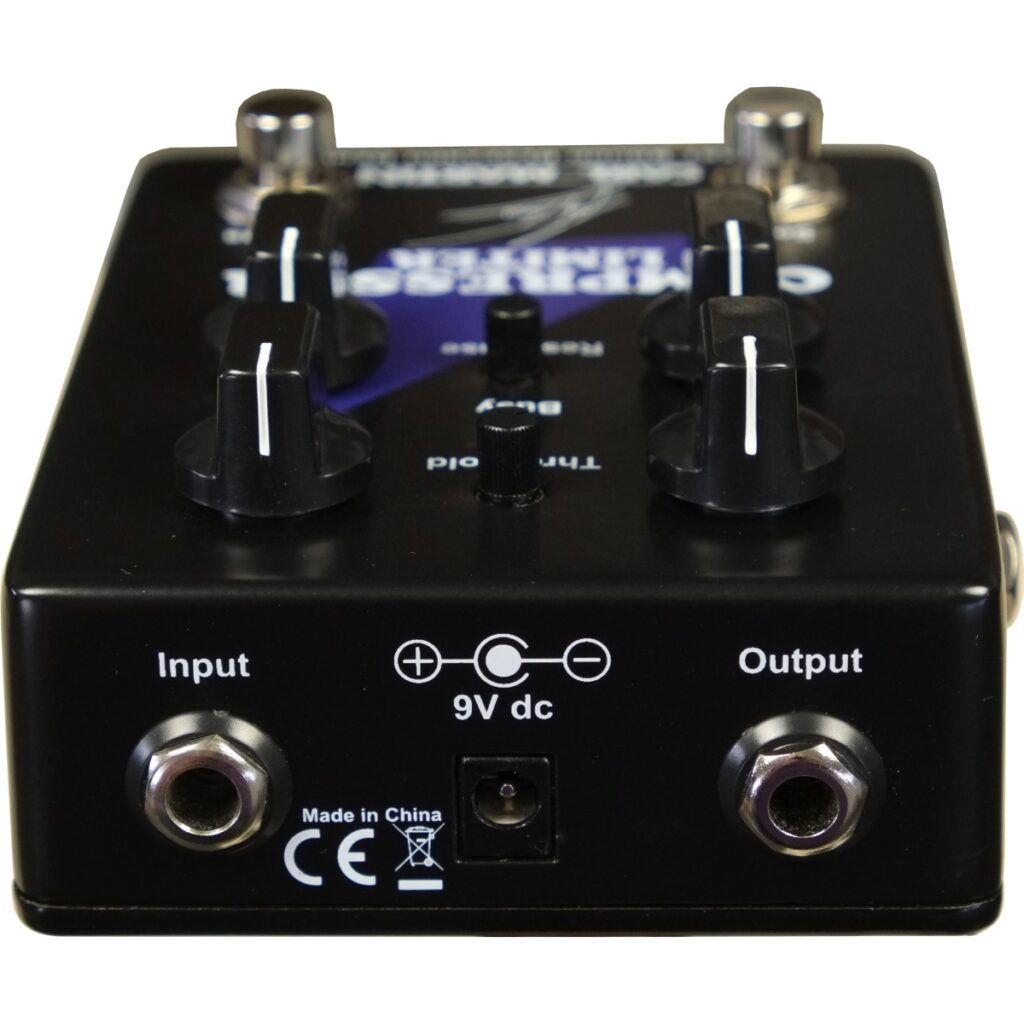
Andy Timmons Signature Compressor/Limiter
- Developed with Andy Timmons, offering two easily switchable presets for rhythm and solo compression.
- Studio-quality compressor/limiter with fixed Threshold and Response for user-friendly operation.
- Remote preset switching via ¼” jack for seamless transitions during performance.
- Newly developed DC/DC converter allows internal ±12V operation from a standard 9V supply, ensuring high headroom and sonic clarity.
- Delivers the same clarity, quietness, and performance as top studio compressor/limiters in a compact pedal format.
All about Carl Martin Andy Timmons Signature Compressor/Limiter
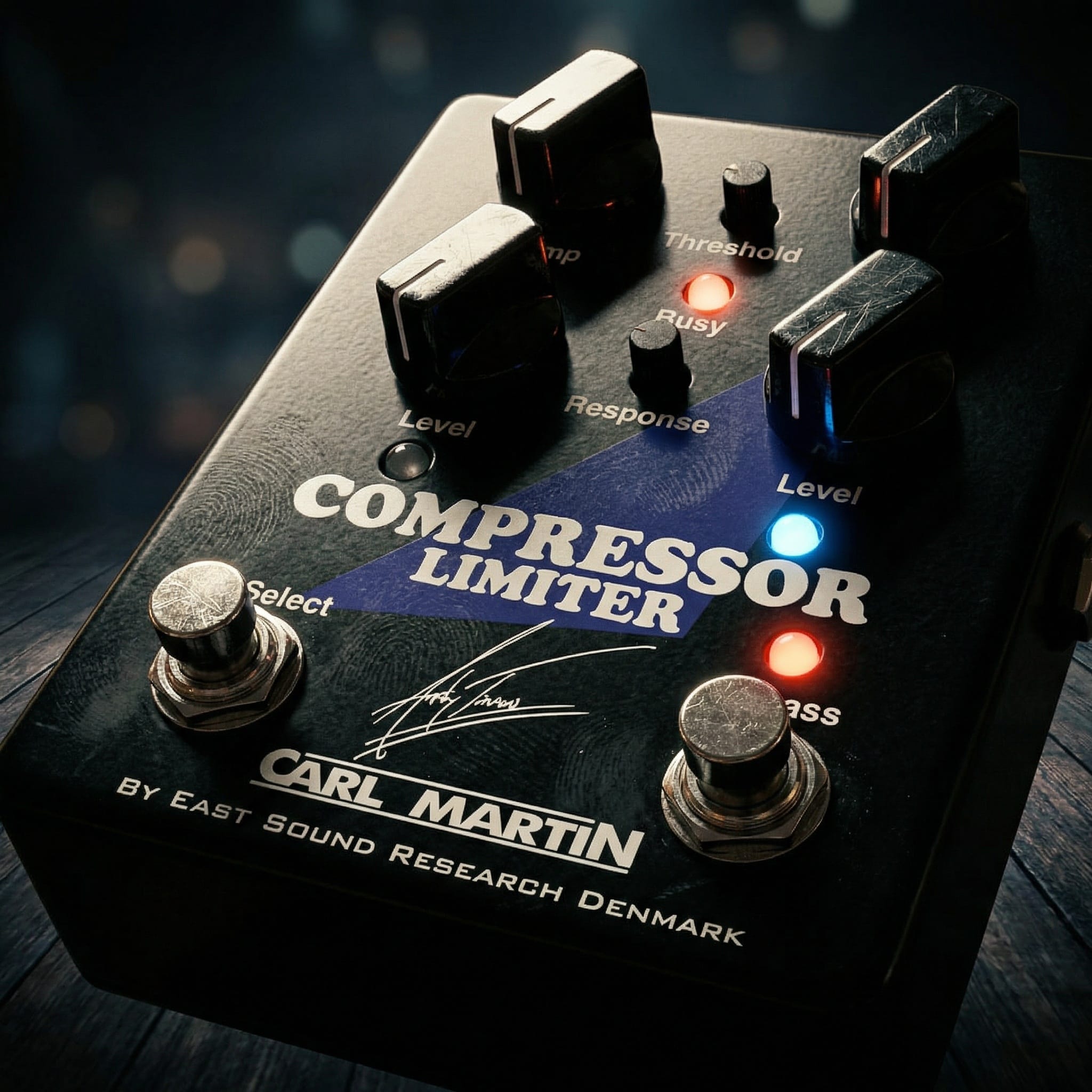
The Carl Martin Andy Timmons Signature Compressor/Limiter! Just like the Carl Martin Compressor/Limiter, we believe this unit to be the most musically useful guitar dynamics processor on the market. The Carl Martin Andy Timmons Signature Compressor/Limiter has been developed in corporation with Andy Timmons to create a user-friendly yet versatile compressor/limiter with its two presets.
Andy Timmons, long-time user and fan of the Carl Martin Compressor/Limiter, suggested to Carl to create a Compressor/Limiter with two presets, so that he had a preset for more subtle rhythm parts, and a preset with more hard compression and sustain for other parts as solos without having to take up real-estate on the board for two Compressor/Limiters.
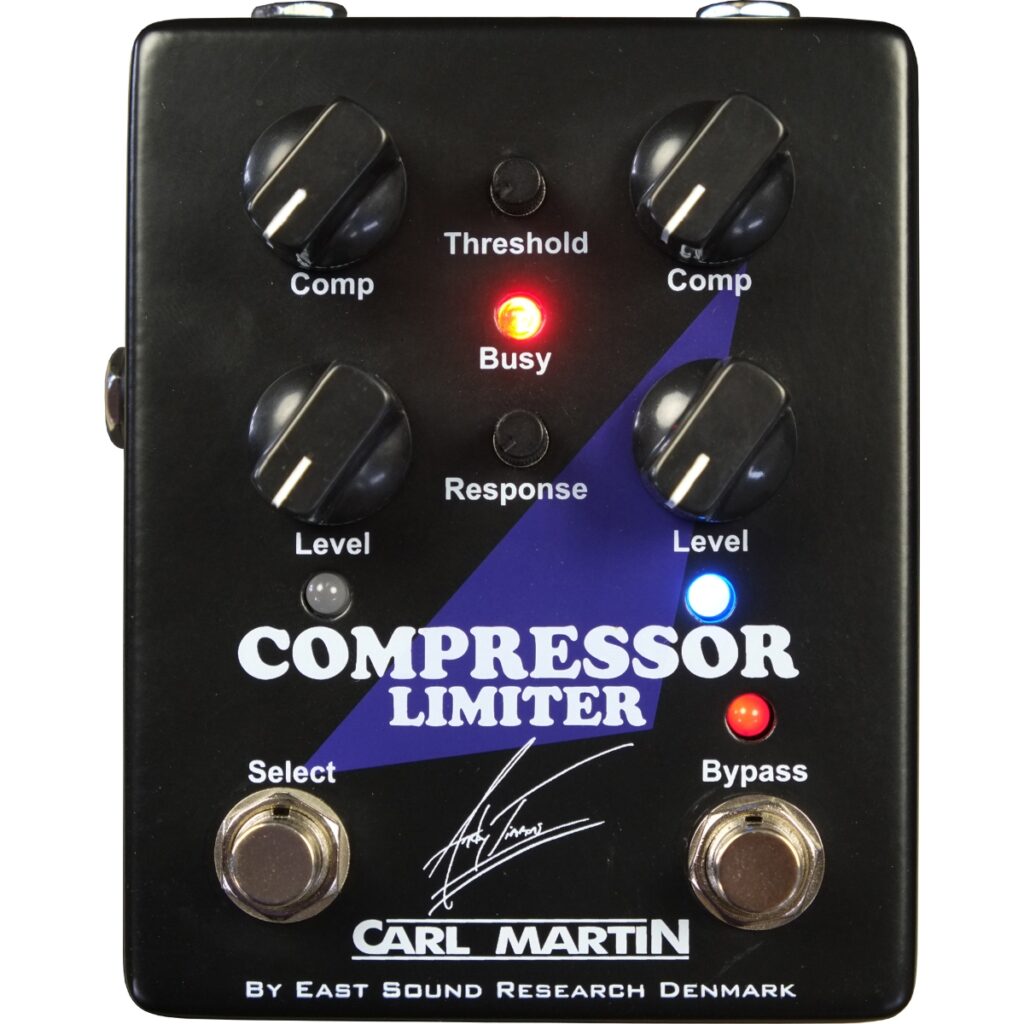
The result is a two-preset option for Compression Rate and Level. In order to save knobs and to be as user-friendly as possible, the Threshold and Response settings are fixed for both presets, leaving the pedal with only six knobs, the Threshold and Response being 6mm miniature knobs.
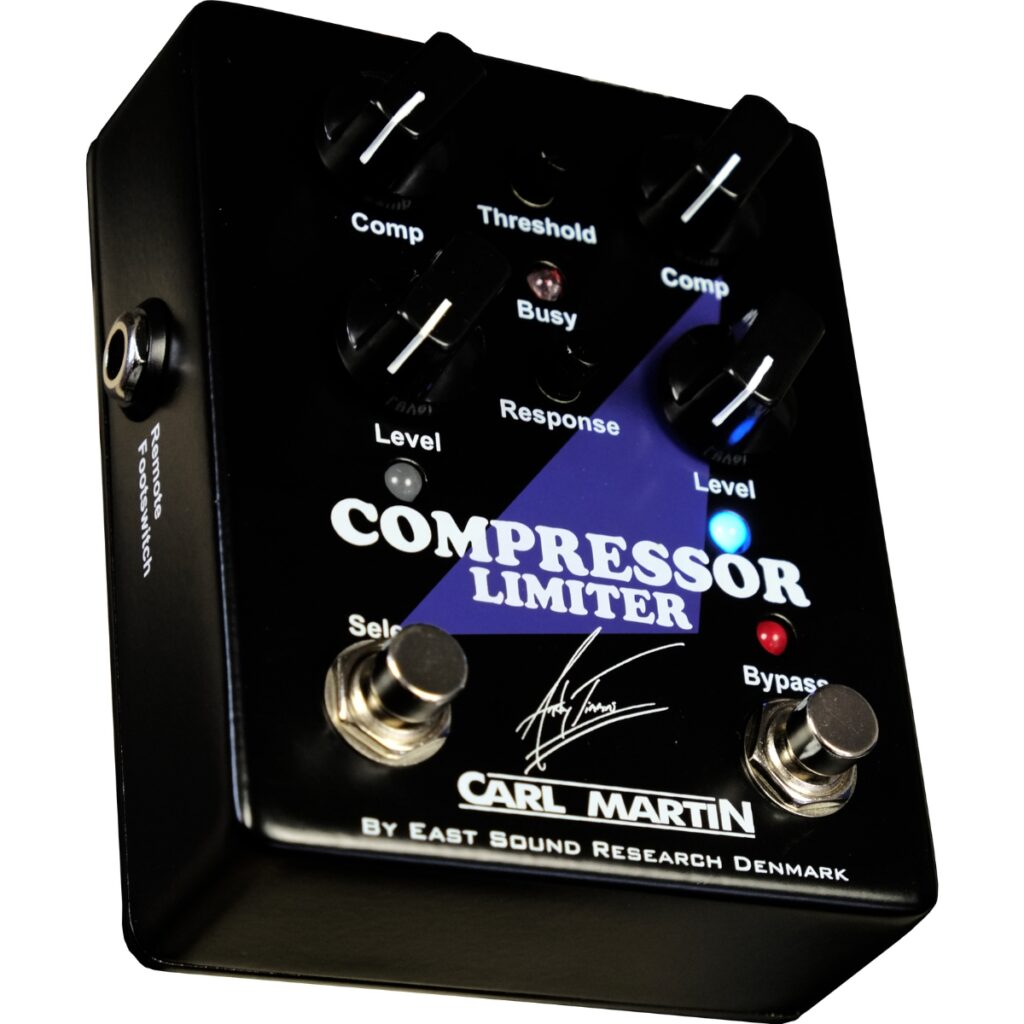
As a useful extra feature we incorporated a ¼” jack for remote switching the presets (Latching).
As something new, the Carl Martin Andy Timmons Signature Compressor/Limiter incorporates the newly developed DC/DC converter circuitry. This enables us to run the pedal with +-12V internally, which is necessary in order to maintain the same sonic quality and headroom as on the “old” Compressor/Limiter using a regular 9V DC 200mA power supply.
The Carl Martin Andy Timmons Signature Compressor/Limiter has been developed to incorporate the same features, sonic clarity, quietness, and performance of the best studio compressor/limiters. Spend a little time with us here in the manual and you can learn some of the basics of compression and limiting, and how to get the most out of your pedal.
Hear it in action
Watch and hear this product in use. Select more videos below.
More videos
FAQ
Quick answers about this pedal — shipping, power, use-cases and more.
What is the Andy Timmons Signature Compressor/Limiter?
It’s a dual-preset compressor pedal designed in collaboration with guitarist Andy Timmons. Essentially, it takes Carl Martin’s famed analog Compressor/Limiter circuit and gives you two switchable compression settings in one unit. Andy wanted one preset for subtle rhythm compression and another for a more squashed, sustained lead tone – this pedal delivers that, so you can footswitch between two comp levels on the fly. It’s often considered one of the most studio-like, high-fidelity compressors available to guitarists, just made stage-friendly with the two presets.
How do the two presets work?
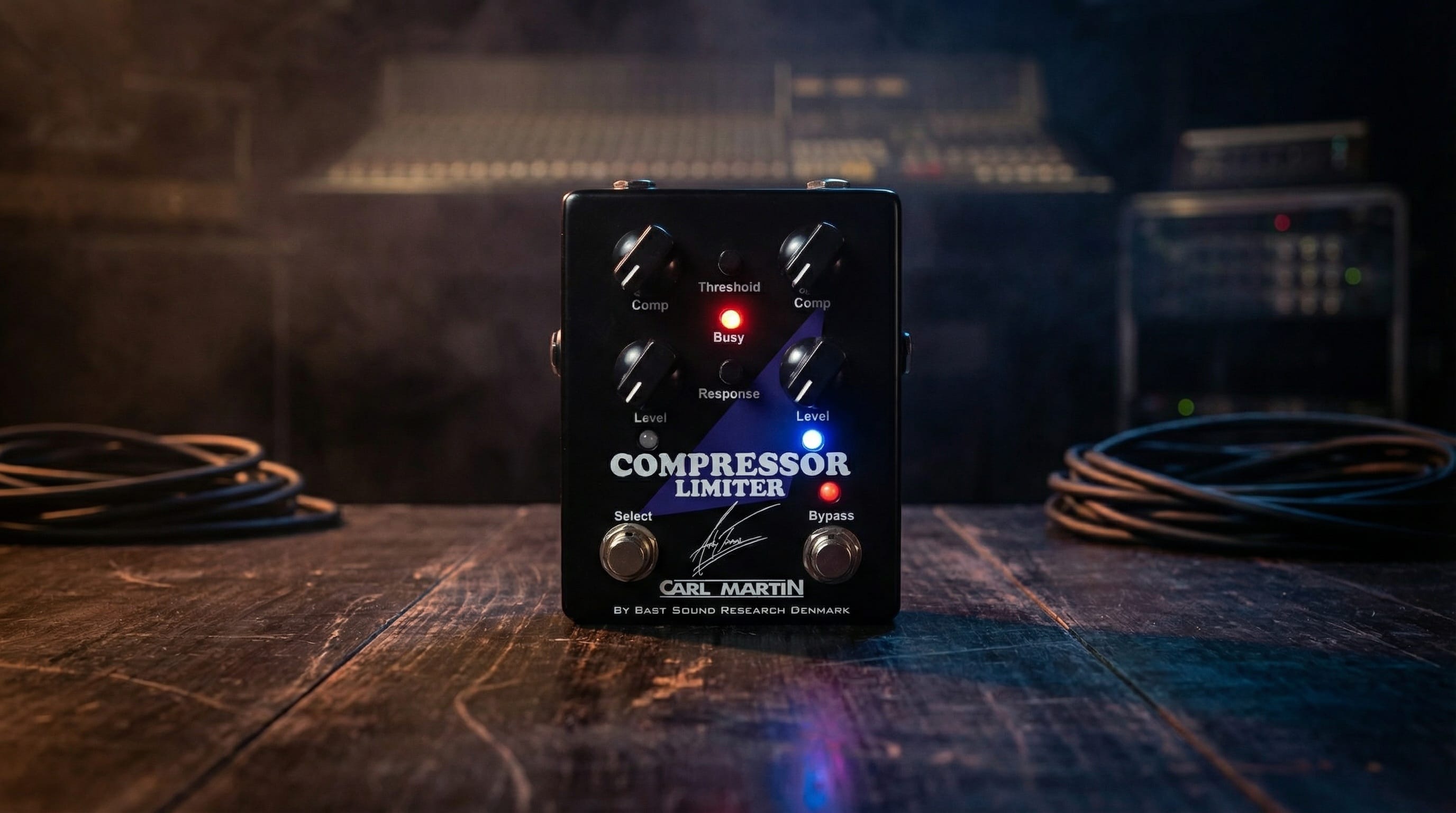
The pedal has two footswitches: one to engage/bypass the compressor, and another to toggle between Preset A and Preset B. Each preset has its own Compression (ratio) and Level knobs on the face, labeled “Comp A” & “Level A” and “Comp B” & “Level B.” The Threshold (input sensitivity) and Response (attack/release speed) controls are shared (fixed internally or via small knobs) for both presets. So, for example, you might set Preset A to have light compression (Comp knob lower, Level set for unity) and Preset B to have heavy compression and maybe a volume boost for solos. Hitting the “Select” footswitch toggles between those two without any popping or delay – effectively giving you like two different compressor pedals in one. It’s super handy: Andy Timmons can go from gentle compression for chords to singing sustain for leads with one stomp.
What are Threshold and Response? Do I need to adjust those?
Threshold sets the signal level at which compression kicks in (lower threshold = compress even quiet notes; higher threshold = only compress when you hit hard). Response controls how fast/slow the compression reacts and recovers (attack and release characteristics). On this pedal, Andy opted to make those fixed globally to keep it user-friendly. The Threshold and Response are pre-set internally to optimal values (actually they are trim knobs or mini-knobs on the pedal, but typically you’d leave them at factory setting unless you want to fine-tune). In use, it means you only have to worry about Comp (amount of compression ratio) and Level (make-up gain) for each preset – easy peasy. The fixed threshold is set such that normal guitar playing will trigger compression in a musical way (Andy’s known for very musical compression). The Response is set for a smooth attack and natural release, mimicking studio compressors. In short: you likely won’t need to tweak those unless you have very specific needs; out of the box it’s dialed in to Andy Timmons’ preference (which most find great).
Does it color my tone or add noise?
The Andy Timmons Comp/Limiter is praised for being transparent and low-noise. It uses high-headroom analog circuitry (runs internally at ±12V from a 9V supply), which means it won’t dull your highs or distort easily. Many users say it doesn’t noticeably color the tone – it just controls dynamics and maybe adds a touch of “polish” or fatness without EQ-ing your signal. As for noise: any compressor will raise the noise floor when the signal decays (because it’s essentially turning up quieter sounds). But this unit is remarkably quiet for what it does. Andy specifically wanted studio-grade performance, and Carl Martin delivered – there’s very low self-noise. If you feed it a very noisy signal, you’ll still hear that noise when compressed (that’s normal), but the pedal itself isn’t introducing hiss in any significant way. In fact, many reviews note how it’s “remarkably quiet” and free of the typical pedal compressor artifacts.
How do I set it for Andy Timmons’ sounds?
Andy typically might use Preset A as a mild compressor – just enough to even out chords and add sustain without being obvious. For that, you’d set Comp A somewhere around 9–10 o’clock (low), Level A maybe around unity or a hair above (to compensate any volume loss). Preset B Andy might set for lead sustain: Comp B higher, maybe 1–2 o’clock or to taste, and Level B maybe slightly boosted so his lead lines pop out. Essentially, Preset B might be a fairly squishy compression that gives that singing violin sustain when he’s playing single-note lines. The great thing is you can match his approach or do your own: e.g. one preset for single-coils, one for humbuckers; or one for fingerpicking (lighter comp) and one for slide (heavier comp). If you want Andy’s actual settings, he’s mentioned he doesn’t overly squash—he likes it musical. So something like 4:1 compression ratio on A, and maybe 8:1 on B with a bit of level boost. But let your ears guide you; the pedal makes it easy to dial in because you can toggle and compare quickly.
What is the power requirement?
It requires a 9V DC regulated power supply, about 120–140 mA draw (Carl Martin uses an internal power converter to run ±12V for the circuitry). It does not take a battery (drawing that much current plus the size of the unit means external supply only). Being a high-end unit, give it clean isolated power if possible. It has a standard 2.1mm center-negative jack. If using it internationally, no worries, as long as your adapter is the right voltage – the pedal itself doesn’t care beyond wanting 9V DC. Some have asked if running at 12V DC external makes a difference (since it converts to ±12V internally anyway) – typically you should stick to 9V input as designed; the pedal is engineered to make the most of that with its internal converter.
Is it purely for guitar or can I use it on bass or other instruments?
ou can definitely use it on bass (Andy himself might even have tried – he’s a guitarist primarily, but the comp works across a wide frequency range). The threshold and response are set with guitar in mind, but bass players have reported good results because of the high headroom – it doesn’t distort low frequencies and the attack keeps transients punchy. The Frequency response is quite flat (it doesn’t cut lows or highs), so it can function as a studio-grade comp. You could even use it in a home studio for tracking keys, vocals, etc., in theory. It’s that transparent. The only caveat: very hot active basses might slam the input – but the pedal can handle line level to some degree due to ±12V rails, and you can lower your bass volume or the Comp knob. In short, it’s not limited to guitar; it’s a quality compressor for any source that fits its threshold window. With bass, you might set one preset for slap (more aggressive comp) and one for fingerstyle (lighter comp) – which could be super useful live.